
MUI Urges Return to 'Affordability' Principle in Hajj Financing Scheme
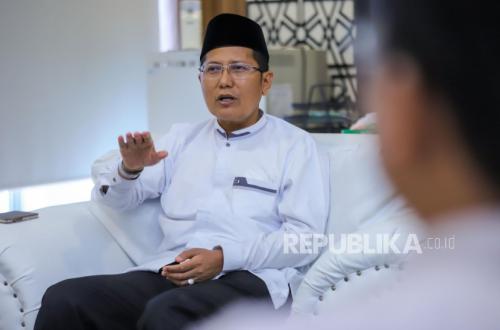
The Deputy Chairman of the Indonesian Ulema Council (MUI), KH Cholil Nafis, has said the hajj financing scheme needs to be returned to the principle of manista’a ilaihi sabila, or the obligation of hajj for Muslims who are financially able.
“Those who go on hajj are those with the means to do so,” said Kiai Cholil when contacted in Jakarta on Wednesday (8/7/2026), responding to the proposed hajj costs and financing scheme submitted by the government for the 2027 hajj season.
The government, through the Ministry of Hajj and Umrah, has proposed a Hajj Organising Cost (BPIH) of Rp107.34 million per person for 2027, an increase from the previous year’s cost of Rp87.4 million.
To keep the portion paid directly by pilgrims affordable, the Ministry of Hajj has proposed a financing scheme comprising 60 percent from the returns on funds managed by the Hajj Financial Management Agency (BPKH) and 40 percent from the Hajj Travel Cost (Bipih) paid directly by prospective pilgrims.
Kiai Cholil said the term subsidy in hajj costs is actually rather inappropriate, because the funds used do not come from the government budget, but from the returns generated on the initial deposits of prospective pilgrims during the waiting period before departure.
“In truth, there is no subsidy within the hajj costs, because the money belongs to the pilgrims themselves. So the returns generated during the waiting list period are theirs. Once virtual accounts are used, there is no subsidy,” said Kiai Cholil.
He takes the view that the current distribution of returns on hajj funds needs to be reviewed so that it is fairer to all prospective pilgrims, including those still waiting in the departure queue.