
MUI Urges New Finance Minister to Seek State Revenue Sources Beyond Taxation
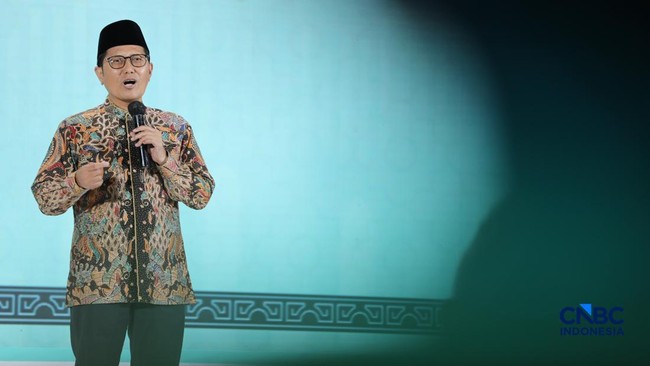
The Indonesian Ulema Council (MUI) has requested that Finance Minister Suahasil Nazara implement reforms to state revenue strategies by reducing the State Budget’s (APBN) dependence on the taxation sector.
This message was delivered by the Vice Chairman of MUI, KH M Cholil Nafis, during the handover ceremony for the Finance Minister on 15 September 2026.
According to Kiai Cholil, the government needs to more optimally utilise Indonesia’s natural resource (SDA) wealth and the quality of its human resources (SDM) as sources of both growth and state revenue. He noted that while taxes remain the primary backbone of the state budget, Indonesia possesses vast natural resource potential that has not yet been fully maximised.
“Secondly, ensure that state income does not only come from taxes. But rather, how to maximise it from natural resources and good human resources. Perhaps taxation should target businesses more than individuals,” said Kiai Cholil, as quoted from the MUI website on Friday (18/9/2026).
In his view, taxation policy should be directed more towards business activities and corporations rather than burdening individual citizens. Furthermore, the government is urged to be careful in avoiding double taxation practices that could potentially burden the business world and taxpayers.
In addition to reforming state revenue sources, the MUI also proposed the integration of fiscal and religious instruments through a tax credit scheme for zakat payments. Kiai Cholil believes such a policy could provide incentives for Muslims to fulfil their zakat obligations while simultaneously supporting their contribution to the state.
“We hope that zakat can be made a tax credit. Thus, when people pay zakat, there is both a religious and a national motivation,” he stated.
Currently, zakat payments in Indonesia are eligible for deductions from taxable income under existing tax regulations. However, the MUI proposes that the scheme be upgraded to a tax credit that directly reduces tax liabilities.
On the same occasion, Kiai Cholil also expressed hope that Suahasil would provide greater attention to the development of the national Sharia economy and finance. He argued that Muslims, as the majority population in Indonesia, should not merely serve as a market or consumers, but must become a primary pillar of national economic development.
Consequently, the MUI proposed the formation of ‘Danantara Syariah’ as a platform for the national integration and consolidation of the community’s economy.
“We hope Mr Suahasil can encourage and maximise the Sharia economy. The economic strength of the community should not just be as consumers, but as a support for Indonesia’s development. We have informed Mr Rosan, CEO of Danantara, regarding the formation of Danantara Syariah to consolidate the community’s economy,” said Kiai Cholil.
According to the MUI, strengthening the Sharia economy could serve as an instrument to expand the national economic base while increasing public welfare.
Source: jawawa.id (https://jawawa.id/newsitem/mui-urges-new-finance-minister-to-seek-state-revenue-sources-beyond-taxation-1789703614)
Originally published by CNBC Indonesia (https://www.cnbcindonesia.com/news/20260918090258-4-768909/mui-dorong-menkeu-baru-cari-sumber-penerimaan-negara-selain-pajak), translated from Indonesian