
MUI to Issue Fatwa on Whether Vapes Are Halal or Haram
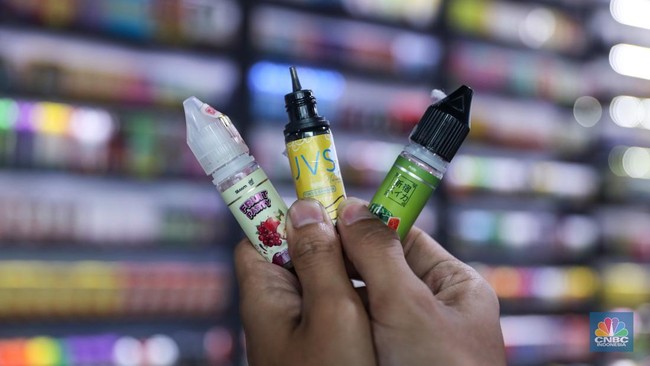
Jakarta, CNBC Indonesia — The MUI Fatwa Commission is acting on a request from National Police Chief General Suyudi Ario Seto to establish a legal ruling and religious guidance on electronic cigarettes, or vapes, particularly amid their growing misuse as a means of distributing narcotics and psychotropic substances.
As an initial step in preparing the fatwa, the commission has pledged to gather a broad range of views, involving stakeholders from academia, regulatory bodies and businesses.
MUI Fatwa Commission chairman Prof KH Asrorun Ni’am Sholeh stressed that a fatwa would not be issued hastily or without a scientific basis and consideration of real-world conditions. The commission is therefore planning a comprehensive discussion through a Focus Group Discussion (FGD) to examine the substance of the issue, its impacts and the relevant legal considerations.
He said the first step would be to hold an FGD and invite experts.
“We will bring in representatives from the National Research and Innovation Agency (BRIN), regulators from the Ministry of Health, health and chemistry experts, academics, members of parliament, and anti-smoking and anti-vaping campaigners,” Kiai Ni’am said, according to a statement from MUI Digital on Saturday (24 October 2026).
The Fatwa Commission will also hear directly from businesses. “We will also listen to the perspectives of business operators. This approach is important to ensure a holistic, objective and fair view before MUI makes a religious ruling,” he added.
Kiai Ni’am said the commission had coordinated internally at a leadership meeting on Friday evening (16 October 2026) to set out its work plan and develop a research methodology.
The head of An-Nahdlah Islamic Boarding School in Depok, West Java, said Islamic jurisprudence (usul fiqh) gives close consideration to the effects of an action on the protection of life and public order (hifz an-nafs and hifz al-aql).
Theologically, the commission is examining the issue with reference to a saying of the Prophet Muhammad: “La dharara wa la dhirar”, meaning that one must not harm oneself or others.
The Quran also explicitly prohibits actions that lead to destruction, stating: “Wa la tulqu bi-aydikum ila al-tahlukah” (“Do not cast yourselves into destruction”).
He said the negative effects of vaping, both on users’ health and on social order more broadly, must be assessed in detail.
“How these effects can be prevented, and what the positive law says about the issue, will be studied comprehensively before being weighed against religious principles,” said the professor of fiqh at Syarif Hidayatullah State Islamic University Jakarta.
The MUI Fatwa Commission hopes the ruling will serve not only as a guide to Islamic jurisprudence, but also as a practical instrument to protect the public (himayat al-ummah) and promote the common good.
“Hopefully all stages of this study will be completed soon, so that we can issue the fatwa as a shared guide,” Kiai Ni’am said.
National Police Chief General Suyudi Ario Seto had earlier warned the public of the serious threat posed by new types of liquid narcotics smuggled through e-cigarettes or vapes.
He made the remarks during a visit to MUI’s central office in Menteng, Central Jakarta, on Tuesday (13 October 2026). In view of the potential harm, Suyudi specifically asked MUI’s scholars and central board to study the issue and issue a fatwa banning the use of e-cigarettes in Indonesia.
Suyudi said narcotics distribution had shifted from solid to liquid forms. Vapes were particularly dangerous, he said, because the concealed packaging and fruit flavours made them difficult for the public and law enforcement officers to distinguish from ordinary e-cigarettes.
He said vapes were no longer used only for recreation with chemicals that were themselves harmful to the lungs and health, but had also become a means of narcotics abuse.
“Even the National Narcotics Agency and the police have difficulty identifying them by sight, because they look and smell the same, but contain liquid narcotics,” he said.
Suyudi added that the growing smuggling of liquid methamphetamine and liquid cannabis extracts into Indonesia amounted to a covert war, deliberately orchestrated by international networks to damage the country’s future.
He cited the 19th-century Opium Wars as a dark historical example of how addiction to addictive substances had weakened a major world power. To counter the threat, the police chief praised the East Java MUI, which had previously taken firm steps to prohibit vapes.
Suyudi said he hoped the national MUI would follow suit with a similar fatwa or religious recommendation to strengthen moral and legal protections for Muslims in Indonesia.
“I thank the East Java MUI for banning vapes. Hopefully the central MUI will also ban them outright. I ask for your support, Kiai and chairman, because I am convinced this is one of the sources of disaster in the current era,” he said.
The police chief further said he had personally proposed a total ban on e-cigarettes to the President of Indonesia and received a positive response.
He said this would align with policies in more than 90 countries worldwide, including neighbouring South-east Asian countries Singapore, Thailand, Vietnam, Laos and Brunei Darussalam, which have banned vape operations outright.
The National Police hopes that an MUI fatwa declaring vapes haram, together with formal government regulations, will provide a strong defence against young Indonesians becoming ensnared in narcotics and suffering long-term health risks.
Source: jawawa.id (https://jawawa.id/newsitem/mui-to-issue-fatwa-on-whether-vapes-are-halal-or-haram-1792839063)
Originally published by CNBC Indonesia (https://www.cnbcindonesia.com/syariah/20261024132205-29-779140/mui-akan-keluarkan-fatwa-halal-atau-haram-soal-vape), translated from Indonesian