
MUI Stresses That AI Algorithms Must Not Destroy the Chain of Islamic Knowledge Transmission
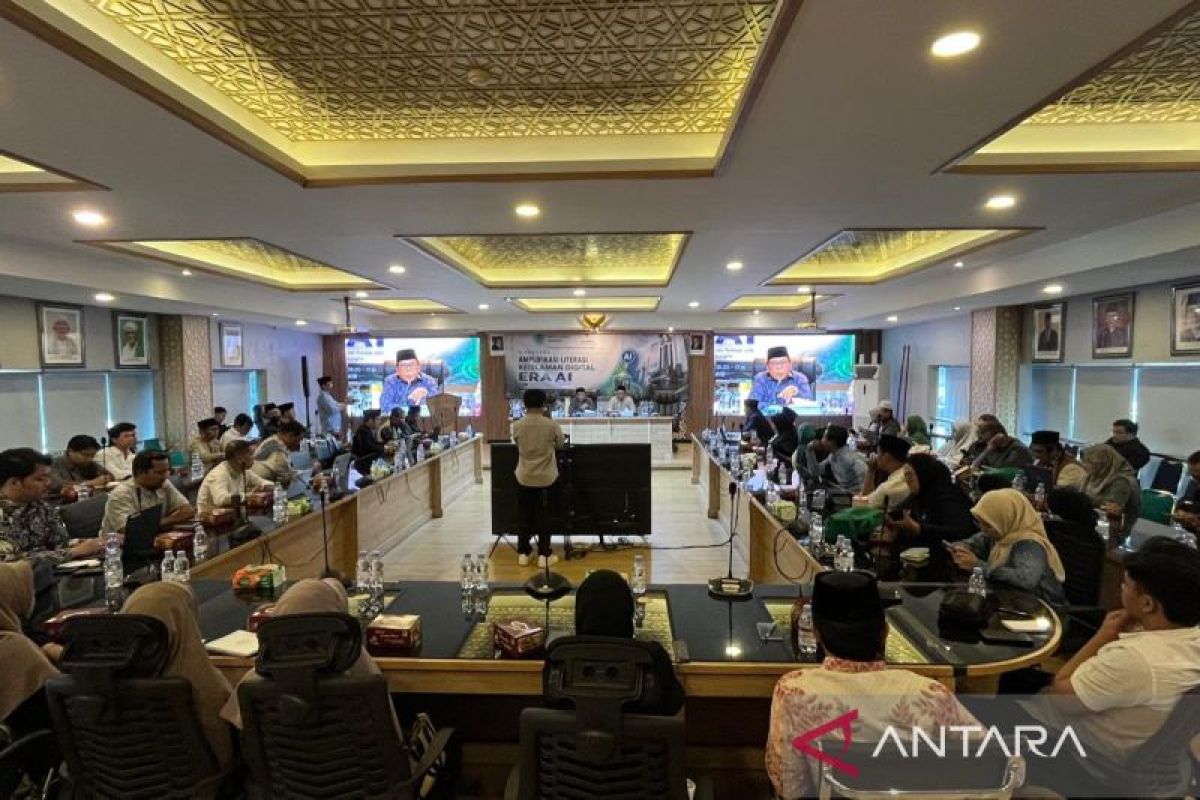
Jakarta (ANTARA) — The Indonesian Ulema Council (MUI) has stressed that the sanad system of knowledge and the teacher-student relationship that form the foundation of Islam in the archipelago must not be eroded or destroyed by artificial intelligence (AI) algorithms.
“Today we are facing the phenomenon of an algorithm war,” said Masduki Baidlowi, Chair of MUI’s Information, Communication and Digital Affairs Division (Infokomdigi), in Jakarta on Wednesday.
He delivered the message while opening and serving as keynote speaker at the workshop “Amplification of Digital Islamic Literacy in the AI Era”, organised by the MUI Infokomdigi Commission together with the National Zakat Agency (Baznas) of the Republic of Indonesia at the MUI Central Office.
Kiai Masduki highlighted the development of AI, which is no longer limited to producing ordinary visual or text content but has evolved into agentic AI capable of planning, discussing and executing decisions in detail.
According to him, if religious institutions such as MUI do not prepare high-capacity, excellent human resources, the role of ulama and religious institutions will gradually be sidelined from the lives of young people.
Masduki explained that when people ask questions and algorithms answer according to each person’s tastes, an echo chamber phenomenon occurs. They will only consume information that suits them and disregard the rest without any cross-checking.
“This is very dangerous because our sanad system, the tradition of learning between teacher and student, could be destroyed by the digital system if we remain passive,” said Kiai Masduki.
According to him, the religious character of the younger generation is undergoing a deconstellation, in which religion is often understood as a form of personal ego and comfort, rather than a gradual search for divine guidance alongside a God-fearing teacher.
“As a result, the instant answers from digital platforms have the potential to sever the chain of understanding of a peaceful (wasathiyah) and authentic religion,” he said.
AI must be utilised as an efficient means to spread the values of salvation (assalam), to facilitate religious services such as zakat, and to assist the learning process of Quranic study, which must remain under the verification (cross-check) of the ulama.
“MUI must be filled with people of high calibre so that it is trusted by the younger generation,” he said.
He reminded that MUI must not become a mediocre institution that only knows how to blame others. AI is an effective tool if mastered, capable of directing digital content to spread a moderate Islamic message, bring a sense of security, and preserve the scholarly tradition inherited from the ulama of the archipelago.
Meanwhile, Hari Usmayadi, Chair of the MUI Infokomdigi Commission, stated that the challenge of dakwah (Islamic proselytisation) in the modern era is no longer limited to delivering material in a conventional manner, but rather a battle to win public attention on social media through an understanding of algorithms and artificial intelligence.
He cautioned that calming and authentic Islamic content must not lose out to instant content that damages civilisation, such as the proliferation of illegal online lending (pinjol), LGBTQ propaganda, and the phenomenon of figures who rely solely on popularity yet dare to issue religious views without any scholarly basis.
Source: jawawa.id (https://jawawa.id/newsitem/mui-stresses-that-ai-algorithms-must-not-destroy-the-chain-of-islamic-knowledge-transmission-1785319100)
Originally published by Antara (Indonesian) (https://www.antaranews.com/berita/5671084/mui-tekankan-sanad-ilmu-jangan-hancur-oleh-algoritma-ai), translated from Indonesian