
MUI Reiterates Fatwa Banning Forest and Land Burning
JAKARTA — Zainut Tauhid Sa’adi, secretary of the Advisory Council of the Indonesian Ulema Council (MUI), has urged law enforcement to take firm action against those responsible for forest and land fires. The MUI stressed that indiscriminate burning that damages the environment and threatens lives is haram, or forbidden under Islamic law.
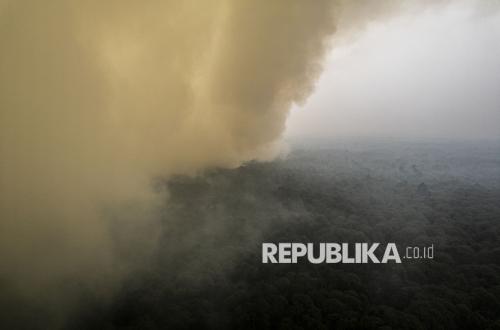
Zainut made the appeal following a renewed outbreak of forest and land fires in several parts of Indonesia, which has caused haze. The disaster has disrupted people’s activities, threatened public health, damaged ecosystems and affected the economy.
“The MUI reiterates its Fatwa No. 30 of 2016 on the Law on Forest and Land Burning and its Control: indiscriminate forest and land burning that damages the environment and threatens human life (hifdz al-nafs) is haram and violates Islamic law,” Zainut said in a press statement in Jakarta on Saturday (17 October 2026).
According to Zainut, causing damage (mafsadah) and threatening human survival runs counter to the fundamental principles of Islamic law. He said perpetrators and companies that deliberately set fires must face firm and fair law enforcement, without exception.
In addition to calling for law enforcement, the MUI urged the central and regional governments, the Indonesian National Armed Forces (TNI), the National Police, the National Disaster Management Agency (BNPB) and volunteers to strengthen coordination and pool resources to extinguish the fires more quickly.
Zainut also expressed concern about the health and safety risks posed by the haze, particularly to children, older people and other vulnerable groups. The MUI prayed that people in affected areas would be granted patience, strength and protection by Allah SWT.
Residents in affected areas were urged to remain alert and protect their own health and that of their families. They were advised to wear masks outdoors and avoid areas at high risk from the fires.
The MUI also called on the public to uphold the spirit of mutual assistance, or ta’awun, by helping people affected by the haze. Residents were asked to watch for new fires in their neighbourhoods and not to burn rubbish or land indiscriminately.
Alongside practical response measures, the MUI called on Muslims to strengthen their spiritual efforts in facing the fires and the effects of drought.
Zainut urged religious leaders and mosque and prayer-room administrators across Indonesia, particularly in affected areas, to hold congregational sunnah prayers for rain, known as Salat Istisqa. The prayer is performed in the hope of receiving rain as a blessing and mercy from Allah SWT.
Muslims were also encouraged to seek forgiveness through istighfar and recite Qunut Nazilah during obligatory prayers, asking for protection from calamities, hazardous haze and drought.
Zainut said protecting the environment and human life is an important part of Islamic teachings. He stressed that preserving the environment (hifdz al-bi’ah) and safeguarding human life (hifdz al-nafs) are religious obligations.
“Collective awareness of the need to protect nature must continue to be strengthened by all elements of the nation,” Zainut said.
He warned that exploiting nature in ways that damage the environment and endanger other people’s lives contradicts Islam’s principle of being a mercy to all creation (rahmatan lil ’alamin). Tackling forest and land fires therefore requires collective action, from law enforcement and firefighting to protecting residents and raising public awareness about environmental conservation.
The provisions of MUI Fatwa No. 30 of 2016 on the Law on Forest and Land Burning and its Control are as follows:
Legal provisions:
Burning forests and land in a way that may cause damage, environmental pollution, losses to others, health problems or other harmful effects is haram.
Facilitating, allowing and/or profiting from the burning described in point 1 is haram.
The burning described in point 1 is a crime, and those responsible are subject to sanctions according to the level of damage and the effects caused.
Controlling forest and land fires, as defined in the general provisions, is obligatory.
In principle, the use of forests and land is permissible provided that the following conditions are met:
A lawful right to use the land is obtained.
Permission to use it is obtained from the relevant authorities in accordance with applicable regulations.
The use is intended for the public good.
It does not cause damage or harmful effects, including environmental pollution.
Source: jawawa.id (https://jawawa.id/newsitem/mui-reiterates-fatwa-banning-forest-and-land-burning-1792230635)
Originally published by Republika (https://khazanah.republika.co.id/berita/tn1mmp430/mui-ingatkan-fatwa-haram-pembakaran-hutan-dan-lahan), translated from Indonesian