
MUI: In Islamic New Year, Unity is the Unshakeable Backbone of Indonesia
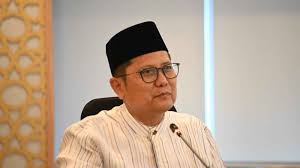
Deputy Chairman of the Indonesian Ulema Council (MUI), M. Cholil Nafis, delivered a national message to mark the Islamic New Year 1448 Hijriah. He stressed that in the context of the nation, unity is the main backbone that must not waver if Indonesia is to achieve progress and prosperity. Cholil invited Muslims to follow the example of the Prophet Muhammad (PBUH) when building civilisation in Medina. At that time, the initial step taken by the Prophet was not to homogenise differences, but to bind all elements of society in a single bond of unity. “When the Prophet Muhammad formed the state of Medina, the first article of the Medina Charter called for unity: Innahum ummatun wahidatun min duunin naas. Because it is impossible to build prosperity and progress without unity,” he stated, as quoted from an official release on Tuesday (16/6). The head of the Cendekiawan Amanah Islamic Boarding School in Depok, West Java, explained that the essence of the Medina Charter proves that differences in ethnicity, race, and even religion are a human nature that must be allowed to grow. However, all these differences must be united by one great commitment, namely love of the homeland. “Differences in religion, ethnicity, and race are left according to their nature. But we have one word, one agreement, which is to defend the homeland. So nationalism, love of the homeland, is the reference for building our unity,” asserted the Chairman of the MUI’s National Sharia Board (DSN). In order to realise solid unity within society, Cholil shared three important and interconnected stages: tafahum (mutual understanding), ta’wun (mutual assistance), and takaful (mutual protection). The Rais Syuriah of PBNU reminded that the spirit of hijrah in the modern era must be drawn into the socio-economic realm. Especially amidst the current economic pressures, Muslims are required to be financially independent so as not to burden others, and then use that surplus to improve the welfare of fellow citizens. “After that, there is no longer a hijrah of place, but a hijrah from badness to goodness, from an individualistic spirit to the public interest, from a merely temporal spirit to one that is everlasting,” he added. While expressing gratitude for the gift of longevity to see the year 1448 Hijriah, Kiai Cholil hoped this momentum would bring blessings to the Indonesian nation. “Hopefully with more age, comes more goodness, more blessings, and greater closeness to Allah SWT,” he concluded.