
MUI: Halal Certification is Not Merely Administrative but Provides Added Value
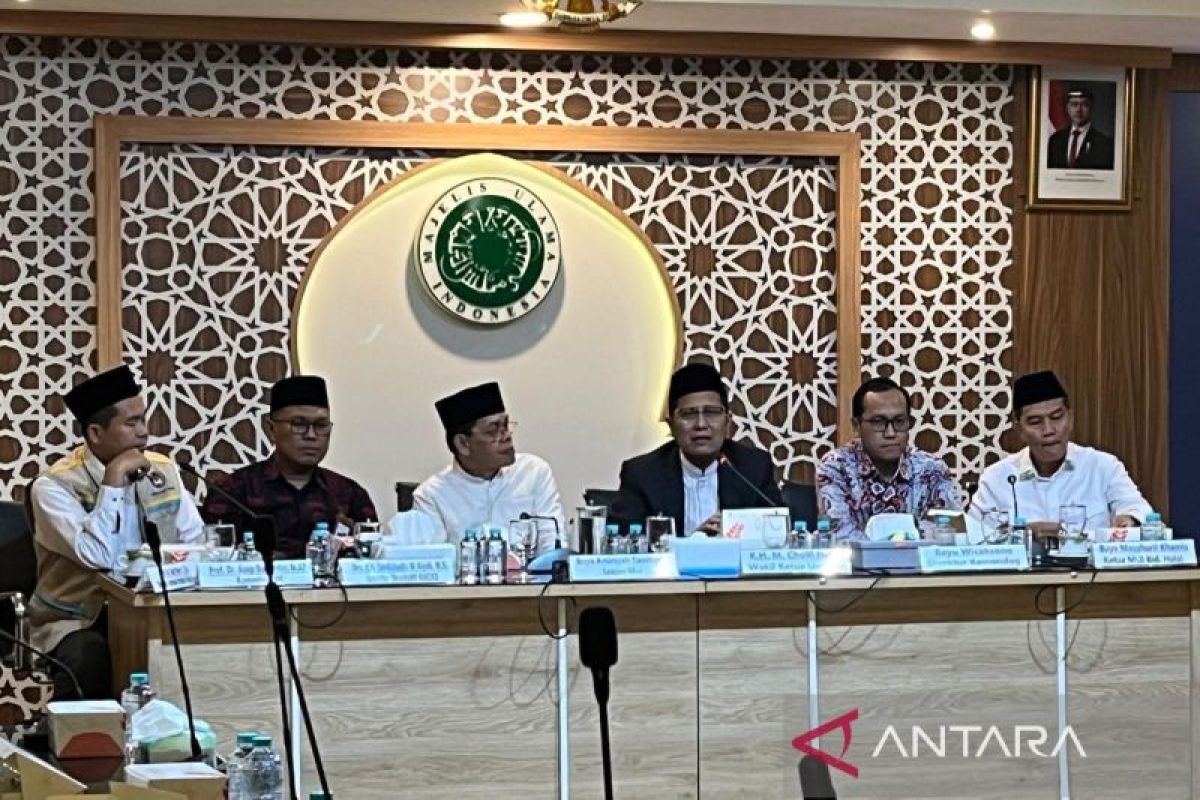
Jakarta (ANTARA) - The Vice Chairman of the Indonesian Ulema Council (MUI), Cholil Nafis, has emphasised that halal certification is not merely an administrative matter, but serves as a guarantee of halal status while providing added value for products and business actors.
“There is added value with halal certification; it is not a burden on the prices for business actors. Instead, it provides added value to the businesses and trade circulating in Indonesia,” said Chollo during a press conference ahead of the 18 October halal mandate at the MUI Building, Jakarta, on Thursday.
Kiai Cholil stated that the government, along with relevant parties, is prepared to implement the halal obligation on 18 October. This has been discussed in ministerial-level meetings involving the Coordinating Ministry for Human Development and Cultural Affairs (Kemenko PMK), the Halal Product Assurance Agency (BPJPH), the Ministry of Religious Affairs, the Ministry of Trade, and other related institutions.
“Everyone has agreed to implement the halal mandate on 18 October,” he said.
Kiai Cholil noted that massive socialisation regarding the halal certification obligation is necessary, considering that the policy targets not only domestic business actors but is also related to export and import activities. He believes socialisation is required so that business actors understand the halal certification mechanism and can utilise the policy to improve product quality and competitiveness.
According to him, halal certification can serve as a means for business actors to “level up,” whether in the food and beverage sector, pharmaceuticals, or other products.
“Initially, there was no guarantee of halal, but now there is a guarantee. We even want to connect it so that it is not just halal, but also thayyib,” said Cholil.
He explained that the concepts of halal and thayyib are an integrated whole. In addition to meeting religious aspects, products are also expected to meet health standards and contain ingredients that are good for the public.
“With the existence of halal, it is not just a business matter, but it ensures that Indonesian children and Indonesian people are healthy, life expectancy improves, and the SDGs can also be achieved,” Cholil added.
Meanwhile, the Head of the Halal Product Assurance Agency (BPJPH), Ahmad Haikal Hasan, emphasised that the implementation of halal product assurance is not intended as a prohibition or a restriction on trade. On the contrary, the policy is an instrument to provide protection and comfort to the public while simultaneously creating economic added value and increasing product competitiveness.
According to him, the objective of implementing halal product assurance has been established in Law (UU) Number 33 of 2014 concerning Halal Product Assurance, which is to provide protection to the public in consuming and using products, while also providing economic benefits for business actors and the national economy.
“The legal basis is the same, and the objective is the same: to provide protection for the public in consuming and using products, to provide economic added value, and to increase competitiveness,” said Haikal Hasan.
Source: jawawa.id (https://jawawa.id/newsitem/mui-halal-certification-is-not-merely-administrative-but-provides-added-value-1790254787)
Originally published by Antara (Indonesian) (https://www.antaranews.com/berita/5757056/mui-sertifikasi-halal-bukan-hanya-administrasi-tapi-jadi-nilai-tambah), translated from Indonesian