
MUI Drafts Bill to Criminalise LGBT Acts, Pushes for Inclusion in National Legislation Programme
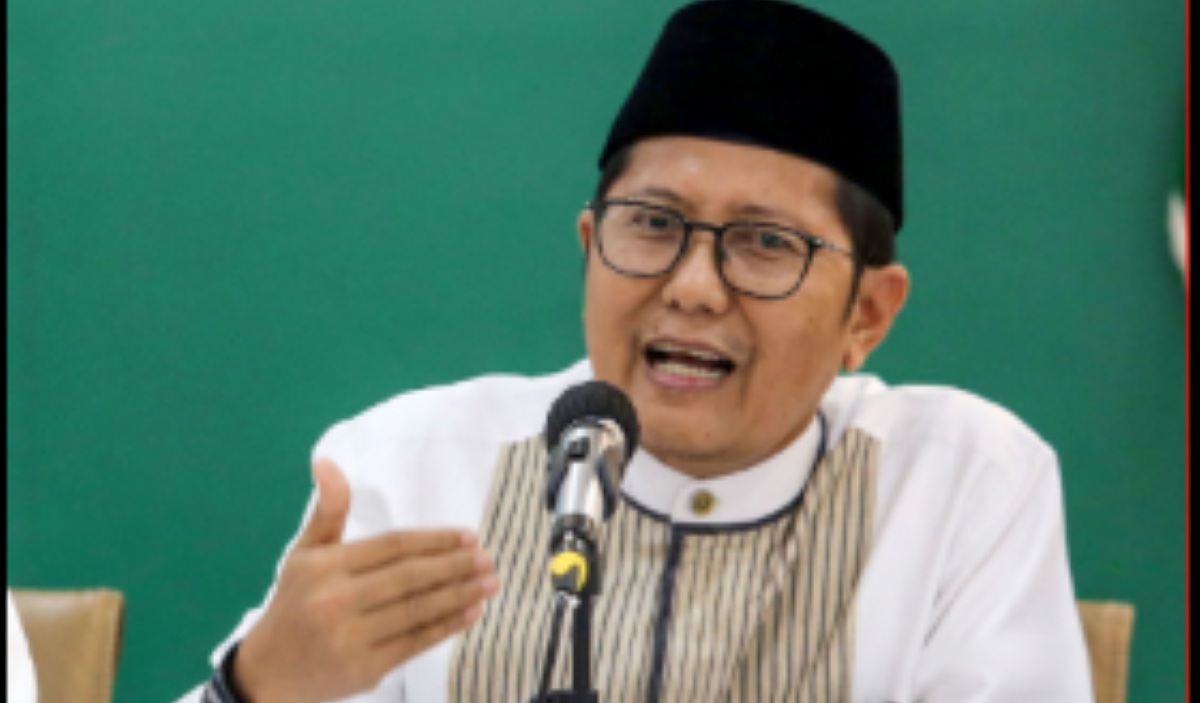
The Indonesian Ulema Council (MUI) is drafting an Academic Paper and Bill on the Criminalisation of Lesbian, Gay, Bisexual, and Transgender (LGBT) acts. This step is being taken to push for the regulation to be included in the National Legislation Programme (Prolegnas) at the House of Representatives (DPR).
MUI Deputy Chairman KH M Cholil Nafis asserted that a legal approach is necessary because moral appeals are no longer considered effective in curbing the phenomenon of sexual deviancy, which is increasingly being displayed in public spaces. MUI is taking a firm stance to combat the behaviour and campaigning of LGBT activities in Indonesia.
“For the sake of our love for true humanity, we urge them to return to their natural disposition. We are preparing the academic paper and the criminal bill, it is now up to the DPR to discuss and enact it,” said Cholil, as quoted by the official MUI website on Sunday (28/6/2026).
Cholil highlighted a shift in the behaviour of LGBT groups. Whereas previously individuals tended to be secretive, they are now perceived as being bolder in openly organising same-sex events. He expressed regret that there is a stigma of intolerance against members of the public who try to reprimand such actions.
However, MUI stressed that the bill will not criminalise ‘sexual orientation’ which is still in the realm of thought, but will focus on acts of deviance (the perpetrators) and the campaigning of such activities. “If it is just orientation, we do not call it a crime because orientation is still in the mind. So what we classify as criminal is the perpetrator,” he stated.
The drafting of this bill refers to religious legal views outlined in MUI Fatwa Number 57 of 2014 concerning Lesbian, Gay, Sodomy, and Sexual Abuse. The fatwa declares same-sex sexual relations as haram (forbidden) and categorises them as a form of crime.
Cholil, who also serves as the Head of the Cendekia Amanah Islamic Boarding School, explained that the proposed sanctions could take the form of criminal penalties or ta’zir. Ta’zir is a punishment whose type and severity are determined by a judge, aimed at providing a deterrent effect for perpetrators of the acts or the campaigning. He analogised the regulation to laws on corruption or narcotics, arguing that while laws cannot completely eliminate crime, their existence is crucial to prevent the normalisation of acts deemed deviant.
“Punishment makes people understand that this is not normal, that this is wrong,” he asserted. The legal principle upheld by MUI is al-mawani’ wa al-zajir, which is preventive in nature and provides a deterrent effect so that society returns to its true human nature.