
MUI Clarifies Islamic Ruling on Cross-Dressing During 17 August Competitions
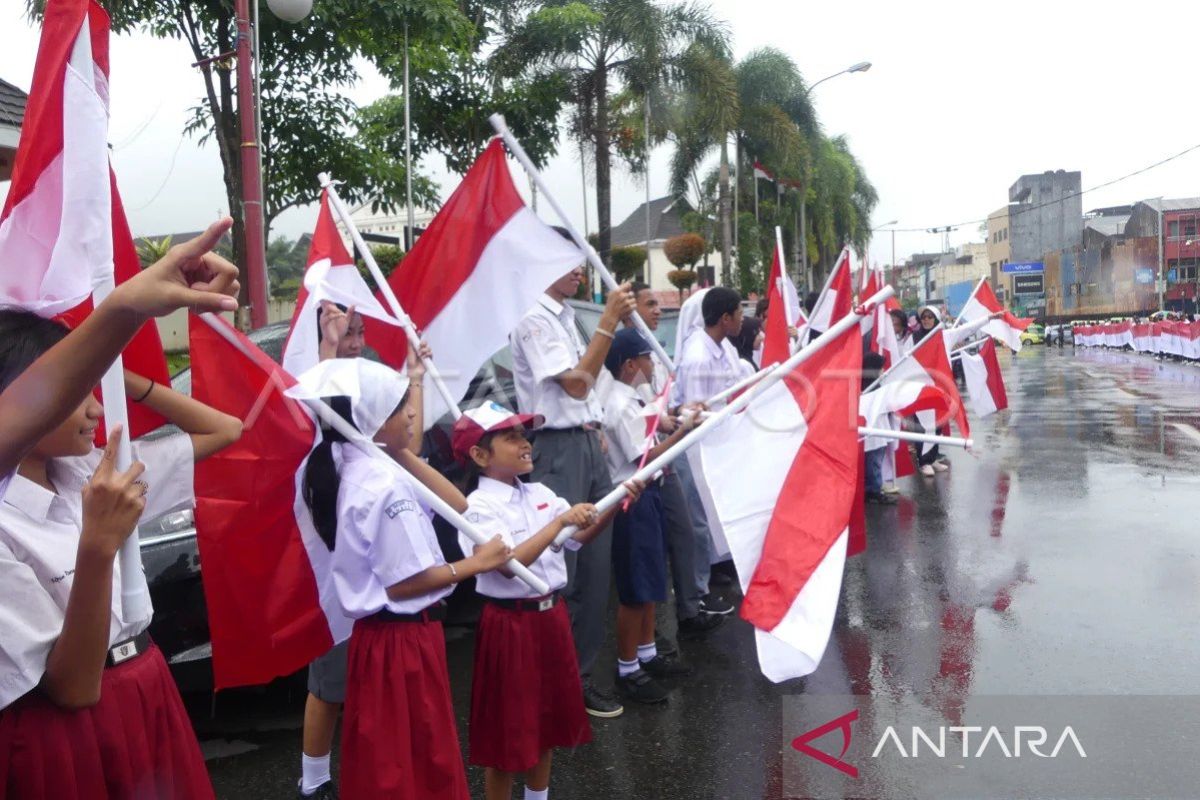
The Indonesian Ulema Council (MUI) has reminded the public not to wear clothing resembling the opposite sex during celebrations for the anniversary of Indonesian independence, including 17 August competitions and carnivals.
Deputy Secretary of the MUI Fatwa Commission, KH Abdul Muiz Ali, considers men wearing clothing specifically designated as women’s attire to be an act of tasyabbuh, or resembling the opposite sex. MUI states that this practice is haram and sinful from the perspective of Islamic law.
“It is haram for men to appear in or wear clothing usually worn by women. Likewise, it is haram for women to appear in or wear clothing usually worn by men,” KH Muiz Ali told MUI Digital on Friday (7/8).
KH Abdul Muiz Ali explained that the prohibition is based on a hadith of the Prophet Muhammad SAW which forbids men from resembling women and women from resembling men.
“In the present context, wearing clothing of the opposite sex tends to promote the practice of the LGBT movement, which is clearly forbidden by religion and contrary to social norms,” said KH Muiz Ali.
MUI cited a hadith narrated by Imam Bukhari which states that the Prophet Muhammad SAW cursed men who resemble women and women who resemble men. Based on this hadith, MUI considers the use of clothing specifically identified as the attire of the opposite sex to be impermissible.
MUI explained that the issue is not merely the colour or style of clothing, but clothing that is specifically known as the attire of the opposite sex in the customs of society.
Accordingly, men who wear clothing identified with women’s attire to take part in competitions or carnivals remain a matter of concern from the perspective of sharia law.
MUI affirmed that this ruling applies both in public and private spaces.
Competitions held in conjunction with the anniversary of independence may in principle still be held. However, MUI reminded organisers to choose activity concepts that do not conflict with religious provisions.
This means organisers may hold various competitions such as traditional games, sports, agility contests, and other creative activities without making the wearing of opposite-sex clothing part of the competition.
MUI has also previously reminded that August competitions must be free from elements of gambling or qimar, particularly regarding the use of participant registration fees as prizes.
According to MUI, independence anniversary celebrations should remain a positive momentum for strengthening social relations and community togetherness.
Therefore, the public may still enliven independence commemorations through various activities as long as they do not contain elements prohibited by religion.
MUI also reminded carnival organisers to pay attention to public order, including ensuring that activities do not disturb the comfort of road users.
Organisers may replace competition concepts that require participants to wear opposite-sex clothing with more creative competitions that remain in accordance with religious provisions.
For example, competitions to decorate the local environment, traditional games, sports, independence quizzes, or creativity competitions with clothing appropriate for each participant.
Thus, MUI does not prohibit 17 August competition activities, but reminds that their implementation should not include practices deemed contrary to sharia, including men wearing clothing specifically designated as women’s attire.
Source: jawawa.id (https://jawawa.id/newsitem/mui-clarifies-islamic-ruling-on-cross-dressing-during-17-august-competitions-1786582294)
Originally published by Antara (Indonesian) (https://www.antaranews.com/berita/5691955/mui-ungkap-hukum-pakai-baju-lawan-jenis-saat-lomba-17-agustus), translated from Indonesian