
MUI Chairman: Free Nutritious Meal Programme is Noble, Shortcomings Must Be Fixed Not Used as Reason to Stop It
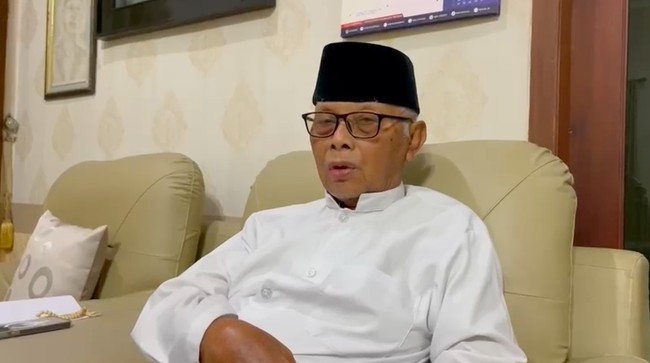
Jakarta, CNBC Indonesia - The General Chairman of the Indonesian Ulema Council (MUI), Anwar Iskandar, considers the government’s Free Nutritious Meal (MBG) programme to be a noble initiative from a religious perspective. He referred to a verse in the Quran which explains that God provides food and security to mankind. “So, from a religious perspective, the President’s free meal programme is something very noble,” Anwar said in a video statement quoted by CNBC Indonesia on Saturday (13/6/2026). “Even in the Quran, God says, ‘So let them worship the Lord of this House, who has fed them against hunger and made them safe from fear’,” he added.
Nevertheless, Anwar acknowledged that there are still several issues in the programme’s implementation on the ground. However, he noted that the government has taken enforcement action against various violations found. “It is noble from a religious aspect. If there are things that are not good in the implementation, well, there are rules. And indeed, action has been taken, from the top officials, their deputies, and now many cases are being pursued everywhere. There are members of the House of Representatives, deputy ministers, and various others. That is concrete action. Unless it was left unchecked,” he said.
Anwar assessed that the budget of Rp10,000 per beneficiary is actually sufficient if used according to regulations. He suspects that the various complaints arising are caused by irregularities committed by unscrupulous individuals. “The Rp10,000 is actually good; it can cover the four healthy five perfect nutritional standards if implemented correctly. Why do problems arise? Because of rogue elements at the bottom who cut corners, reducing the intended Rp10,000 to Rp7,000 or Rp5,000,” he said. “Why does this happen? Perhaps to cover the cost of bribes paid to obtain permits, where at one point the bribe could be Rp300 million or Rp500 million. As a result, the beneficiaries are the ones who suffer,” he continued.
Beyond providing benefits to students and Islamic boarding school pupils (santri), Anwar stated that the MBG programme also contributes to creating jobs and stimulating the community’s economy. According to him, the existence of food supply kitchens is able to absorb a large workforce. At the same time, the programme creates demand for micro-entrepreneurs and farmers, ranging from tempeh and tofu producers, chicken breeders, to fishermen and vegetable farmers. “This programme is truly beneficial. Not only for santri and students, but also for people who need jobs, thereby reducing unemployment,” he said.
Anwar also assessed that the programme encourages money circulation in the banking sector because many managers of the Nutrition Fulfilment Service Units (SPPG) utilise bank financing to run their operations. Because of its wide-ranging benefits, he rejected any discourse on stopping the MBG programme. According to him, any shortcomings should be corrected, not used as a reason to dissolve the programme. “The money circulates at the grassroots level. Why should it be stopped? Don’t stop it. If there are shortcomings or mistakes, fix them. If there is a barn with rats, kill the rats, don’t burn the barn,” he explained.
He also asked various parties to deliver criticism and input through constructive dialogue. According to him, the government is open to receiving reports regarding any deficiencies occurring in the field. “So, in my opinion, the idea of dissolving it is wrong. Not everything is bad. Don’t generalise. The National Nutrition Agency (BGN) has its faults, yes, but it also has many good points. Don’t blame everything,” Anwar said. He concluded that from a religious, social benefit, and legal standpoint, the programme has good objectives. Therefore, the main focus should be on fixing the weaknesses in its implementation. “So, from a religious perspective it is correct, from the perspective of a leader providing benefits to the people it is correct, and the law is correct. If there are mistakes, just fix them. Don’t consider everything to be bad,” he concluded.