
MUI Advisory Council Urges Strict Oversight of KUII VIII Recommendations
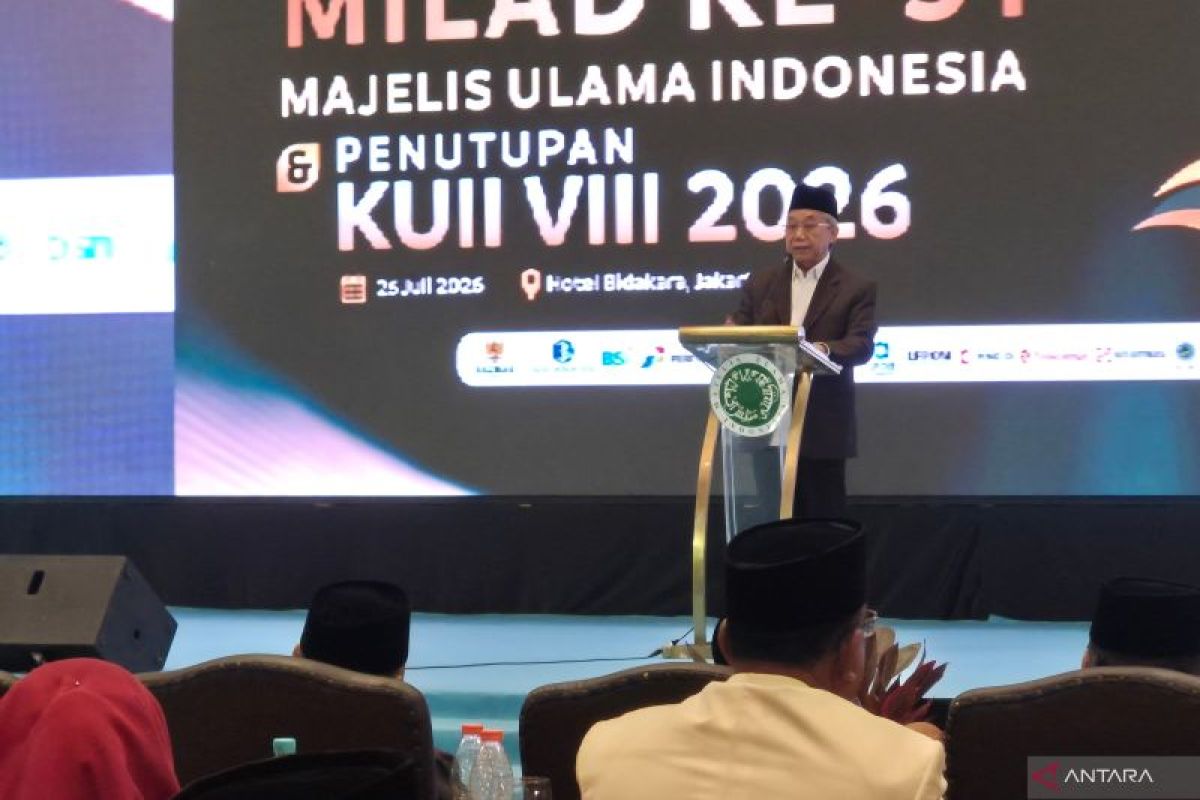
Jakarta - Deputy Chairman of the Advisory Council of the Indonesian Ulema Council, Masykuri Abdillah, has urged that all recommendations from the 8th Indonesian Muslim Congress be strictly monitored in their implementation, right up to the policymaking level. Speaking at the closing of KUII VIII in Jakarta on Sunday evening, Masykuri assessed that the formulation of the 8th congress’s outcomes was the most comprehensive in the history of the event. Unlike the first congress in 1945, which focused on establishing the Masyumi Party and strengthening the Jihad Resolution, this congress dissected a wide range of issues, from socio-culture and economic welfare to political security, foreign policy, and Artificial Intelligence technology. “These formulated outcomes must be conveyed to public policymakers, policy implementers, and the community as a whole. If they are just stored away, they are useless,” he said. To ensure the recommendations are acted upon, Masykuri encouraged MUI’s Law Commission and Study Commission to continuously track and evaluate regulations issued by both the executive and legislative branches. In this oversight process, he stressed that MUI positions itself as a civil society entity that provides healthy and balanced criticism. “Criticism is actually permissible because it is part of participation to evaluate whether a policy is being implemented well or not. However, the criticism made by Islamic organisations is constructive in nature, not aimed at bringing down the government like an opposition party,” he stated. Internally, Masykuri also issued a stern warning to all MUI board members to prioritise organisational ethics. He strictly forbade members from issuing controversial statements or fatwas individually that could trigger polemics in society and degrade the institution’s dignity. Every stance taken must go through a meeting mechanism and commission study. Masykuri also highlighted the importance of education at the grassroots level. He proposed the innovation of compiling a Friday sermon guidebook by the Central MUI containing the essence of the congress outcomes in language easily digestible by the general public. According to him, this is crucial to alleviating the low literacy rate among the community. He also made a special note regarding the discourse on the formation of a “Sharia Danantara” which strongly emerged during the congress. “This needs to be re-examined by involving various sectors, including people who have long studied what Islamic finance truly is. Let this not just be a matter of enthusiasm,” said Masykuri Abdillah.