
Muharram: A Monument of Time, Reflections on Holy Days and Religious Calendars
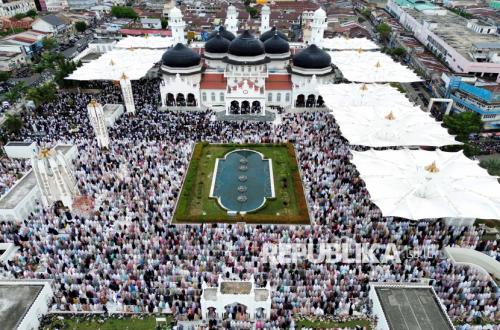
Why, generally speaking, is every major holiday on the calendar marked in red and designated as a public holiday? Or why do almost all beliefs and religions feature commemorations and religious festivals held on specific dates and times? Examples include Christmas in Christianity, Yom Kippur in Judaism, Diwali in Hinduism, Vesak in Buddhism, and Nyepi in Bali.
In Islam, there are specific dates such as 1 Shawwal (Eid al-Fitr), 10 Dhu al-Hijjah (Eid al-Adha), 15 Sha’ban (the night of Nisfu Sha’ban), Mawlid al-Nabi, Isra Mi’raj, and 1 Muharram. Furthermore, on 9 Dhu al-Hijjah (the Day of Arafah) and 10 Muharram (the Day of Ashura), Muslims are encouraged to fast.
Religious holidays are not merely red dates on a calendar or boisterous celebrations; according to the sociology of religion, they serve as monuments of time established collectively by adherents to remember, celebrate, and renegotiate the meaning of religious life. In several Abrahamic religions, these commemorations are indeed divine commands enshrined in sacred scriptures.
Within these calendars, linear time meets sacred time, history meets myth, and the individual meets the community. The roots of religious holiday commemorations can be traced to several sources: historical events, natural cycles, and scriptural records.
The first source is based on the actors of the events. For instance, Jewish Passover commemorates the Exodus from Egypt, Christian Easter celebrates the resurrection of Jesus, while Eid al-Adha commemorates the sacrifice of Prophet Ibrahim and Prophet Ismail.
Meanwhile, 10 Muharram is associated with various events, such as the acceptance of Prophet Adam’s repentance, the anchoring of Prophet Nuh’s ark on Mount Judi, Prophet Ibrahim’s survival of the fire, Prophet Yusuf’s release from prison, the salvation of Prophet Musa and the Israelites from Pharaoh, and the martyrdom of Imam Hussain in Karbala according to Shia tradition. In this context, past historical time is elevated to sacred time. The dates are repeated annually so that these events do not collapse into mere legends or stories of the past.
The second source is the alignment of various calendars with agricultural and astronomical cycles. The Hindu celebration of Diwali is observed during the transition from darkness to light. Christmas on 25 December was adopted because it coincides with the winter solstice in Northern Europe. Fasting during the month of Ramadan follows the pre-Islamic Arab lunar calendar. Religions do not abolish local calendars, but rather baptise and reinterpret them with new meanings.