
Muhammadiyah West Java's 'Flame of Enlightenment' Must Keep Burning Through Education Quality, Says Deputy Minister
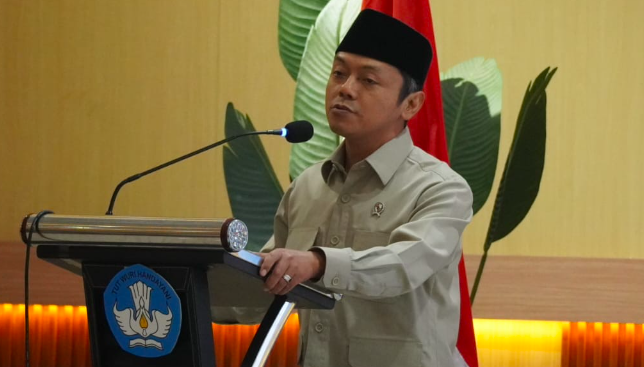
Deputy Minister of Primary and Secondary Education Fajar Riza Ul Haq has emphasised that the ‘flame of enlightenment’ of Muhammadiyah West Java must continue to burn through improved educational quality, service innovation, and harmony within the organisation’s charitable ecosystem. He made the remarks while opening the Regional Coordination Meeting for the West Java Muhammadiyah Regional Executive’s education councils at the BBPPMPV BMTI in Cimahi on Saturday. Fajar noted that Muhammadiyah West Java has been part of the chain of the enlightenment movement since its inception, citing historical connections in Sukabumi with key figures such as Haji Rasul, the father of Buya Hamka, and A.R. Sutan Mansur, as well as developments in Jasinga and Leuwiliang, Bogor. He said this history shows that Muhammadiyah West Java was never merely a spectator in the organisation’s journey, recalling that the region hosted the 36th Muhammadiyah Congress in Bandung in 1965, where President Soekarno stressed the importance of nationalism and ignited the Islamic spirit. Fajar assessed that Muhammadiyah West Java’s dynamism has grown significantly over the past decade and urged that this momentum be maintained by strengthening charitable ventures, particularly in education. He stressed the need to shift orientation from the quantity of charitable ventures to their quality, a point consistently raised by the central leadership. While appreciating that over 80 per cent of Muhammadiyah junior secondary schools in the province have achieved ‘A’ accreditation, he noted that primary and senior secondary levels still require strengthening. He encouraged building a culture of quality from early childhood to senior secondary levels, ensuring that learning is vibrant, teachers grow, principals lead change, and services gain public trust. Fajar also pushed for a strategy of establishing at least one flagship school per regency or city at each level, insisting that new schools must be built with proper planning, quality, innovation, and sustainability, not merely good intentions. He called on Muhammadiyah schools to adapt to changing times, including rising parental expectations, the digital generation, and stronger competition in education quality, by strengthening a learning ecosystem involving families, schools, and the community. He affirmed that private schools managed by community organisations like Muhammadiyah are strategic partners of the government in expanding access and improving education quality, a task the state cannot accomplish alone. The Chairman of PWM West Java, Ahmad Dahlan, stated that Muhammadiyah has always been an agent of national enlightenment, strengthening Islam, nationalism, and progress. Fajar concluded by expressing hope that the meeting would strengthen the harmony of the education ecosystem and consolidate steps towards excellent, innovative, and competitive charitable ventures, noting that Muhammadiyah is respected for its quality and inclusive service.