
Muhammadiyah Urges Non-Halal Labeling for Cigarettes and Vapes
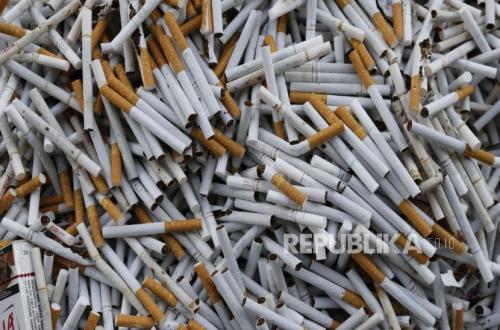
The Tarjih and Tajdid Council of the Muhammadiyah Central Leadership, together with the Muhammadiyah Tobacco Control Network (MTCN), met with the Head of the Halal Product Assurance Agency (BPJPH), Ahmad Haikal Hasan, to push for ‘non-halal’ labelling on cigarettes. The meeting aimed to confirm and communicate the stance that cigarettes and vapes should be labelled as non-halal, in accordance with Muhammadiyah’s fatwa declaring them haram.
This issue presents a potential legal gap that could endanger public protection from the harmful impacts of such products. The request is based on Muhammadiyah’s Fatwa on the Prohibition of Smoking (No. 6/SM/MTT/III/2010) and the Fatwa on the Prohibition of Electronic Cigarettes (No. 01/PER/I.1/E/2020).
The core points of Muhammadiyah’s fatwa regarding smoking are: first, to strive for the maintenance and improvement of public health to the highest possible level and to create a conducive environment for a healthy lifestyle, which is a right for everyone and a part of the objectives of Sharia (maqashid asy-syari’ah).
Second, smoking is categorised as an act of engaging in ‘khabaits’ (harmful things), involves elements of self-destruction, and endangers both oneself and others, as smoking is recognised as an addictive substance containing toxic elements.
Third, those who do not yet smoke must protect themselves and their families from attempting to smoke.
Fourth, those who have already become smokers are obligated to make every effort, according to their ability, to quit the habit.
During the meeting, Ustad Nur Fajri Romadhon, representing the Muhammadiyah Tarjih and Tajdid Council, stated that Muhammadiyah has maintained a firm stance for over a decade that smoking is haram.
The Chairperson of the Muhammadiyah Tobacco Control Network (MTCN), Roosita Meilani Dewi, reinforced this position with data and studies on the harmful impacts of tobacco products on lower-income communities. She argued that if cigarettes were labelled as non-halal, it would reduce the direct negative impact on society by decreasing consumption.
“Policies issued must side with the protection of the people from the harmful impacts of products (health, environmental, and household economic impacts),” said Roosita in a press release received on Tuesday.