
Muhammadiyah Urged to Embrace 'Merchant DNA' and Transform into a Socio-Religious Corporation
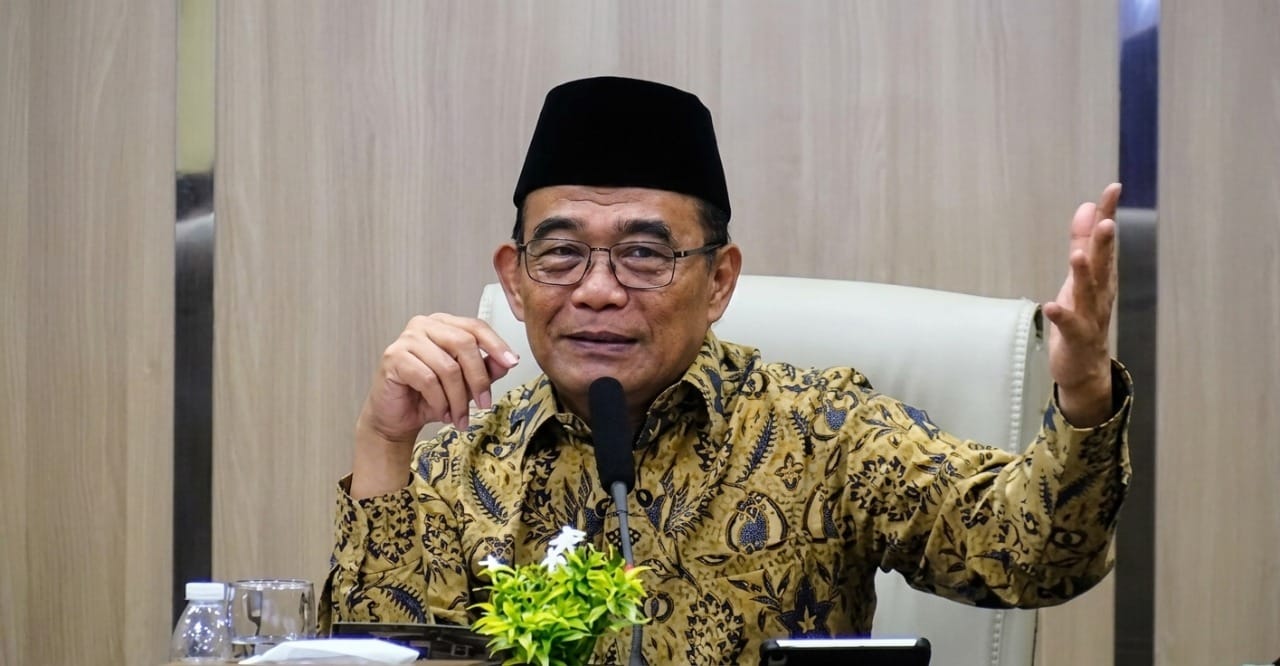
PALEMBANG – Chairman of the Muhammadiyah Central Board, Muhadjir Effendy, has asserted that the organisation possesses strong roots as a missionary movement founded on an entrepreneurial spirit. He argued that Muhammadiyah must revive its ‘merchant DNA’ as a foundation for building the organisation’s economic independence.
Speaking at a recitation event for organisational leaders and charitable enterprises (AUM) hosted by the Muhammadiyah Regional Board of South Sumatra on Monday evening (27/7), Muhadjir explained that Muhammadiyah was built by progressive scholars who were also merchants with a modern outlook. He noted that the founder, Kiai Ahmad Dahlan, was a batik trader who made economic activity an inseparable part of his missionary work. ‘The founder of Muhammadiyah, Kiai Ahmad Dahlan, was fundamentally a batik trader. So, when he travelled to preach, he would bring samples of batik,’ Muhadjir explained.
This entrepreneurial spirit was passed down to the next generation. Muhadjir recounted how Kiai Dahlan sent his son, Dhurie Dahlan, to Europe to study business as a long-term investment for the organisation’s future. Upon returning to Indonesia, Dhurie Dahlan successfully developed various enterprises, from importing bicycles to establishing a sarong factory that exported products to Bangladesh, Thailand, and Myanmar.
However, Muhadjir explained that this merchant spirit gradually faded, particularly from the New Order era onwards, as the professional orientation of Muhammadiyah members shifted massively. ‘As Muhammadiyah developed, there was a massive shift in professions. Since the New Order era, 90% of Muhammadiyah members began entering the bureaucracy sector, causing the trading tradition to be abandoned,’ he stated.
As a solution for the future, Muhammadiyah is now striving to restore this entrepreneurial character through efforts to transform the organisation into a socio-religious corporation. Muhadjir clarified that this concept is not aimed at profit accumulation for its own sake, but rather at building healthy, independent, and profitable business units whose proceeds are used for the greatest possible public welfare. ‘We must build profitable business units. The difference with ordinary corporations is that the profits must be used to the greatest extent for the prosperity and welfare of the people,’ he stressed.
He assessed that this concept aligns with the spirit of Article 33 of the 1945 Constitution, which places the principle of family as the foundation of national economic development. With its extensive organisational network, Muhadjir is optimistic that Muhammadiyah can develop into a super holding with strong national competitiveness. As a concrete step, he highlighted the development of an integrated business ecosystem through various Muhammadiyah Charitable Enterprises. He cited the University of Muhammadiyah Malang (UMM), which has successfully developed business units including a star-rated hotel, a hospital, an automotive workshop, and a unique container-based lodging facility.
At the central level, the Central Board of Muhammadiyah is initiating the construction of an IV fluid factory, targeted for launch before the 49th Muhammadiyah Congress. Another key initiative is the Mentari Mart retail business, which he described as a sector with the lowest risk against the dynamics of the times. ‘Look, the business safest from political turmoil is retail. This is because everyone needs to eat. So, this is our effort to continue expanding Mentari Mart across Indonesia,’ he said.
Concluding his presentation, Muhadjir also highlighted the need to reorient the quality of Muhammadiyah education. He stressed that schools must improve their quality to survive and compete. ‘If we want to survive, our schools must be excellent. I have a dream, actually. If we have a profitable business, the salaries of teachers in schools that are not yet well-off can be subsidised by Muhammadiyah and the central board,’ he said. From its merchant DNA to its aspiration of becoming a socio-religious corporation, Muhammadiyah, now entering its second century, is expected to build an integrated business ecosystem involving its cadres, leaders, charitable enterprises, and business units. Muhadjir views all these efforts as a form of long-term charitable investment that will continue to benefit the community, where charitable enterprises are not just service institutions but also instruments of economic empowerment whose results are reinvested for missionary work and public welfare.
Source: jawawa.id (https://jawawa.id/newsitem/muhammadiyah-urged-to-embrace-merchant-dna-and-transform-into-a-socio-religious-corporation-1785228629)
Originally published by muhammadiyah.or.id (https://muhammadiyah.or.id/2026/07/merujuk-ke-dna-saudagar-muhammadiyah-didorong-memiliki-visi-menjadi-korporasi-sosial-keagamaan/), translated from Indonesian