
Muhammadiyah on West Kalimantan Forest Fires: An Ecological Disaster, Not Just a Natural One
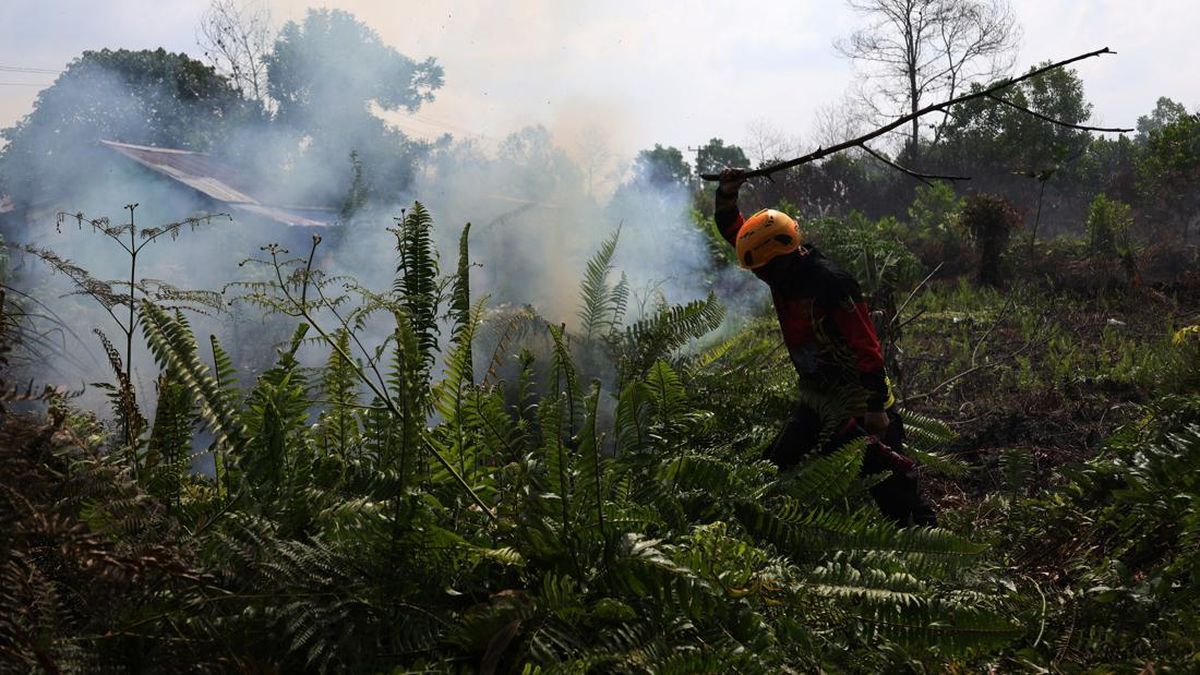
The Environmental Council of the West Kalimantan Regional Leadership of Muhamlammadiyah assesses that the forest and land fires (karhutla) occurring in West Kalimantan are an ecological disaster, rather than merely a natural disaster.
Consequently, according to Muhammadiyah, the handling of these fires must prioritise rapid response and robust prevention, accompanied by strict law enforcement.
“The 2026 West Kalimantan forest fires are an ecological disaster and not solely a natural disaster,” said M. Hermayani Putera, Chairman of the Environmental Council of the West Kalimantan Regional Leadership of Muhammadiyah, quoting Antara on Tuesday (2/9).
Hermayani stated that the fire crisis is exacerbated by the vulnerability of peatland ecosystems, land-use management that is deemed sub-optimal, and weak prevention and mitigation efforts.
According to her, the escalation of fires, particularly in peatland areas, has reached a condition that endangers public safety, threatens public health, and has the potential to cause broader environmental impacts.
Muhammadiyah West Kalimantan highlighted the surge in the number of hotspots based on data from BMKG West Kalimantan and BPBD West Kalimantan, which showed an increase from 3,371 hotspots to 6,050 hotspots during the monitoring period of 28 to 29 August 2026.
The concentration of these hotspots is located in several regions, particularly Ketapang, Kubu Raya, North Kayong, and Melawi regencies, parts of which possess peatland ecosystems vulnerable to sub-surface fires.
According to Muhammadiyah West Kalimantan, handling forest fires is not sufficient by relying solely on surface firefighting efforts, especially in peatland areas.
“Sub-surface embers must be resolved through peat wetting, water management, canal blocking, and the provision of boreholes as emergency water sources in fire-prone areas,” she said.
Muhammadiyah West Kalimantan also urged the government and law enforcement agencies to conduct investigations into concession areas experiencing fires and to ensure accountability for all parties if elements of negligence or legal violations are found.
Furthermore, the government is requested to strengthen prevention efforts, increase regional preparedness, ensure transparent and accountable information regarding fire handling, and provide adequate support to volunteers and firefighters on the ground.
Hermayani assessed that the public, particularly vulnerable groups, indigenous peoples, and communities living around forests and peatland areas, are the parties most directly affected by the haze resulting from these fires.