
Muhammadiyah: Forest and Land Fires Must Not Be Normalised as an Annual Disaster
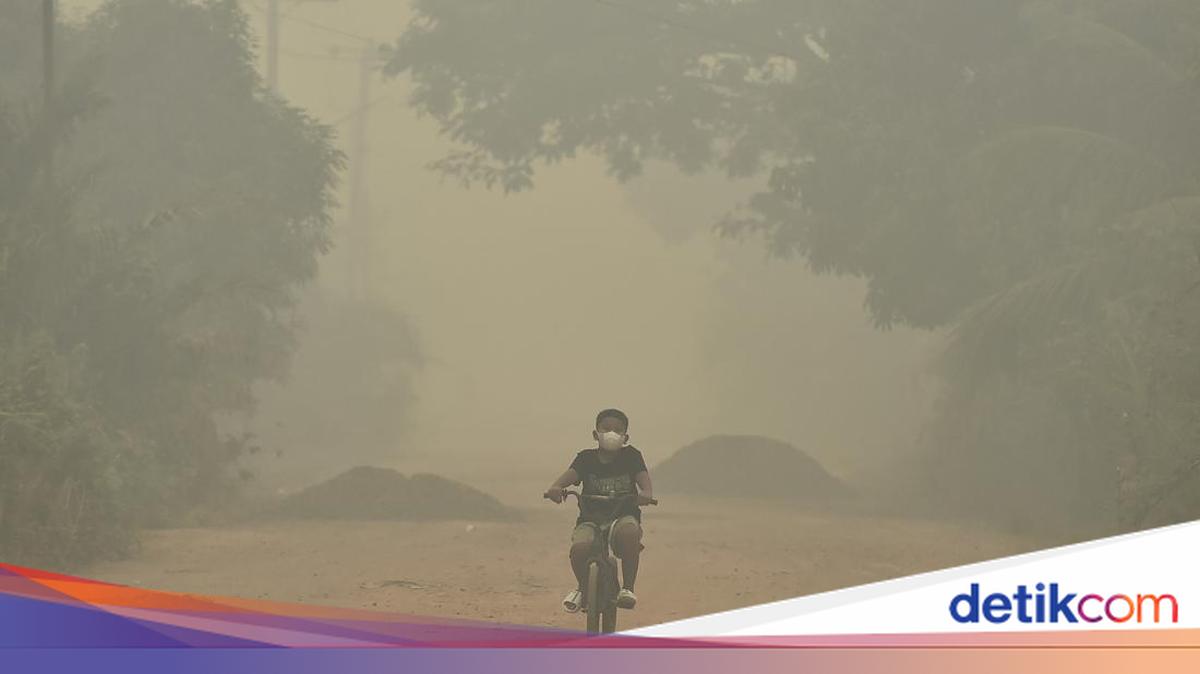
Muhammadiyah’s Central Executive Board (PP Muhammadiyah) has expressed concern over forest and land fires, particularly those in Sumatra and Kalimantan. It said the fires must not be normalised as an annual disaster.
“Muhammadiyah stresses that forest and land fires must not be normalised as an annual disaster that continues to burden the people,” the organisation said, according to a statement on its official website on Wednesday (21 October 2026).
Muhammadiyah called on the government, law enforcement agencies and businesses to demonstrate commitment through concrete action to protect communities, punish violations, repair damage and prevent fires from recurring. It said it was ready to work with all parts of the nation to protect livelihoods and achieve fair and sustainable management of natural resources.
As well as causing severe environmental damage, the fires have directly created serious problems for communities, including health issues and disruption to education, loss of livelihoods and damage to Indonesia’s image internationally, particularly in neighbouring countries, Muhammadiyah said.
For Muhammadiyah, environmental protection is part of Islamic teaching: an expression of humanity’s trust as stewards of the Earth and a responsibility to future generations. The organisation said God had entrusted people with building the world but forbidden them from causing damage, citing verses from Surah Al-Baqarah 2:11, Al-A’raf 7:56 and Ar-Rum 30:41.
The fires in Indonesia are complex, from their underlying causes to their consequences, Muhammadiyah said. They are linked to natural conditions, human activity, natural-resource governance and other factors.
“The recurrence of forest and land fires demands a comprehensive review of policies and their implementation, together with clear accountability. The safety of the people and the sustainability of life must take precedence over economic and political interests, or the gains of particular groups,” Muhammadiyah said.
The following are the nine points in PP Muhammadiyah’s statement on forest and land fires in Indonesia:
Prioritise public safety and protection. While acknowledging measures already taken, Muhammadiyah called on central and local governments to mobilise all available capacity fully, promptly, extensively and in a highly coordinated manner to tackle the fires and protect the public. Healthcare, basic necessities and protection for vulnerable groups must be guaranteed. Children, older people, pregnant women, people with disabilities and those with health vulnerabilities require particular attention. The public is entitled to clear and open information about environmental conditions and the protective measures needed.
Improve governance and ensure sustained prevention. President Prabowo Subianto has a strong political commitment to managing natural resources in accordance with the Constitution, particularly Article 33 of the 1945 Constitution, Muhammadiyah said. It called on the government to adopt strategic measures and fundamentally reform policies on forests, land and natural resources, with the public interest and environmental sustainability as priorities. Prevention must be a consistent, year-round responsibility, backed by serious oversight and adequate resources. The government must review permits and business practices that increase the risk of environmental damage, and stop abuses of authority, conflicts of interest, corruption and collusion in natural-resource management.
Enforce the law firmly and impartially. Law enforcement agencies should fully and transparently investigate suspected arson, negligence and other violations that cause or worsen the fires. Prosecutions should extend to individuals, companies, those who ordered or profited from the acts, and anyone proven to have protected those responsible or obstructed enforcement. Any suspected involvement by officials, security personnel or law enforcement officers should be investigated independently and accountably. Power, office and financial influence must not shield anyone from legal accountability or obstruct justice.
Align central and local government policies and action. Governors, regents and mayors, sub-district heads, and village or urban-ward leaders in affected and fire-prone areas—particularly in Kalimantan and Sumatra—should ensure that prevention, response and recovery measures are consistent and coordinated with the central government. Central and local governments must provide support, clarify responsibilities and cooperate across administrative boundaries down to the village and urban-ward level. Differences in authority must not hinder public protection. Implementation, spending and results must be openly accounted for, including the accountability of officials found negligent. Central and local policies must be aligned and must not conflict in addressing the fires.
Hold businesses responsible. Businesses should conduct their activities ethically, prevent fires in areas under their responsibility and avoid shifting the costs of environmental damage onto communities. Environmental compliance must be demonstrated through concrete action, rather than limited to administrative requirements or corporate social-responsibility programmes. Businesses found responsible must face legal consequences and restore damage and compensate for losses in accordance with the law.
Restore communities’ livelihoods and the environment. The government should ensure sustained support and recovery for affected communities, including the restoration of health, education and livelihoods. Forests and land must be restored in earnest so that the damage is not passed on to future generations. Local communities and smallholders should be protected and supported to manage land sustainably without burning. Recovery policies must be fair and involve affected communities.
Strengthen public responsibility and solidarity. Muhammadiyah urged the public not to clear or prepare land by burning, to protect the environment, and to report fires and suspected violations promptly to the authorities. Concern for others should be expressed through humanitarian assistance, protection for vulnerable groups and participation in public oversight. The government and authorities must protect people who report concerns in good faith.
Mobilise practical action across Muhammadiyah. Muhammadiyah leaders at every level, ’Aisyiyah and other autonomous organisations, the Environmental Council, the Disaster Resilience Institute (LRB) or Muhammadiyah Disaster Management Center (MDMC), and relevant Muhammadiyah charitable and business entities were instructed to strengthen healthcare, humanitarian aid, environmental education, community support and advocacy for affected residents according to their capacities. Muhammadiyah called on ’Aisyiyah and all parts of the organisation to work together. Muhammadiyah and ’Aisyiyah universities were encouraged to contribute through research and community service. All efforts should be coordinated, inclusive and reach those in need. The organisation urged its members to embody the spirit of Al-Ma’un and Muhammadiyah’s commitment to humanitarian action and service for the welfare of humanity and the environment.
Reaffirm commitment and mutual cooperation. Muhammadiyah reiterated that forest and land fires must not be normalised as an annual disaster that continues to burden the people. The commitment of the government, law enforcement agencies and businesses must be demonstrated through practical measures to protect communities, punish violations, repair damage and prevent further fires. All parts of society should continue working together to address this serious problem. Muhammadiyah said it was ready to cooperate with all elements of the nation to protect livelihoods and promote fair and sustainable management of natural resources. It concluded by praying that God would continue to grant Indonesia help, blessings and mercy.
Source: jawawa.id (https://jawawa.id/newsitem/muhammadiyah-forest-and-land-fires-must-not-be-normalised-as-an-annual-disaster-1792554719)
Originally published by detikcom (https://news.detik.com/berita/d-8716685/muhammadiyah-karhutla-tak-boleh-dinormalisasi-jadi-bencana-tahunan), translated from Indonesian