
Muhammadiyah Builds Infusion Factory in Malang with Investment Value of Rp18 Billion
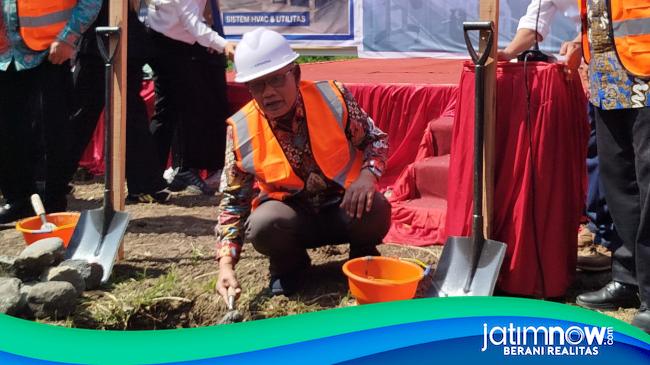
Muhammadiyah has officially begun construction of an infusion factory in the Karangploso area of Malang Regency, marking the organisation as the only religious mass organisation (ormas) in Indonesia to own an infusion factory. PP Muhammadiyah Chairman Haedar Nashir stated that the construction of this infusion factory is an initial milestone in expanding Muhammadiyah’s role in Indonesia’s development. He noted that there has been a negative stigma attached to religious mass organisations entering industrial management, such as building this infusion factory, whereas managing the industrial sector is part of social and religious practice that governs relationships between humans and with the environment. “We want to provide an understanding that this is a narrow view of religious movements, and even a narrow view of religion itself. Because religion, in a mature understanding, is not only about aspects of faith and worship, but also morals and muamalah, worldly muamalah, which encompasses all matters interacting with fellow human relationships and the environmental dimension,” he said during the Infusion Factory Groundbreaking in Karangploso, Malang, on Thursday afternoon. Haedar explained that Muhammadiyah currently has 130 hospitals and 231 clinics that can serve as a market for the infusion products of PT Suryavena Farma Indonesia, the infusion factory company owned by Muhammadiyah. According to him, the need for infusions is a basic requirement in the medical world alongside other medicines. “We have 130 hospitals and hundreds of clinics; if we do not serve them with our own strength, we usually use the services of others. We will start with something we can most feasibly do within the hospital business ecosystem. We will move into the field of medicine, and many things usually follow once we start something else,” he clarified. The hope is that the construction of the infusion factory and Muhammadiyah’s entry into several other business sectors, including mining and palm oil management, will provide independence and benefit to the community, so that when needed, there will be no need to ask for donations from various parties, including the government. “There must be an Islamic organisation with relatively strong potential to move even further forward, so that we can own this Indonesia ourselves, not hand it over to other irresponsible parties,” he added. Meanwhile, PP Muhammadiyah Chairman for Economy, Business, and Halal Industry, Muhadjir Effendy, stated that the investment value of this infusion factory is Rp800 billion, with a production capacity of up to 15 million bottles of infusion per year. The factory occupies a land area of 14 hectares in Ngijo Village, Karangploso District, Malang Regency, of which three hectares are allocated for an integrated industrial zone. “I hope that by mid-2027 this factory can begin production. The factory investment value is Rp800 billion excluding the land; UMM (University of Muhammadiyah Malang) is one of the shareholders. So the land belongs to the University of Muhammadiyah Malang, while the factory itself involves major hospitals within the Muhammadiyah network,” said Muhadjir Effendy. Muhadjir is optimistic that the construction of this infusion factory will meet the infusion needs of approximately 130 Muhammadiyah hospitals and 231 clinics across Indonesia, as for the past two years Muhammadiyah has collaborated with a state-owned pharmaceutical producer for infusion supplies at its medical facilities. If possible, the infusions could also supply the needs of other hospitals and clinics in Indonesia. “We know that infusion is one of the materials greatly needed by all hospitals and all doctors; there is no special prescription, so it is very generic. With infusion, no one dares to prescribe it, and from a risk management perspective, it is easy to manage. Later, when we produce it ourselves with our own factory, we hope it will be far more efficient,” he concluded.