
Muhammadiyah Amid the Pull of Salafism and Traditionalism on Social Media
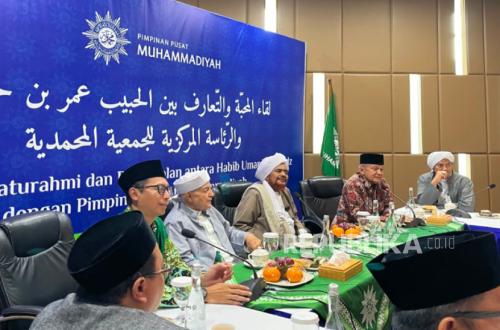
The visit by Habib Umar bin Hafiz, head of Darul Musthafa in Tarim, Yemen, to the Muhammadiyah Central Leadership office in Jakarta on Monday, 12 October 2026, was more than a meeting between Islamic figures. In the digital sphere, it developed into a contest of narratives about creed, religious authority, organisational identity and the direction of religious life among Indonesian Muslims.
On one hand, the visit offered an opportunity to strengthen Islamic solidarity, scholarly dialogue, and educational and humanitarian cooperation for Palestine. On the other, a number of social media posts accused it of being part of an effort to “make Muhammadiyah like NU” and weaken its commitment to eradicating superstition, religious innovations and khurafat (TBC).
The controversy shows how an institutional event can become an identity struggle amid competing Salafi and Islamic traditionalist narratives. Neither camp, however, is homogeneous. Not all Salafis opposed the visit, just as not all Nahdlatul Ulama (NU) members and Habib Umar’s admirers share the same views.
From a meeting to a contest of narratives
At the meeting, which I attended alongside Buya Anwar Abbas, Habib Umar stressed the importance of using modern means to serve religion and the Muslim community. The delegation also outlined opportunities for cooperation on Qur’an study circles at Al-Aqsa Mosque and online education for Palestinian students.
Some online discussions, however, shifted attention away from the substance of the meeting and towards questions such as: Is Muhammadiyah changing its religious method? Does welcoming Habib Umar mean accepting all his religious views? Was the visit intended to protect the reputations of Habib Umar or Muhammadiyah figures who praised him?
Posts using phrases such as “Muhammadiyah is in disarray” and “turning Muhammadiyah into NU and Habib followers” linked the visit to controversies over Habib Umar’s scholarly credentials, remarks by Ustaz Adi Hidayat, criticism of the haul tradition, and developments in NU’s leadership.
This chain of arguments needs to be examined critically. Linking several events does not automatically prove that there is a planned strategy. Claims about hidden motives require evidence, not merely proximity in time or connections between individuals.
This is why it is important to distinguish facts, religious interpretations and speculation.
Salafism, traditionalism and the tradition of tajdid
Some Salafi circles emphasise purifying monotheism and caution towards practices they consider to lack a basis in Islamic law, including forms of tawassul (seeking intercession), istighasah (supplication for help), maulid celebrations, or veneration of figures deemed excessive. Various traditionalist and Habib Umar-admiring circles, meanwhile, regard respect for scholars, spiritual guidance, maulid recitations and haul commemorations as part of religious education and the preservation of scholarly ties.
These differences are legitimate subjects for scholarly discussion. There is no need to avoid criticism of evidence, hadith, tawassul, karamah (saintly miracles) or acts of worship. But criticism loses its value when it becomes sweeping labelling of individuals or organisations without sufficient evidence. Conversely, respect for scholars must not close off the space for scholarly evaluation.
For Muhammadiyah, the controversy touches on the history of its tajdid (renewal) movement, which dates back to 1912. Muhammadiyah takes the Qur’an and sunnah as its primary references, alongside ijtihad, the development of modern education, social services and the renewal of Muslim life.
Tajdid does not mean only rejecting certain traditions. It also means examining religious understanding, improving social practices and building institutions capable of responding to the challenges of the times. Muhammadiyah’s identity cannot be understood solely through the slogan of opposing TBC, but also through its work in education, healthcare, philanthropy, science and organised preaching.
For that reason, meeting scholars from different backgrounds does not in itself threaten the organisation’s identity. Dialogue is not the same as adopting all a guest’s views, just as humanitarian cooperation does not require uniformity on every question of Islamic jurisprudence.
Openness, of course, does not mean abandoning principles. Muhammadiyah has its own tradition of tarjih (weighing and selecting religious opinions), institutional mechanisms and organisational authority. Any view proposed as official policy must be tested through scholarly argument and accountable organisational procedures.
Source: jawawa.id (https://jawawa.id/newsitem/muhammadiyah-amid-the-pull-of-salafism-and-traditionalism-on-social-media-1792205424)
Originally published by Republika (https://opini.republika.co.id/berita/tn12y6451/muhammadiyah-di-tengah-tarikan-wacana-salafisme-dan-tradisionalisme-di-media-sosial), translated from Indonesian