
Muhaimin urges Creative Economy Masterplan to become instrument for asset commercialisation
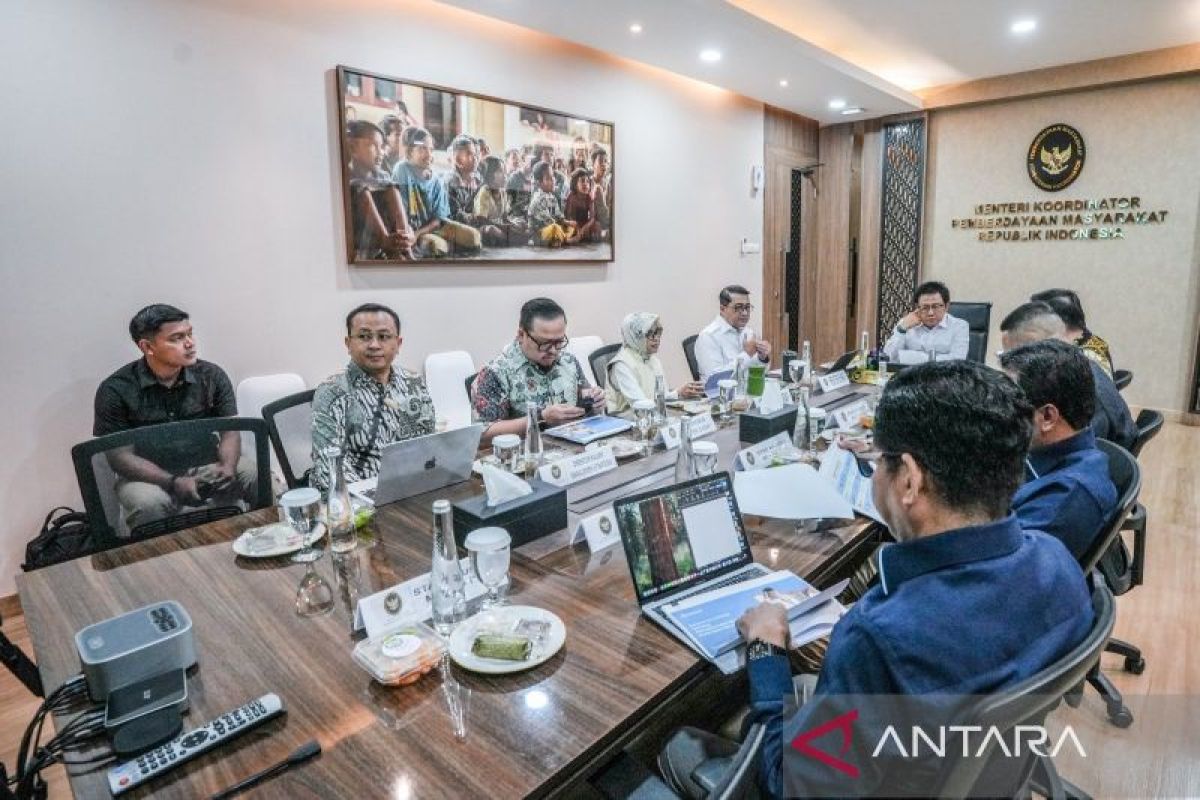
Jakarta (ANTARA) - The government is encouraging the implementation of the Creative Economy Masterplan (Rindekraf) 2026-2045 to move beyond being merely a policy for sector development, instead becoming an instrument to optimise creative assets and intellectual property into new sources of economic value.
The Coordinating Minister for Human Empowerment, Muhaimin Iskandar, believes that developing the creative economy through Rindekraf can serve as a tool to face development challenges, including strengthening and revitalising the middle class.
“This Presidential Regulation is extraordinary because it can serve as an important device to anticipate various challenges, including the decline of the middle class. The implementation of this regulation can be a driver to strengthen and rebuild the middle class,” Muhaimin stated in a briefing received in Jakarta on Friday.
According to Muhaimin, a key element of creative economy development is bridging the gap between research results and market needs. This step is necessary to ensure that knowledge, creativity, and innovation do not merely end as works or research findings, but can be developed into products with commercial value.
The Rindekraf 2026-2045 was established through Presidential Regulation Number 37 of 2026 on 2 July 2026. The document serves as the national masterplan for creative economy development over the next 20 years, outlining policy directions, strategies, targets, and the roles of various stakeholders.
In the context of strengthening business actors, the initial phase of Rindekraf implementation is outlined in the 2026-2029 Action Plan. The eight prepared strategies include the development of research and education, facilitation of funding and financing, provision of infrastructure, development of marketing systems, provision of incentives, facilitation of intellectual property, and the protection of creative outputs.
These strategies are expected to build the creative economy value chain from upstream to downstream. Creative actors are not only encouraged to produce works but also to gain access to financing, markets, infrastructure, and intellectual property protection so that their assets can be developed into revenue streams.
The Minister of Creative Economy, Teuku Riefky Harsable, stated that Rindekraf serves as the foundation to ensure that creative economy development is directed, integrated, and sustainable.
“The Ministry of Creative Economy has a role in ensuring that the development agenda for this sector is translated into concrete, measurable programmes that provide an impact for creative economy actors throughout Indonesia,” said Riefky.
In its implementation, the Ministry of Creative Economy is mandated to execute several strategic agendas, ranging from conducting policy studies on seven priority creative economy sub-sectors, developing seed funding schemes, and facilitating access to funding for creative economy business entities, to developing creative clusters, providing and revitalising creative public spaces, and strengthening intellectual property.
Strengthening intellectual property is a vital component, as creative assets can be developed through various commercialisation schemes. With support in financing, marketing, and industry access, the works and innovations of creative economy actors have the potential to generate recurring income while expanding business scales.
Riefky noted that the implementation of Rindekraf also requires cross-sector coordination to ensure the benefits of creative economy development reach more participants.
“Support regarding the implementation of Rindekraf, particularly concerning coordination across Coordinating Ministries and various ministries, is essential for accelerating realisation,” said Riefky.
He added that the implementation of Rindekraf will involve local governments, associations, academics, business actors, media, communities, and financial institutions. This collaboration is aimed at strengthening the ecosystem while accelerating the realisation of various creative economy development programmes.
“The ultimate goal of this team is to support local governments, associations, academics, businesses, media, and financial institutions, but the greatest benefits will eventually reach local governments, associations, and communities,” Riefky said.
Through Rindekraf, the creative economy is expected to become more than just a sector that produces works; it is intended to become a source of value addition, employment, and new revenue. Ultimately, strengthening the capacity and scale of creative economy actors is expected to pave the way for community groups to increase their income and rejoin the middle class.
Source: jawawa.id (https://jawawa.id/newsitem/muhaimin-urges-creative-economy-masterplan-to-become-instrument-for-asset-commercialisation-1789103296)
Originally published by Antara (Indonesian) (https://www.antaranews.com/berita/5736043/muhaimin-dorong-rindekraf-jadi-instrumen-komersialisasi-aset-ekraf), translated from Indonesian