
Muara Angke 'Trash Island' Nearly Cleared, Jakarta Provincial Government to Conduct Regular Inspections
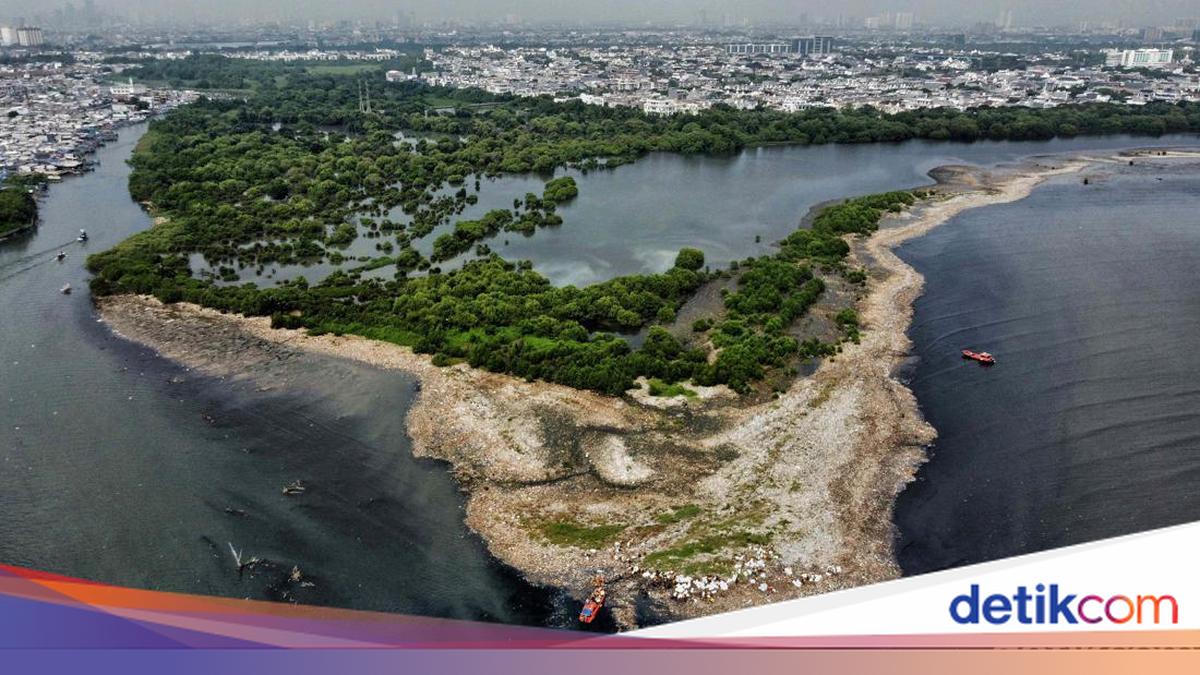
The Jakarta Provincial Government has stated that the cleaning process of the ‘trash island’ in the Muara Angke coastal area, North Jakarta, is nearing completion, with progress currently reaching 90 per cent.
Afan Adriansyah Idris, Assistant for Development and Environment of the Jakarta Regional Secretary, noted that the cleaning operation commenced on Wednesday (3/6/202_). He aims for the operation to be fully completed by Saturday (6/6/202_) afternoon. “As of now, progress is approximately 85 to 90 per cent. We ensure that by Saturday afternoon, all waste in the delta will have been removed,” Afan stated when confirmed on Saturday.
Afan explained that the cleaning process involves around 100 personnel, two amphibious excavators, and three waste transport vessels. All personnel have been deployed to remove the piles of waste clogging the coastal area. “There are 100 personnel in total. We are using two amphibious excavators and three ships to transport the waste. The entire operation has been running from Wednesday until Saturday afternoon,” he said.
Despite being near completion, Afan acknowledged that the primary challenge remains the influx of waste arriving from upstream areas. Consequently, the government is implementing preventative measures upstream by installing barriers and waste filters. “The biggest challenge is certainly the continuous arrival of waste from upstream. However, we are actively engaging our teams upstream to use barriers and filters to prevent waste from reaching the coast,” he added.
Following the completion of the cleanup, the authorities will conduct regular inspections to ensure the Muara Angke area remains clean and does not become re-polluted. Afan also urged the public to stop disposing of waste into drains and rivers. “We hope that residents will no longer dispose of waste into water bodies, whether it be drains, rivers, reservoirs, or ponds. If we do not, we are the ones who will suffer the consequences. Besides environmental pollution, this also has the potential to cause flooding, the impact of which will be felt by us all,” he concluded.