
MTI Warns Bali Tram Project Must Not Fail
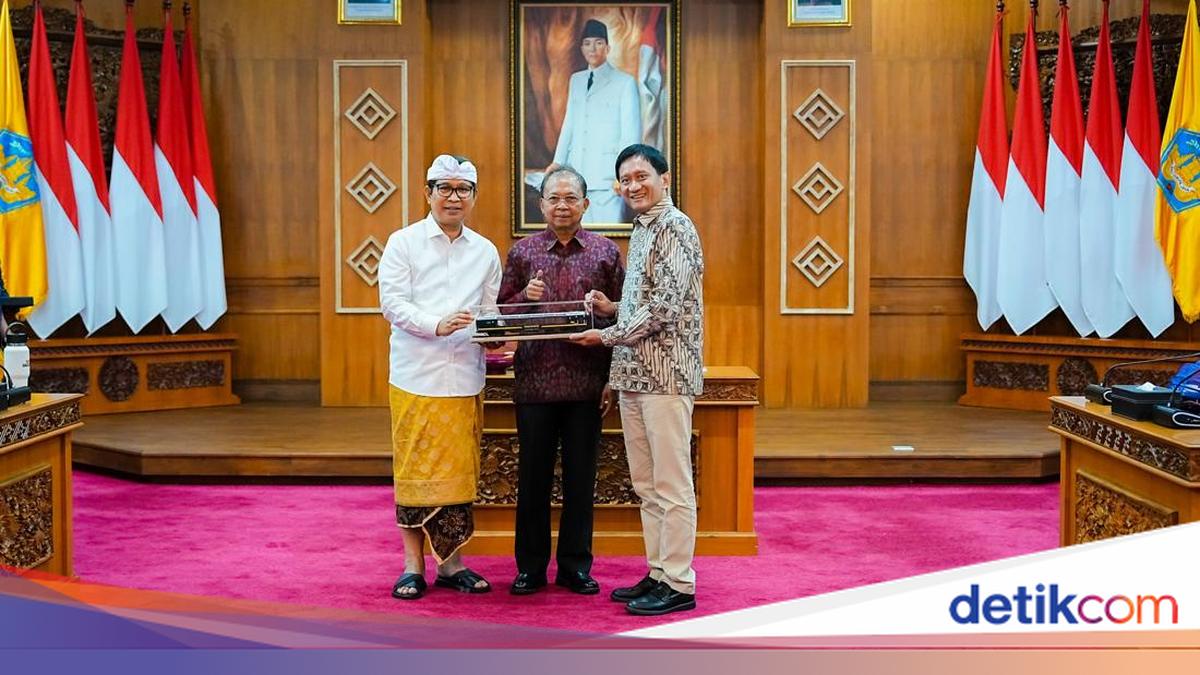
The Indonesian Transport Society (MTI) has warned the Bali Provincial Government and the Badung Regency Government against allowing the tram project to fail.
MTI Central Advisory Board member Djoko Setijowarno stated that Bali must learn from Semarang and Bogor, where similar rail development efforts failed. He suggested the implementation of local regulations, similar to those in Pekanbaru and Batam, to ensure the project’s continuity across different regional leadership terms.
“The battery-based electric tram project on the Ngurah Rai Airport-Kuta-Canggu route requires special attention from the Bali Local Government to ensure the plan does not remain merely an agreement on paper,” Djoko told detikBali on Thursday (3/9/2026).
He identified critical points that the Bali government must address, specifically the clarity of track sterilisation and the management of the Right of Way. Furthermore, narrow and mixed-use roads pose a risk of the trams becoming stuck in traffic.
“The characteristics of the Kuta-Canggu corridor are very dense and narrow. The Local Government must ensure that land allocation or road widening efforts truly realise a dedicated right-of-way,” he said.
While the project is considered aesthetically appropriate for tourist areas due to its lack of overhead electric cables, the emphasis must remain on track sterilisation and physical road spatial planning to ensure reliable punctuality for the trams.
Additionally, the Civil Engineering academic from Soegijapranata Catholic University warned against sidelining existing road-based public transport, such as Trans Metro Dewata. Instead, the tram must be directly and accurately integrated with bus networks, taxis, and other feeder services.
“The local transport ecosystem must be restructured to prevent social conflict once the tram is operational,” he added.
Djoko also highlighted the need for certainty regarding financial feasibility schemes and the sustainability of subsidies. He noted that if the Capital Expenditure (CAPEX) is disproportionately high compared to the Regional Budget (APBD) capacity, it could pose a risk, as Public-Private Partnership (PPP) schemes often struggle to reach feasibility agreements.
“The Bali Local Government must clearly map the budget burden distribution between the State Budget (APBN), provincial or regency budgets (APBD), PT KAI, and the private sector,” said Djoko.
He suggested utilising creative regional funding potential, such as allocating portions of the Foreign Tourist Levy or Specific Goods and Services Tax (PBJT) to support operational subsidies.
Furthermore, Djoko expressed concerns regarding the construction process, which could impact heavy tourist traffic in areas like Kuta and Canggu. Therefore, the Bali Provincial Government, Badung Regency Government, and local police must plan traffic engineering to prevent the local economy from being paralysed.
Finally, Djoko advised that there must be clarity regarding the operational institution of the tram. Issues such as the uncertainty of the concession holder, whether the operator will be a Regional-Owned Enterprise (BUMD) or a State-Owned Enterprise (BUMN), and the lack of a regional regulatory framework for urban rail operations need to be addressed.
“The Local Government needs to formalise an institution, for example, through a BUMD consortium acting as a Transport Authority in Bali, to professionally manage tariff integration, scheduling, and service reliability,” he concluded.