
MTI Urges Government to Address Transport Safety Issues Before Tragedies Recur
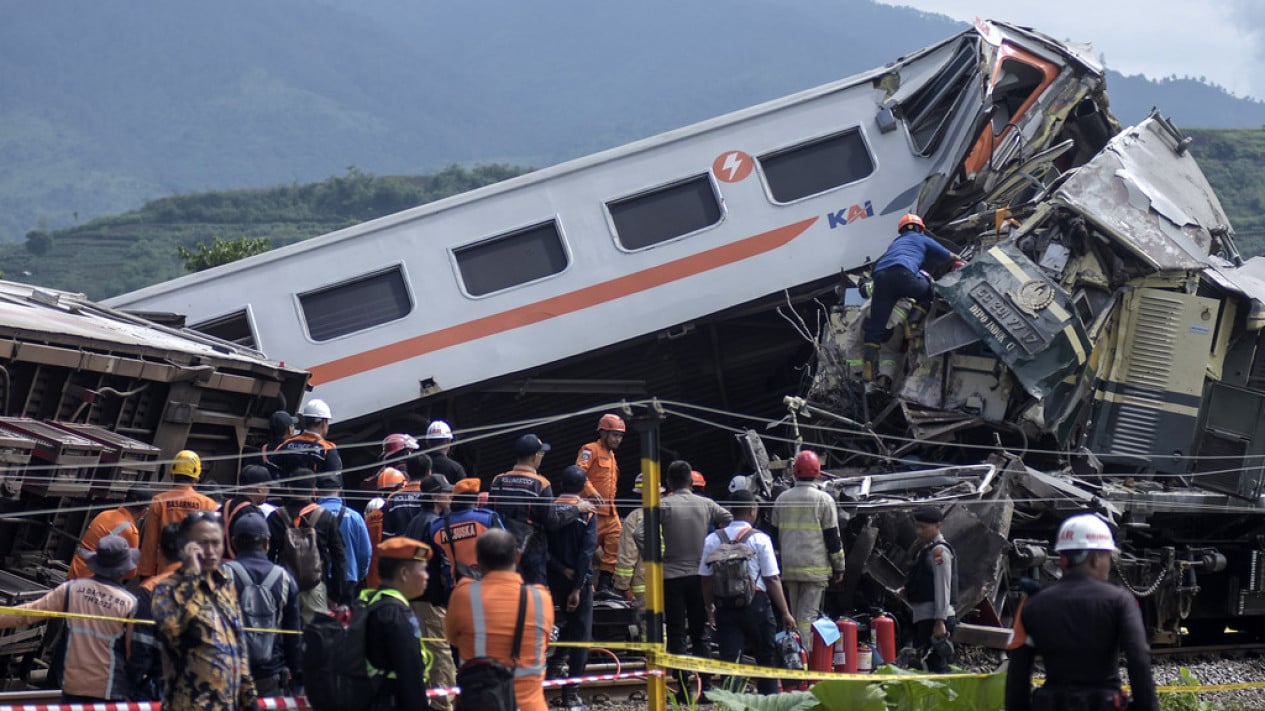
Jakarta, VIVA – The Indonesian Transport Society (MTI) argues that transport safety should be built through three aspects: education, engineering, and enforcement. However, in Indonesia, the system only responds after incidents occur rather than proactively preventing them. MTI advisory council member Djoko Setijowarno stated that this is not merely a momentary oversight but a reflection of the state’s negligence towards road transport safety. “More than 100 people die daily from accidents in Indonesia, mainly on roads,” Djoko said in a statement on Monday, 1 June 2026. He added that these figures are not from a single viral tragedy but from accumulated daily accidents often overlooked. “So far, there appears to be no positive development in road transport safety; instead, there is a gradual increase,” he said. The recent Bekasi Timur train incident is the latest evidence of systemic failure. Nearly a month later, the National Transportation Safety Committee (KNKT) still lacks a detailed chronology and factual data. Although the investigation is ongoing, the pattern of the problem is already emerging. The Bekasi Timur tragedy did not stem from a single error but from layered failures that could have been prevented due to human negligence, faulty infrastructure, suboptimal operational systems, and the absence of safety standards during emergencies. Djoko stressed that this reflects a lack of significant improvement in Indonesia’s road transport safety, which is even showing an increasing accident trend. “Prevention is cheaper than post-accident handling,” he said. The incident, which claimed many lives, has not only drawn public attention and empathy for victims but also highlighted Indonesia’s suboptimal transport safety standards. The challenge is growing more complex as safety standards fail to keep pace with high public reliance on daily transport. BPS data shows hundreds of thousands of passengers using trains daily throughout 2025. Meanwhile, over 300,000 buses operate on roads, and 145 million motorcycles dominate movement across Indonesia. At this scale, a single safety gap can turn into a mass tragedy within seconds. Tulus Abadi, chairman of the Forum Konsumen Berdaya Indonesia, stressed that risk mitigation cannot rely solely on user behaviour.