
MTI: Transfer of Kepulauan Seribu Transport Management Requires System Readiness
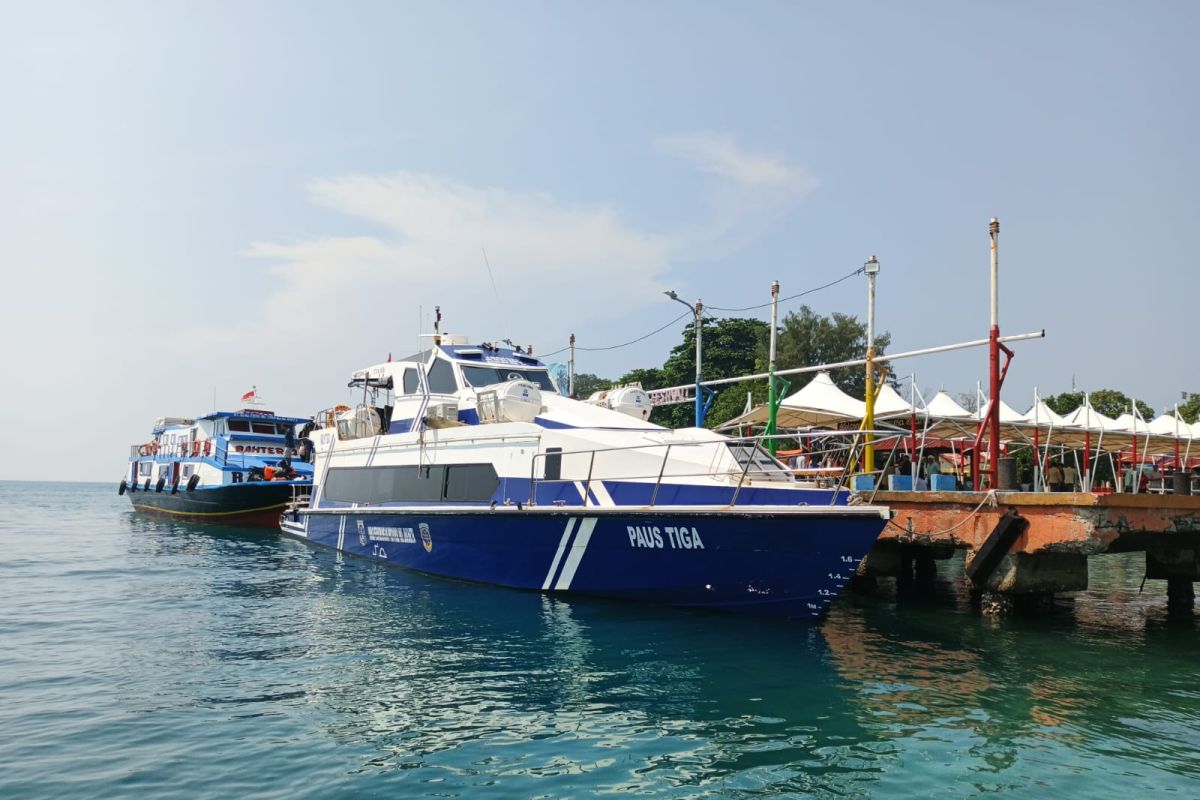
The Indonesian Transportation Society (MTI) Advisory Board member Djoko Setijowarno has said that transferring management of sea transport to the Thousand Islands from the Jakarta Transportation Agency to PT Transjakarta will require regulatory restructuring, the establishment of Minimum Service Standards (SPM), and readiness of an integrated ticketing system.
Djoko said in an electronic message on Wednesday that this is necessary because water transport management has so far involved many parties, including the Jakarta Transportation Agency, the Port Technical Implementation Unit (UPT), the Harbourmaster and Port Authority Office (KSOP), as well as private operators or local communities.
Furthermore, he said, water transport in the Thousand Islands presents its own dynamics because it directly confronts the characteristics of an archipelagic region, marine environmental conditions, and governance challenges.
First, there are high investment and operational costs. Djoko noted that fuel consumption and operational costs for sea vessels, especially speedboats, are very high because fuel oil consumption is far more wasteful than land transport per passenger-kilometre.
“Fleet maintenance, high salinity levels trigger rapid corrosion on ship hulls, engines, and dock infrastructure, thereby shortening asset service life and demanding very high periodic maintenance costs,” Djoko said.
“Dependence on the regional budget (APBD) to keep fares affordable for local residents. This service requires a Public Service Obligation (PSO) scheme or substantial fare subsidies from the Jakarta Provincial Government on an ongoing basis,” Djoko stated.
In addition, there are challenges of weather vulnerability and climate change. Oceanographic conditions make vessel operations highly dependent on weather dynamics, such as seasonal winds, for example westerly winds and high waves that can halt sailings for several days.
On the other hand, siltation of shipping channels, coral reefs and coastal erosion often make port or dock entrance channels shallow, limiting the size of vessels (draft) that can safely berth at certain islands.
Another challenge is limited infrastructure and supporting facilities. Djoko said dock and navigation standards, as well as the quality and capacity of docks on each island, are not yet uniform.
“Many docks are not yet equipped with night navigation systems or adequate cargo loading and unloading facilities,” Djoko revealed.
Furthermore, he continued, the provision of clean energy and plans to transition towards e-boats or electric-powered vessels face challenges in electricity availability (charging stations) and renewable energy supply on small islands.
Djoko proposed that the management pattern for water transport to the Thousand Islands could emulate BP Batam.
BP Batam, he said, focuses on operational management, infrastructure, and port business, which in Jakarta’s case would be represented by PT Transportasi Jakarta (Transjakarta).
However, functions related to shipping safety, maritime law enforcement, and issuance of vessel seaworthiness certification remain under the authority of the Special Batam Harbourmaster and Port Authority Office (KSOP) of the Ministry of Transportation.
Meanwhile, a number of vessels owned by the Jakarta Provincial Government and operated by the Jakarta Transportation Agency should be handed over to sea vessel operators capable of operating them.
“In this way, it does not burden PT Transjakarta in managing transport to the Thousand Islands,” Djoko concluded.
Source: jawawa.id (https://jawawa.id/newsitem/mti-transfer-of-kepulauan-seribu-transport-management-requires-system-readiness-1786506808)
Originally published by Antara (Indonesian) (https://www.antaranews.com/berita/5690299/mti-alih-kelola-transportasi-kepulauan-seribu-butuh-kesiapan-sistem), translated from Indonesian