
MTI Questions Fuel Subsidies, Says It's Time to Redirect Them to Public Transport
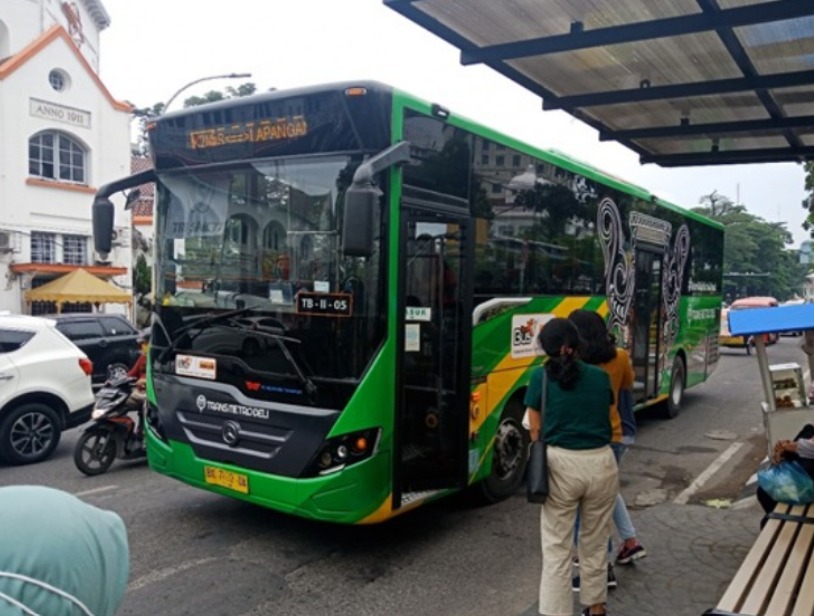
Transport observer Djoko Setijowarno assesses that the state budget (APBN) continues to be overshadowed by the never-ending puzzle of energy financing. “One of the expenditure items that most drains our fiscal energy is the Fuel Oil (BBM) subsidy, which unfortunately often misses the target of social justice,” Djoko told Media Indonesia on Sunday (14/6/2026). According to him, the amount of fuel subsidies always fluctuates annually. This occurs because the energy expenditure budget in the APBN is heavily influenced by three main factors: the Indonesian Crude Price (ICP), the rupiah exchange rate against the US dollar, and the volume of public consumption. He explained that the realisation of fuel subsidies in 2022 soared to Rp 551.2 trillion, before falling to Rp 375 trillion in 2023, and shrinking sharply to Rp 113.3 trillion in 2024. However, this figure surged significantly again in 2025 to Rp 394.3 trillion, before finally being set at Rp 210.1 trillion in 2026. Djoko Setijowarno, who serves as a Central Advisory Board member of the Indonesian Transportation Society (MTI), revealed that the transportation sector is the largest contributor, accounting for 40% of total national fuel consumption. Yet ironically, data from the Ministry of Energy and Mineral Resources (ESDM) shows that 93% of subsidised fuel consumption is actually enjoyed by the wealthy who own private vehicles, both two-wheelers and four-wheelers. “And the rest is enjoyed only by freight transport at 4% and public passenger transport at 3%,” stated the academic from the Civil Engineering programme at Soegijopranoto University bluntly. Therefore, regarding this situation, the necessary strategic solution is the acceleration of public transport programmes in the regions. This step is crucial, considering the President’s vision targeting Indonesia to become the fourth largest developed country in the world by 2045. One of the main indicators of a developed country is an established public transport system. With only 19 years remaining until 2045, this nation needs to learn from the success of Transjakarta, which has been running for 20 years. He continued that a special programme for accelerating the improvement of public transport in the regions should be implemented starting now. Moreover, the facts show that current conditions are still far from expectations. Out of 514 regional governments in Indonesia, only 45, or around 9%, have improved their public transport systems to become more modern. More tragically, of that small number, only a fraction are self-sufficient. Currently, only two regional governments still depend on APBN funds for their operations, namely Balikpapan City through Balikpapan City Trans and Manado City with Trans Manado. Djoko Setijowarno stressed that rather than the APBN being allocated to generally subsidise Rp5 million for the purchase of electric motorcycles, it is believed it would be more impactful if redirected to stimulate regional governments in improving public transport. “If electric vehicle incentives continue, then the target areas must be revised. This subsidy should be prioritised for communities on small islands and in 3TP regions (Disadvantaged, Frontier, Outermost and Border) which face geographical constraints in fuel supply,” he concluded.