
MSMEs Remain Sluggish Due to Purchasing Power and Administrative Issues
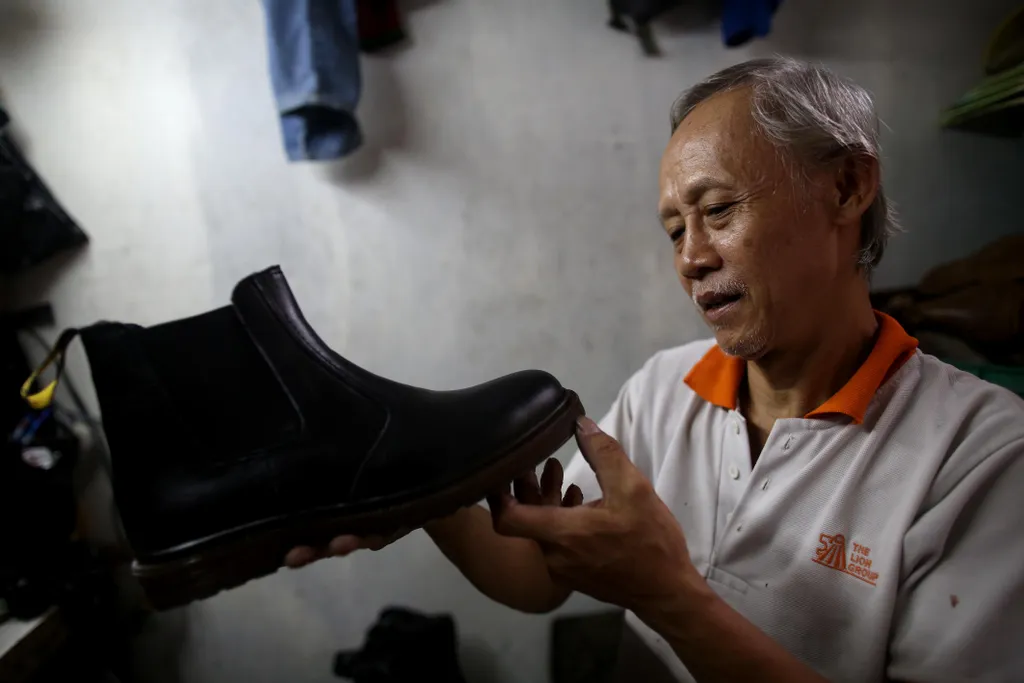
The distribution of micro, small, and medium enterprise (UMKM) credit is still far below the growth of banking credit on an industry-wide basis. Its share of total national credit is only about 17.16 percent.
By Agustinus Yoga Primantoro
23 Jun 2026 19:12 WIB · English
JAKARTA, KOMPAS – The distribution of micro, small, and medium enterprise (UMKM) credit is indicated to be growing slightly higher. Nevertheless, UMKM business actors still face challenges, including weakened purchasing power and administrative obstacles in credit approval.
The results of the analysis of the money supply (M2) released by Bank Indonesia (BI) on Thursday (23/6/2026) indicate that the distribution of micro, small, and medium enterprise (UMKM) credit in May 2026 grew by 0.6 percent year-on-year. This figure is indeed slightly higher compared to the achievement of the previous month, which reached 0.2 percent.
However, the growth of micro, small, and medium enterprise (UMKM) credit over the past year tends to still be in a slowing trend. As of May 2025, UMKM credit was recorded to have grown by 1.9 percent year-on-year. In fact, the disbursement of UMKM credit even experienced a decline or contracted by -0.6 percent in February 2026.
The Secretary General of Sahabat UMKM, Faisal Hasan Basri, stated that the weakening purchasing power of the community has been felt by micro, small, and medium enterprises (UMKM). As a result, they tend to hold back on expansion while waiting for economic conditions to improve.
“The banking sector is also concerned about the risk of default, leading to a more selective approach in disbursing their funds. As a result, there has been a slowdown in credit distribution,” he stated when contacted from Jakarta.
This condition is reflected, among other things, in the development of credit based on its usage type. The expansion of MSME credit in May 2026 primarily stems from a 12.5 percent year-on-year growth in investment credit. Conversely, working capital credit has actually decreased or contracted by 4.5 percent.
On the other hand, access to credit for MSMEs is also hindered by administrative matters. According to Faisal, many MSME actors have not yet prepared financial reports in accordance with standards. This results in difficulties for banks in conducting credit assessments.
“Actually, the majority of over 60 million MSMEs in Indonesia are in the micro category, whose financial reports are still very simple and mixed with personal and business financial records,” he said.
When they want to take out a loan, the procedural requirements are also not easy for MSME actors. The filters from these procedural requirements are layered. In addition to passing the SLIK (Financial Information Service System), they must also pass the government credit integration system or program credit.
Contacted separately, the Chairperson of the Indonesian Micro, Small, and Medium Enterprises Association (Akumandiri), Hermawati Setyorinny, stated that currently, MSME actors tend to hold back on expansion due to weakened purchasing power. This has made MSMEs reluctant to take out working capital loans.
This condition is reflected in the more selective consumption behavior of the community when shopping. At the same time, the influx of imported goods provides options for the public regarding necessities that tend to be cheaper.
“When they want to take out a loan, the procedural requirements are also not easy for MSME actors. The filters from these procedural requirements are layered. In addition to passing the SLIK (Financial Information Service System), they must also pass the government’s credit integration system or program credit,” he stated.
He added that micro, small, and medium enterprises (UMKM) are also facing the risk of defaulting on loans due to the less conducive economic conditions. This has also become a separate consideration for banks in disbursing credit.
In relation to this, the government and the DPR have ratified the revision of Law Number 4 of 2023 concerning the Development and Strengthening of the Financial Sector (Law P2SK). This regulation includes provisions regarding write-offs and debt forgiveness for non-performing loans of MSMEs.
As regulated in Article 250, banks or non-bank financial institutions, whether in the form of state-owned enterprises or regional-owned enterprises, may carry out book write-offs and debt write-offs for non-performing loans of micro, small, and medium enterprises (MSMEs) in order to support access to financing.
“Such matters typically see minimal outreach to business actors in Indonesia. Therefore, the challenge actually lies in the socialization, implementation, and supervision of every government program,” said Hermawati.
He hopes that the policy of debt cancellation and write-off can target micro, small, and medium enterprises (UMKM) that truly need it. Moreover, in previous practices, this policy tended to be enjoyed by UMKM actors who no longer had any assets, rather than those who are still running their businesses.
Meanwhile, the government is working to improve access to financing for micro, small, and medium enterprises (UMKM). One of these efforts includes reducing the interest rates on the Prosperous Family Development Program (Mekar) loans from PT Permodalan Nasional Madani (PNM), from a range of 18-25 percent to 8 percent.
The Minister of Small and Medium Enterprises, Maman Abdurrahman, stated that this policy is an instruction from the President to support low-income communities, particularly women entrepreneurs in the ultramicro and supermicro sectors who are customers of PNM Mekar.
“The government provides a subsidy of around 10 percent, resulting in a decrease in the loan interest rate to 8 percent,” he stated in a press release on Monday (22/6/2026).
For more than a decade, millions of PNM Mekar customers have still been bearing relatively high loan costs. These costs are influenced by the model of assistance, coaching, and monitoring