
MSMEs Integral to Jakarta's Ecosystem, Not an Urban Problem
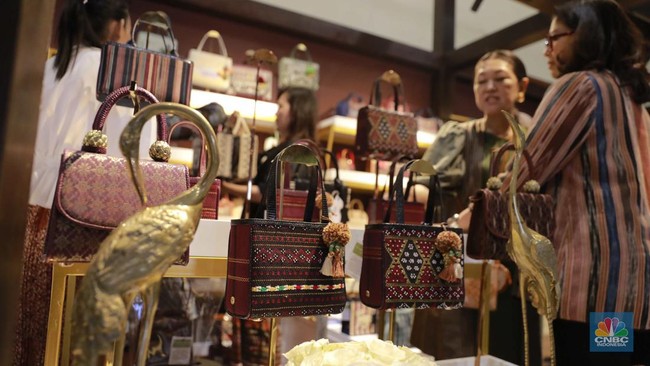
Jakarta is currently in a transition phase towards becoming a global city. Development efforts are marked by accelerated infrastructure, strengthened public transport, urban spatial planning, and initiatives to enhance the region’s economic competitiveness in international markets. These agendas are an objective necessity for a metropolitan city. Jakarta cannot avoid the demands of modernisation, orderliness, and spatial efficiency if it wishes to remain competitive in an increasingly developed world. However, amid these agendas, a pressing policy question arises: to what extent are small traders, street vendors (PKL), and micro, small, and medium enterprises (MSMEs) truly integrated into Jakarta’s development plans, rather than merely being subjects of empowerment programmes? This question emerges because there remains a gap between the vision of economic empowerment and the reality on the ground. Fiscally, the Jakarta Provincial Government has strong capacity. The 2025 Regional Revenue and Expenditure Budget (APBD) stands at approximately IDR 91.34 trillion, providing ample policy space to not only build physical infrastructure but also strengthen the small-scale economic structure sustainably. Within this framework, the Jakarta Provincial Government runs various MSME empowerment programmes, including Jakpreneur and cross-departmental initiatives. The Department of Industry, Trade, Cooperatives, and MSMEs (PPKUKM) focuses on entrepreneurship development through training, business incubation, licensing facilitation, and micro-business capacity building. Meanwhile, the Tourism and Creative Economy Department (Disparekraf) promotes strengthening the creative and culinary sectors as part of urban economic development. Additionally, the Food Security, Marine, and Agriculture Department (KPKP) oversees food business development and community-based food security. The Social Affairs Department (Dinsos) supports economic empowerment for vulnerable groups to foster self-reliance among ‘wong cilik’ (the common people). Policy-wise, Jakarta’s MSME empowerment instruments are comprehensive and structured. However, the main challenge lies not in programme availability, but in consistent implementation within urban spatial planning that still lacks support for small traders and MSMEs. On the ground, the informal sector is often most vulnerable during urban restructuring. Relocations and clean-ups are part of city order policies, but solutions to allow ‘restructured’ vendors to resume sustainable trading are not always provided. In the urban economic structure, street vendors and MSMEs are not peripheral phenomena. They form part of the city’s daily economic mechanisms operating at the micro level. They supply everyday urban consumer needs, create community-based employment, drive local economies to productivity, and often act as an economic buffer when the formal sector cannot absorb the abundant workforce. Experiences through various crises, including the Covid-19 pandemic, show the informal sector’s high adaptability and role as a buffer for household economic resilience in urban areas. Therefore, policy approaches towards this sector cannot solely focus on public space order. A more holistic approach is needed where urban planning and small-scale economic sustainability must proceed in tandem. In relocation contexts, policies should not merely be seen as physical business relocations. Relocations must be positioned as part of sustainable economic development plans. This requires several policy prerequisites, including connectivity to markets or consumer flows, location accessibility, business legality certainty, integration with urban mobility, and sustained business mentoring and development support. Without these prerequisites, relocations risk becoming economic pressures rather than solutions to structural issues faced by operators, especially small businesses. In this context, inter-departmental policy synchronisation is crucial. Economic empowerment policies cannot stand alone without being connected to spatial planning, transportation, licensing, and urban restructuring policies. Without such integration, policies risk working at cross-purposes: economic empowerment efforts on one hand, while economic space shrinks on the other. As a global city, Jakarta must not only build a modern physical image but also ensure the modernisation process remains socially and economically inclusive, embracing all segments of society. A healthy global city maintains a balance between economic growth, spatial order, and social justice. Within this framework, MSMEs and the informal sector should not be viewed as urban problems but as integral parts of the city’s economic ecosystem that need ongoing structuring and strengthening. Approaches emphasising only urban aesthetics without considering people’s economic structures risk creating spatial inequality, where city space becomes increasingly concentrated among certain economic groups. Ultimately, the measure of