
MSMEs Enter Digital Era, But Still Struggle with Financial Management
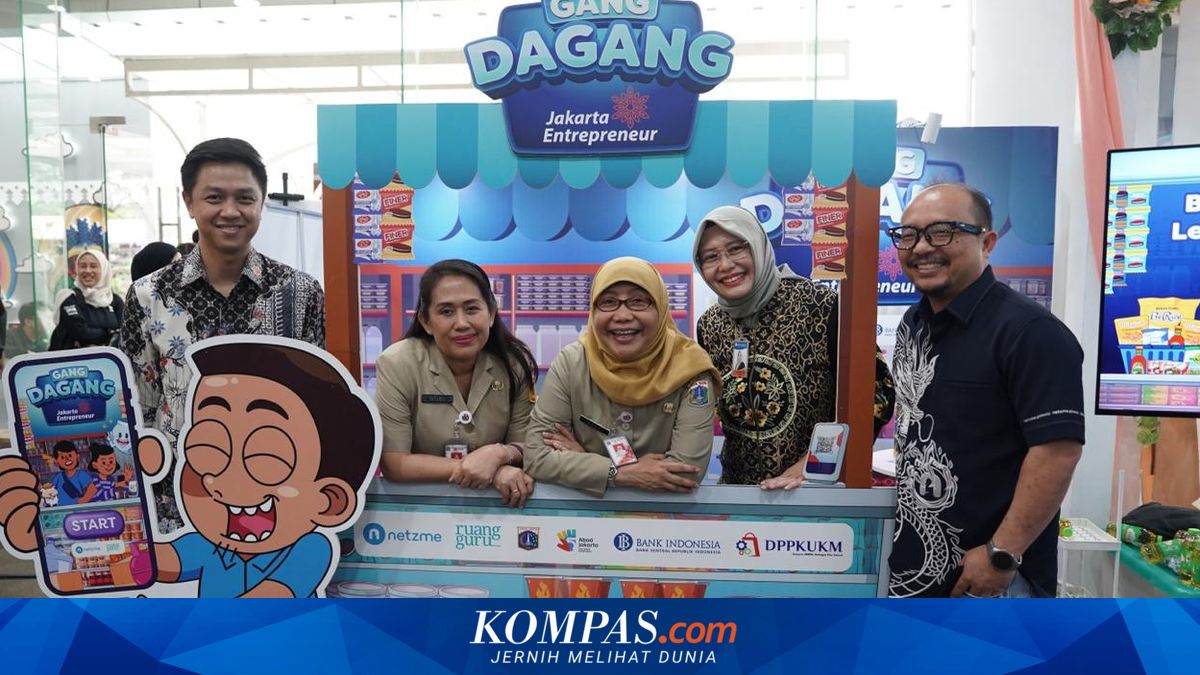
Digital transformation continues to reach micro, small, and medium enterprise (MSME) players. However, amidst the expanding use of digital payments, many entrepreneurs still face fundamental issues in managing their business finances. This condition is evident in the high number of MSME owners who mix personal and business finances, struggle to calculate the Cost of Goods Sold (COGS), and have not optimally utilised the digital payment ecosystem in their daily business activities.
The Jakarta Provincial Government, represented by the Assistant for Economy and Finance of the Regional Secretary of Jakarta, Suharini Eliawati, welcomed the collaboration between Netzme and Ruangguru through the ‘Gang Dagang’ programme, which was launched at the Jakarta City Hall on Monday (18/05/2026). “We welcome this programme, as it aligns with the spirit of Jakpreneur and the commitment of the Jakarta Provincial Government to encourage digital transformation and increase the capacity of MSME players,” said Suharini via a press release.
As contributors to more than 60 per cent of the national Gross Domestic Product (GDP), MSMEs are considered to need capacity building to keep pace with developments in digital-based payment systems and business management. Recognising this situation, Netzme and Ruanggable have introduced the ‘Gang Dagang’ programme, which offers financial and digital literacy learning based on gamification or interactive business simulations.
Unlike conventional training, participants are invited to run business simulations directly linked to daily digital transaction activities. Each learning module is also equipped with an enrichment class guided by Ruangguru so that the material can be applied to business management. In the first cohort, the programme will be attended by 50 MSME players who passed an open selection process, with a learning period of five months.
“We highly appreciate this collaboration between Netzme and Ruangguru as a tangible form of private sector contribution in supporting the improvement and empowerment of Indonesian MSMEs,” said Roes. “Moving forward, we hope such initiatives can synergise between the private sector, government, and authorities to continue accelerating MSME digitalisation, mastery of the payment ecosystem, and the strengthening of an inclusive and competitive regional economy.”
In its implementation, the programme integrates digital payment systems into the participants’ learning process. Every two weeks, participants also take part in digital transaction challenges to practice the use of non-cash payments in business activities. The CEO of PT Netzme Kreasi Indonesia, Vicky G. Saputra, stated that the strengthening of digital payment infrastructure needs to be balanced with increased literacy among business owners. “As a Bank Indonesia licensed Category 1 Payment Service Provider (PJP), we believe that digital payment infrastructure alone is not enough. Indonesian MSMEs need the accompanying literacy. Gang Dagang is our commitment to building an ecosystem that not only provides access but also enhances the capability of business owners so they can do more than just transact digitally, but also grow from those transactions,” added Vicky.