
MSMEs and Social Enterprises Face Funding Gap as Indonesia Impact Investment Summit Discusses Impact Investing
Access to finance for Indonesia’s micro, small and medium-sized enterprises (MSMEs) and social enterprises remains a challenge. The unmet funding need, known as the “missing middle”, is estimated at US$50.8 billion a year.
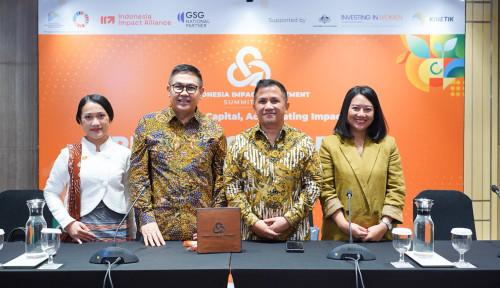
The issue was among the main focuses of the Indonesia Impact Investment Summit 2026, which brought together around 200 investors, business leaders and government representatives in Jakarta on Wednesday (21 October 2026).
The forum was initiated by the Indonesia Impact Alliance (IIA) and the Ministry of National Development Planning (Bappenas), with support from the Australian Government through Investing in Women and KINETIK. Discussions focused on strengthening impact investment: financing that seeks financial returns while generating measurable social and environmental benefits.
Leonardo A. A. Teguh Sambodo, Deputy for Food, Natural Resources and the Environment at Bappenas, said more than 62 per cent of national Sustainable Development Goal (SDG) indicators were on track. However, progress on social and environmental goals still needed to be strengthened.
“Our hope for the Indonesia Impact Investment Summit 2026 is not only to mobilise private capital, but also to accelerate the delivery of development benefits to the people who need them most,” Leonardo said.
According to IIA’s mapping, around 55 per cent of the enterprises surveyed needed financing of between US$100,000 and US$2 million. However, most global impact investment funds typically set a minimum investment of US$1 million.
This leaves some enterprises struggling to secure funding. Their businesses have outgrown microfinance but do not yet meet the criteria or have the capacity to access bank financing or large-scale venture capital.
Indonesia Impact Alliance executive director Atika Benedikta said local capital providers and financing intermediaries had an important role to play in bridging the gap.
“Through this forum, we want to bring together capital owners, investors, financing intermediaries and ecosystem supporters to collaborate in mobilising capital, so that more impact-driven enterprises can grow, create jobs and improve people’s welfare,” Atika said.
Alongside the shortage of funding, businesses’ internal readiness is a key factor in their ability to attract investment. Adisti Chandra, chief operating officer of Instellar Impact, said not all social entrepreneurs were ready to receive innovative investment.
Challenges include organisational governance and financial transparency. Accelerator programmes are therefore seeking to strengthen MSMEs’ business foundations and prepare them to meet investor requirements.
Closer coordination, she said, could help programme managers prepare enterprises to meet investment criteria while identifying the type of financing best suited to each business’s needs.
The government and other stakeholders hope the forum will strengthen collaboration between public funds, philanthropy and private capital. The effort is intended to widen access to finance for impact-driven enterprises, foster inclusive economic growth and support the vision of Indonesia Emas 2045.
Source: jawawa.id (https://jawawa.id/newsitem/msmes-and-social-enterprises-face-funding-gap-as-indonesia-impact-investment-summit-discusses-impact-investing-1792594240)
Originally published by wartaekonomi.co.id (https://wartaekonomi.co.id/amp/read642524/umkm-dan-usaha-sosial-hadapi-kesenjangan-modal-indonesia-impact-investment-summit-2026-bahas-investasi-berdampak), translated from Indonesian