
MSME Players Reap Benefits from Dieng GI Tourism
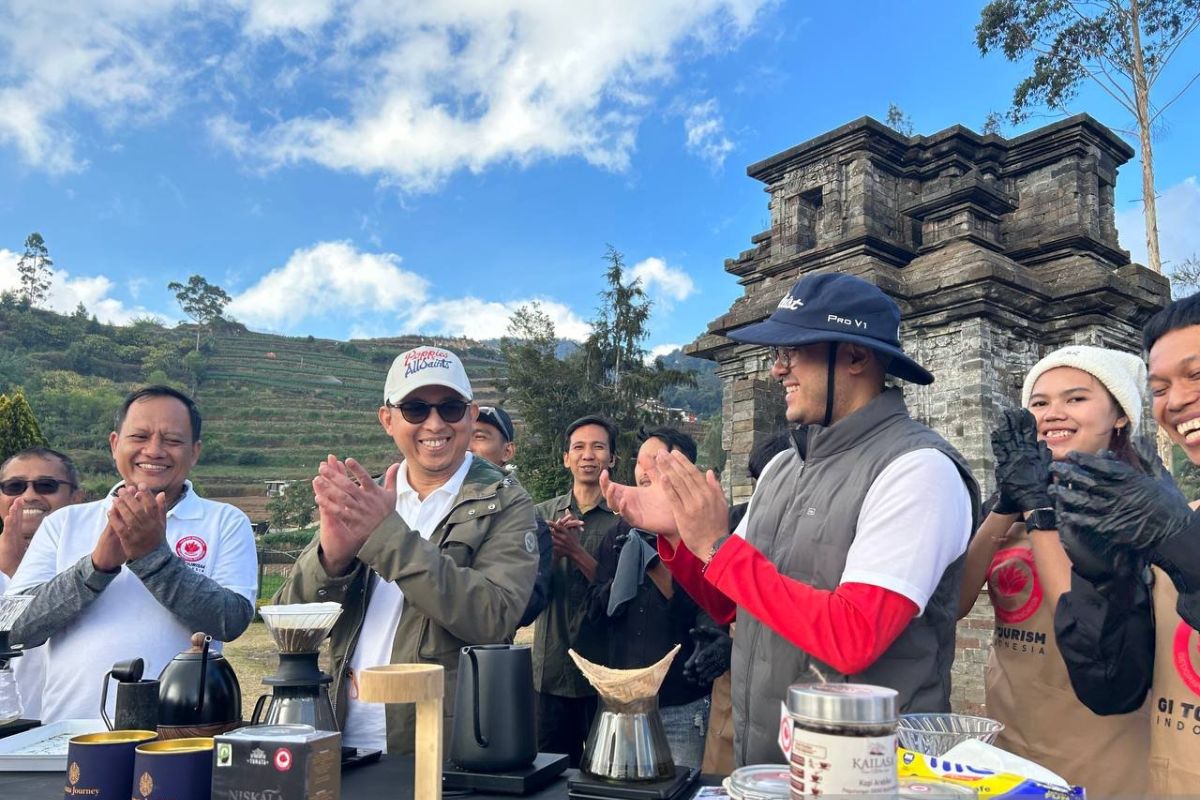
Wonosobo, Central Java — A number of micro, small, and medium enterprise (MSME) players claim to be reaping the benefits of the Geographical Indication (GI) Tourism concept in the Dieng Area, Wonosobo Regency, Central Java, which is being developed by the Directorate General of Intellectual Property (DJKI) of the Ministry of Law.
The owner of UD Podang Mas, Rumi Wikaningtyas, stated that one of the primary advantages of the GI Tourism concept in the Dieng region is that it helps them promote their products not only domestically but also internationally.
“We are fortunate because Carica only exists in Dieng, but the challenge lies in introducing the product; we had to participate in exhibitions everywhere when our product first appeared and was unavailable elsewhere. That was the struggle,” said Rulmi during a GI Tourism route trial in the Dieng Area, Central Java, on Tuesday (22/9).
UD Podang Mas has been operating since 1980, employing more than 25 local residents and collaborating with 10 Carica fruit collectors. On a daily basis, UD Podang Mas processes Carica fruit into cocktails, beverages, rujak, jams, strudels, cosmetics, and animal feed, requiring between 800kg to 1 tonne of fruit per day.
According to Rumi, since the early days of the Carica processing business, the company struggled with the high costs of constant promotion and the need to exhibit frequently. Since registering the patent for their processed Carica products, they have gained both legal protection and promotional assistance. Currently, processed Carica is recognised not only as a souvenir for travellers but also as a specialty item for tourists.
“We realise our products are linked to tourists, whether they are travelling for souvenirs or gifts. With GI Tourism, people recognise that this exists in Dieng; if someone visits Dieng, the proof is that they bring home Carica,” he added.
Furthermore, GI Tourism supports land conservation efforts in the Dieng Highlands, which are currently facing critical conditions due to the annual expansion of potato cultivation.
“The hope is that the impact will expand further to farmers in Dieng. Some farmers have not yet collaborated with us to market their agricultural products and are still planting potatoes, even though the annual exploitation of potato farming is damaging the environment,” Rumi explained.
Meanwhile, the Chairman of the Geographical Indication Protection Community (MPIG) for Dieng Highland Arabica Coffee, Turno, stated that the GI Tourism developed by the DJKI is helping to open up coffee trade routes to his region. Turno’s coffee plantation tourism is located in Babatan Village, Pejawaran District, Banjarnegara Regency, Central Java, approximately one hour’s drive from Dieng.
“Alhamdulillah, the coffee tourism route is developing thanks to this GI Tourism from the DJKI,” said Turno.
Head of Marketing at the Wonosobo Regency Tourism and Culture Office, Sri Fathonah Ismangil, welcomed the Dieng Area GI Tourism programme, noting it aligns with the Wonosobo Regency’s vision and mission.
“The Wonosobo Regency has a vision in our 20-year RPJPD, up to 2045, to realise Wonosobo as a leading, advanced, prosperous, and sustainable agribusiness tourism centre. This vision is closely related to the Dieng Area GI Tourism,” said Fathona.
Separately, the Director of Brands and Geographical Indications at the Ministry of Law’s DJKI, Fajar Sulaeman Taman, who personally monitored the GI Tourism route trial from Monday (21/9) to Wednesday (23/9), stated that this concept is a collaboration between the central government—including the Ministry of Law, the Ministry of Tourism, and the Ministry of Creative Economy—as well as local governments and business actors.
“We hope that through this collaboration, our geographical indication products will be protected,” said Fajar. The DJKI has designated Dieng as a pilot project for GI Tourism as a means of protecting intellectual property.
Geographical Indication (GI) is a sign indicating the origin of a good and/or product, where the geographical factors—including natural factors, human factors, or a combination of both—contribute to its quality. A GI provides a specific reputation, quality, and characteristic to the produced goods. The mark used for a GI can take the form of an e-ticket or a label attached to the product, which may include place names, regions, or a combination of words, letters, or other elements.
Source: jawawa.id (https://jawawa.id/newsitem/msme-players-reap-benefits-from-dieng-gi-tourism-1790139803)
Originally published by Antara (Indonesian) (https://www.antaranews.com/berita/5754056/pelaku-umkm-rasakan-manfaat-dari-gi-tourism-dieng), translated from Indonesian