
MSME Ministry urges farmers to build economic scale through business groups
The Ministry of Micro, Small, and Medium Enterprises (UMKM) is encouraging farmers to strengthen their business institutions by forming groups to build larger economies of scale, increase productivity, and enhance welfare.
Acting Deputy for Micro Enterprises at the UMKM Ministry, Riza Damanik, said in a press statement in Jakarta on Wednesday that institutional strengthening is one effort to overcome the challenges of the agricultural sector, which is often run on a small scale.
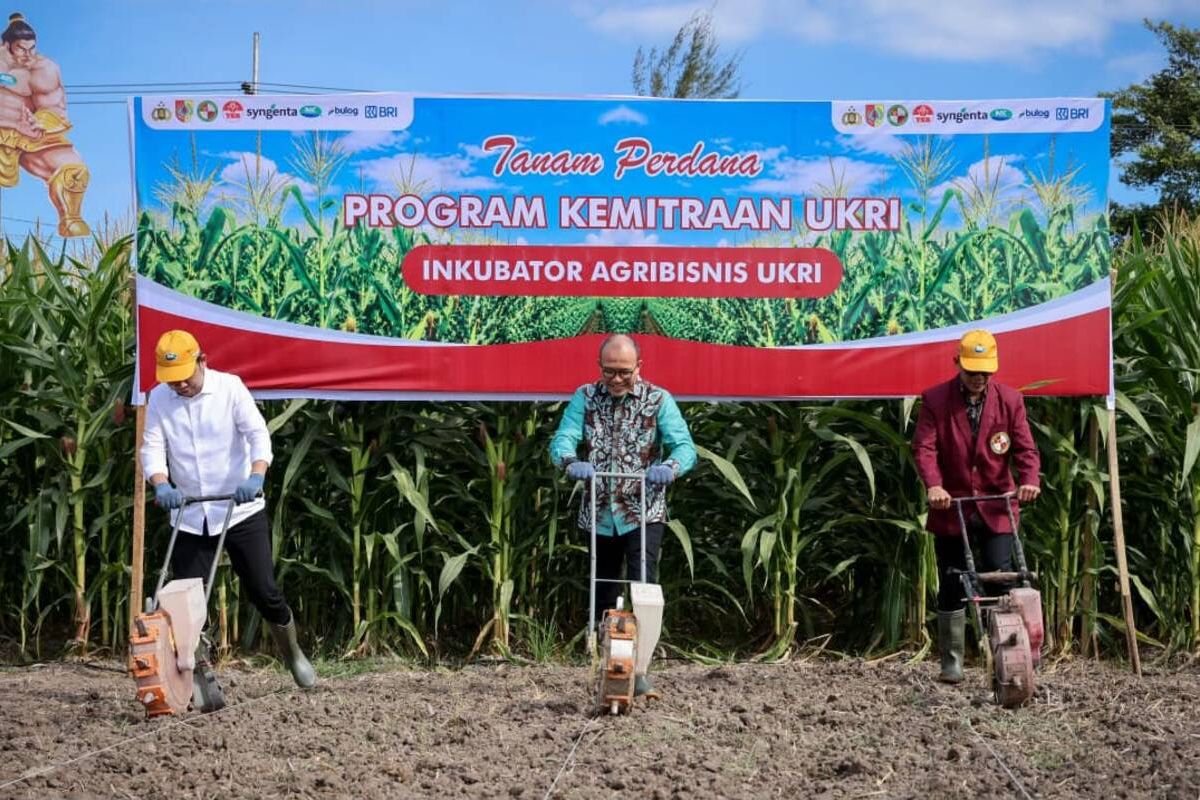
“There is nothing wrong with small plots of land. What we need to change is the way we manage them. When farmers form groups, they can purchase seeds, fertiliser, and other production inputs together, making it more efficient,” Riza said during a maize planting event in Jember Regency, East Java, on Tuesday (21/7).
He noted that the food sector is a national development priority. However, food security does not depend solely on increasing production but must also be accompanied by improving the welfare of farmers as the main actors in the agricultural sector.
“Therefore, various affirmative government policies must be utilised optimally to increase both productivity and farmers’ welfare,” he said.
Riza stated that one form of government support is provided through the Kredit Usaha Rakyat (KUR) scheme, which offers access to financing with subsidised interest rates. Farmers can access KUR loans of up to Rp100 million without additional collateral, in accordance with applicable regulations.
He stressed that the government will not tolerate any KUR distributors who request additional collateral for financing under Rp100 million.
“KUR is a government affirmative instrument to help farmers develop their businesses. Financing up to Rp100 million does not require additional collateral. If there are still requests for additional collateral, the public can report it to the government,” he said.
In addition to easier financing, Riza said KUR also provides flexible payment schemes tailored to the characteristics of agricultural businesses. One such scheme allows payment after harvest, enabling farmers to pay instalments according to the production cycle.
Furthermore, he assessed that strengthening farmers’ business institutions is also important to create efficiency in the production chain and increase competitiveness. Through business groups, farmers can jointly procure production inputs, expand access to financing, and have a stronger bargaining position in marketing their agricultural products.