
MSME Minister Announces KUR Distribution in East Java Reaches Rp37 Trillion
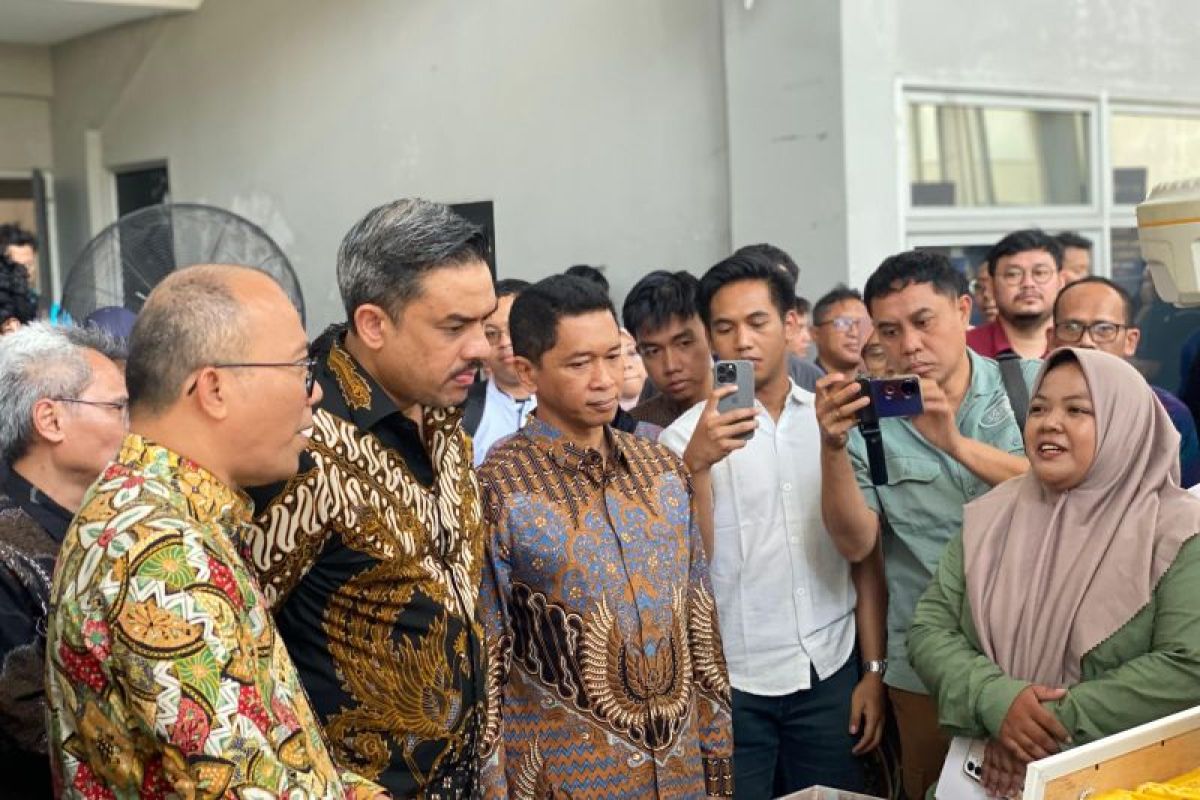
The Minister of Micro, Small, and Medium Enterprises (MSMEs), Maman Abdurrahman, stated that the distribution of People’s Business Credit (KUR) in East Java up to mid-September 2026 has reached Rp37 trillion, reaching approximately 643,000 debtors.
Maman noted that of the total Rp37 trillion, Rp20 trillion has been allocated to the productive sector.
“The total KUR distribution in East Java as of yesterday is Rp37 trillion with 6lar 643,000 MSME debtors, and Rp23 trillion has been allocated to the productive sector,” he said during the 2026 East Java Leading Entrepreneur Exchange and Mass KUR Signing at the Robotics Centre Building, Sepuluh Nopember Institute of Technology (ITS), Surabaya, on Wednesday.
Maman remarked that the large number of debtors indicates that KUR financing has become a vital instrument in supporting the development of MSMEs in the region.
Nevertheless, he assessed that access to capital alone is insufficient to ensure the sustainability of MSMEs, as business owners still face several issues such as licensing, certification, and market access.
“The most important thing today is the market, because our primary problem for MSMEs is that while certification and licensing are in progress and financing is being provided, our MSMEs often struggle to sell their goods,” he said.
He explained that market issues are critical because MSMEs may face difficulties in repaying loans if the products they produce are not absorbed by consumers.
Maman revealed that one of the current challenges regarding market access is the flood of imported products into the domestic market, forcing local products to compete with foreign goods.
Therefore, the Ministry of MSMEs is encouraging the strengthening of domestic industry through synergy with relevant ministries and agencies to control the influx of certain imported products that potentially suppress the competitiveness of MSME products.
In addition to financing and market strengthening, Maman emphasised the importance of synergy between the central government, provincial governments, and district/city governments with universities to build a sustainable MSME development ecosystem.
He stated that the presence of business incubators in universities, including ITS, can serve as a spearhead in mentoring MSMEs to ensure they can grow continuously.
“That is why we are working with universities to revitalise incubators, and hopefully, through this policy, high-quality MSMEs will emerge to meet our domestic needs,” he concluded.