
MSI: Stop Cassava Imports to Boost Prices and Open Bioethanol Market
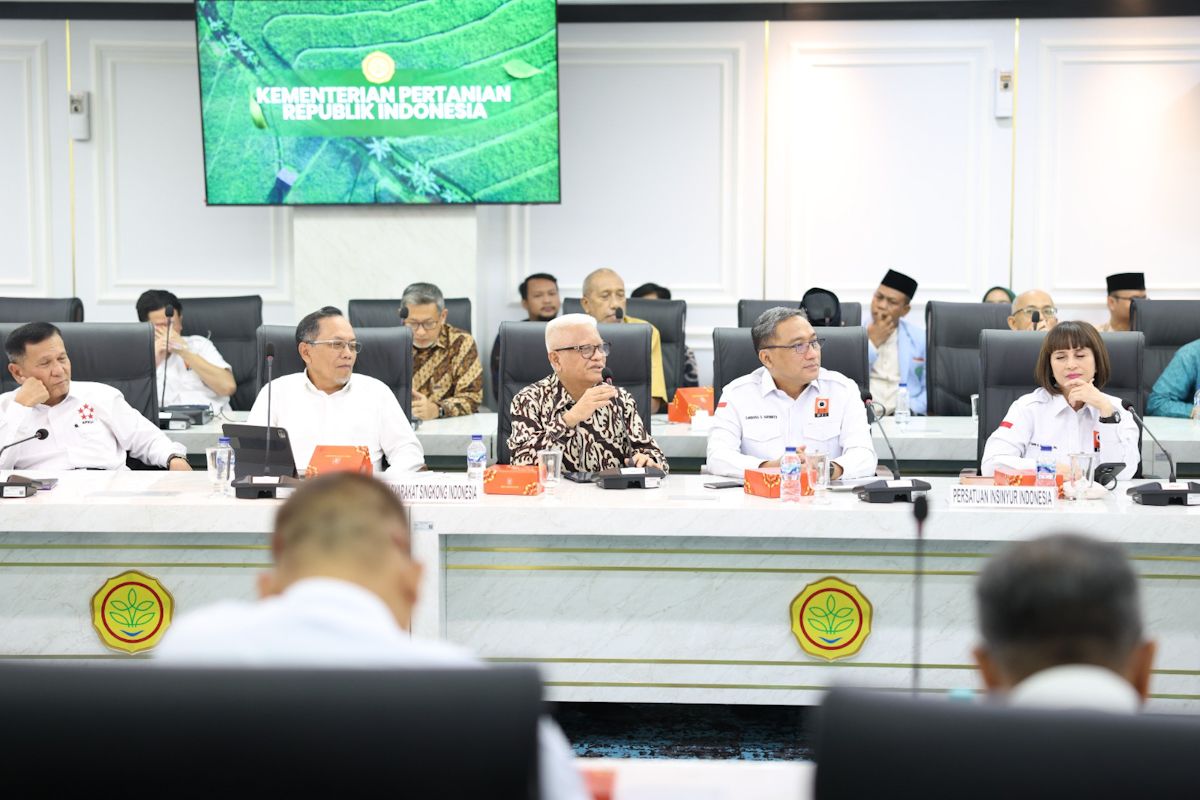
Jakarta (ANTARA) - The Indonesian Cassava Community (MSI) has stated that the government’s policy to halt cassava imports is boosting prices at the farmer level while simultaneously opening new market opportunities through the development of the bioethanol industry.
MSI General Chairman Arifin Lambaga said the policy is beginning to strengthen the domestic cassava market, with prices in several production centres now reaching around Rp2,400 per kilogram, while also opening new markets for farmers through the bioethanol industry.
“Alhamdulillah, especially in Lampung, which is one of the cassava production centres, the price is already good, around Rp2,400 per kilogram. We thank the Minister and the President for their support and several policies, such as stopping cassava imports,” said Arifin following an audience with the Minister of Agriculture, Andi Amran Sulaiman, in Jakarta on Wednesday.
The policy is considered to have a positive impact on cassava farmers. According to him, the reduction in import supply is making more domestic market space available for local farmers’ production.
Arifin noted that the strengthening of the domestic market needs to be accompanied by a gradual increase in production. This is crucial given that cassava demand is likely to rise alongside the development of the national bioethanol industry.
According to Arrol, the Minister of Agriculture’s push for bioethanol development could create a large-scale new market for the cassava commodity. The increasing demand for raw materials will provide opportunities for farmers to expand production and increase the economic value of cassava.
“This is a massive need. This is a very large market for us,” he said.
Consequently, Arifin expressed readiness to support the government’s programme towards E20. The association has also coordinated with cassava stakeholders in various regions to prepare the raw material supply.
“We are 100 per cent ready to support the E50 programme. The important thing is the availability of materials,” Arifin emphasised.
To support this raw material requirement, MSI stated its readiness to participate in the development of approximately 500,000 hectares of cassava land.
However, Arifin noted that large-scale development requires the strengthening of the upstream sector, particularly the provision of superior seeds, fertilisers, agricultural tools and machinery, as well as financing schemes.
Seed requirements are a primary concern. Arifin explained that one hectare of land requires approximately 8,000 to 10,000 cuttings. Therefore, developing hundreds of thousands of hectares requires the provision of seeds in very large quantities.
“The seeds must be superior varieties that can produce high productivity and good starch content. This is because processing for bioethanol depends on the starch content,” he said.
On the industrial side, MSI is also communicating with several investors interested in developing cassava processing into bioethanol.
“We have made several contacts with investors, particularly in cassava processing for bioethanol. Some investors are already prepared,” he said.
According to Arifin, market certainty or the presence of off-takers is a crucial factor for bioethanol investment to be realised promptly. Market certainty is also needed to ensure that the increase in farmers’ production is absorbed by the industry.
MSI proposes that the development of the bioethanol industry be carried out gradually and integrated with cassava production centres. One scheme being prepared is the core-plasma partnership model, allowing farmers to be directly involved as raw material suppliers.
Arifin believes that bioethanol development can be a vital part of national cassava downstreaming. In addition to opening new markets, the industry has the potential to increase the added value of the commodity while expanding farmer involvement in the energy industry supply chain.
MSI hopes that the synergy between the government, farmers, associations, investors, and industry will continue to be strengthened. Thus, import control policies can run in tandem with increased domestic production and the opening of new markets through bioethanol.
Previously, the Ministry of Agriculture had set the price of cassava at Rp1,350 per kilogram.