
MSCI Warning Raises Existential Questions for Indonesia’s Stock Market, Economist Says
MSCI Warning Raises Existential Questions for Indonesia’s Stock Market, Economist Says
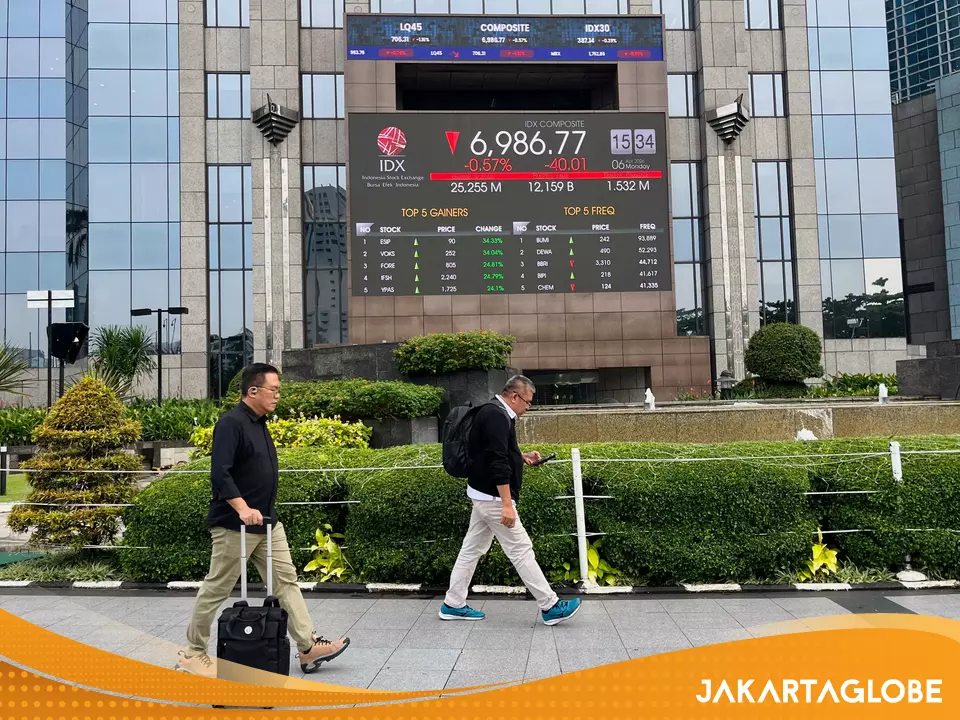
Jakarta. MSCI’s consideration of downgrading Indonesia from an emerging market to a standalone market represents a fundamental test of the country’s credibility in global capital markets, rather than merely a threat to stock prices, a leading economist warned on Friday.
Fakhrul Fulvian, chief economist at Trimegah Sekuritas Indonesia, said such a reclassification could severely diminish the Indonesian stock market’s relevance to international investors, potentially excluding it from widely tracked emerging-market investment benchmarks.
“This is not simply about whether stock prices will fall. When MSCI begins questioning whether Indonesia still deserves to be classified as an emerging market, what is really being tested is confidence in our market institutions,” Fakhrul said in a statement.
He said MSCI’s concerns highlighted weaknesses in ownership transparency, insufficient information to accurately assess publicly tradable shares, and the risk of coordinated trading activity that could distort fair market prices.
Global investors, he argued, need reliable and verifiable information about beneficial ownership, the actual number of shares available for public trading, and the concentration of corporate ownership.
“Global markets cannot rely solely on reported free-float figures. Investors want to know whether those shares are genuinely investable and whether ownership structures are sufficiently transparent,” he said.
Free float refers to shares available for public trading, excluding holdings that are restricted or controlled by strategic shareholders.
Governance Under Scrutiny
Fakhrul said regulatory improvements would achieve little without consistent enforcement, emphasizing that investors must be confident that market rules apply equally to all participants.
“Governance is not about how many regulations exist. It is about investors’ confidence that those regulations are actually enforced,” he said.
He called for stronger trading surveillance, tougher action against market manipulation, improved corporate disclosures, greater accountability among listed companies, and stronger protection for minority shareholders.
According to Fakhrul, MSCI’s review is not an assessment of Indonesia’s economic growth prospects but of whether its capital market meets the standards required by global institutional investors.
The country’s economic fundamentals may not change overnight, he said, but perceptions of investability can deteriorate rapidly when investors begin questioning market transparency and governance.
The consequences could extend beyond equity valuations.
Fakhrul warned that declining investor confidence could prompt investors to demand higher risk premiums, increasing companies’ cost of capital and potentially restricting access to financing.
“Ultimately, institutional quality comes at a price. When trust declines, the cost of capital rises,” he said.
Reform, Not Defensiveness
Fakhrul urged Indonesian authorities to use MSCI’s consultation period to implement measurable reforms rather than focus narrowly on preserving the country’s emerging-market classification.
His recommendations included more transparent beneficial ownership records, detailed and independently verifiable free-float data, closer monitoring of concentrated shareholdings, stronger enforcement against market manipulation, and improved corporate disclosure requirements.
He also stressed the need to strengthen minority shareholder protections and ensure consistent regulatory oversight.
“What we need now is not cosmetic reform. We need reforms that investors can see and trust,” he said.
Fakhrul argued that Indonesia’s position as one of Asia’s largest economies must be matched by capital market institutions capable of meeting increasingly demanding international standards.
“The market is experiencing an institutional shock. The answer is not panic, but institutional reform,” he said.
He concluded that investor confidence was a valuable economic asset that could take years to rebuild once lost.
“MSCI is holding up a mirror to Indonesia’s capital market. If we don’t like what we see, our job is not to argue with the mirror. Our job is to put things right,” Fakhrul said.
Tags: Keywords:
Source: jawawa.id (https://jawawa.id/newsitem/msci-warning-raises-existential-questions-for-indonesias-stock-market-economist-says-1792165812)
Originally published by jakartaglobe.id (https://jakartaglobe.id/business/msci-warning-raises-existential-questions-for-indonesias-stock-market-economist-says)