
MSCI Threat: What Could It Mean for Ordinary Indonesians?
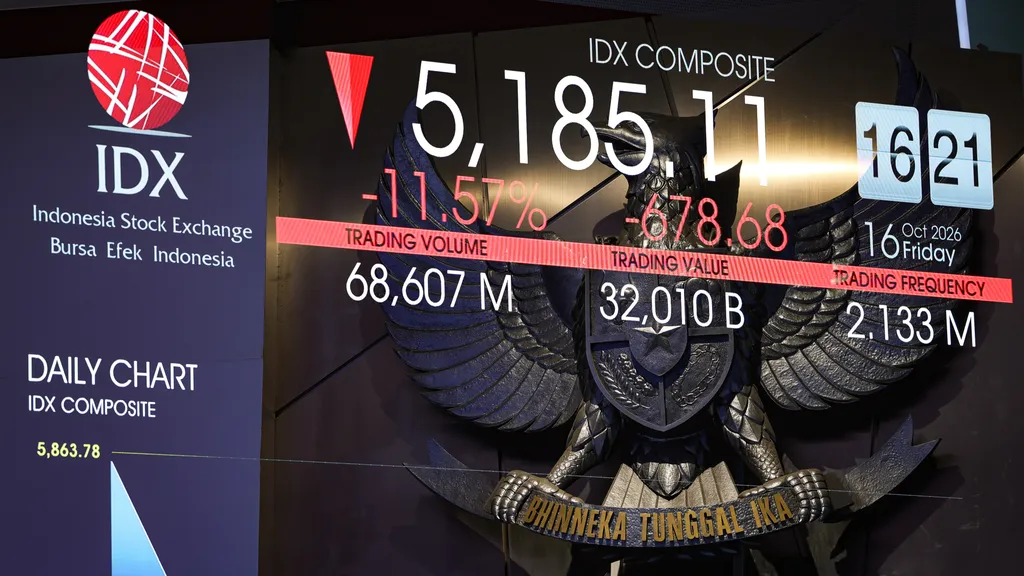
SIDOARJO, KOMPAS — President Prabowo Subianto has recently issued a forceful response to Morgan Stanley Capital International (MSCI), following its warning that it could downgrade Indonesia’s capital market from emerging-market to standalone-market status.
The New York-based global financial index provider announced its position on Friday, 16 October 2026. It is considering downgrading Indonesia’s stock market because it sees no significant improvement on a number of concerns, including the continued presence of share-price manipulation.
The warning prompted a strong reaction from Prabowo. At a plenary cabinet meeting marking the second year of the Prabowo Subianto-Gibran Rakabuming administration at the Presidential Palace in Jakarta on Wednesday evening, 21 October 2026, he said he would not be afraid or intimidated by MSCI.
Nanik Linawati, a lecturer in finance and investment at Petra Christian University, said it was understandable that the President had responded firmly, given that MSCI is an international institution used as a benchmark by global investors.
She said the President’s firmness was important to maintaining the confidence of domestic and foreign investors and preventing them from being further swayed by negative sentiment, with the hope that Indonesia’s stock market would soon recover. However, she said the response also needed to be followed by concrete measures to address the issues raised by MSCI.
What would happen if Indonesia’s stock market were downgraded? Nanik said global investor confidence could weaken if Indonesia moved from emerging-market to standalone-market status. Investors tracking MSCI’s emerging-market indices might reduce their investments in Indonesia, increasing selling pressure on shares and potentially pushing the IDX Composite (IHSG) lower.
“The government and capital-market authorities therefore need to improve transparency and governance promptly so that investor confidence can be restored,” Nanik said on Friday, 23 October 2026.
Is it true that Indonesia’s stock market has made no progress? Nanik said MSCI’s assessment was not entirely accurate, since the number of domestic investors and the development of the capital market indicate that progress has been made.
However, that progress has not been matched by improvements in governance and transparency to the level expected by global investors. The gains should be recognised, she said, without overlooking the weaknesses that still need to be addressed.
“A healthy stock market is not defined solely by a rising IHSG, but also by information disclosure, investor protection and fair trading,” Nanik said.
As debate over the condition of Indonesia’s stock market grows, people at the grassroots level are asking what it could mean for their livelihoods.
Nanik said the consequences of a market downgrade would not be limited to share investors. If volatility persisted and undermined confidence in Indonesia’s economy, companies operating in the country could find it harder to obtain funding for business expansion.
The effects could include changes to investment, employment opportunities and people’s incomes. Ordinary people who do not own shares would not be directly affected by a fall in the IHSG, but could feel indirect effects if market turbulence spread to the broader economy.
“The government needs to maintain market stability while ensuring that economic turbulence does not place an even greater burden on the public,” Nanik said.
Prabowo previously said Indonesia was operating in a global environment marked by hegemonic competition among major powers. Such conditions would affect every country because the world was integrated and nations depended on one another.
Alongside global pressures, Indonesia also faced the effects of changing weather, which had caused various disruptions. The country’s position on the Ring of Fire presented the risk of natural disasters, but also offered opportunities through its abundant natural resources.
Indonesia continued to face many challenges, Prabowo said, including MSCI’s proposal to change the country’s capital-market classification from emerging market to standalone market.
“I will only say this to MSCI: the Indonesian people fear no one and will not be intimidated,” Prabowo said.
He urged Indonesians not to be afraid, saying the nation had strength and courage, was willing to make sacrifices and would never give up. If necessary, he said, the government would make major spending cuts.