
MSCI Review a Catalyst to Strengthen Indonesia's Capital Market Competitiveness
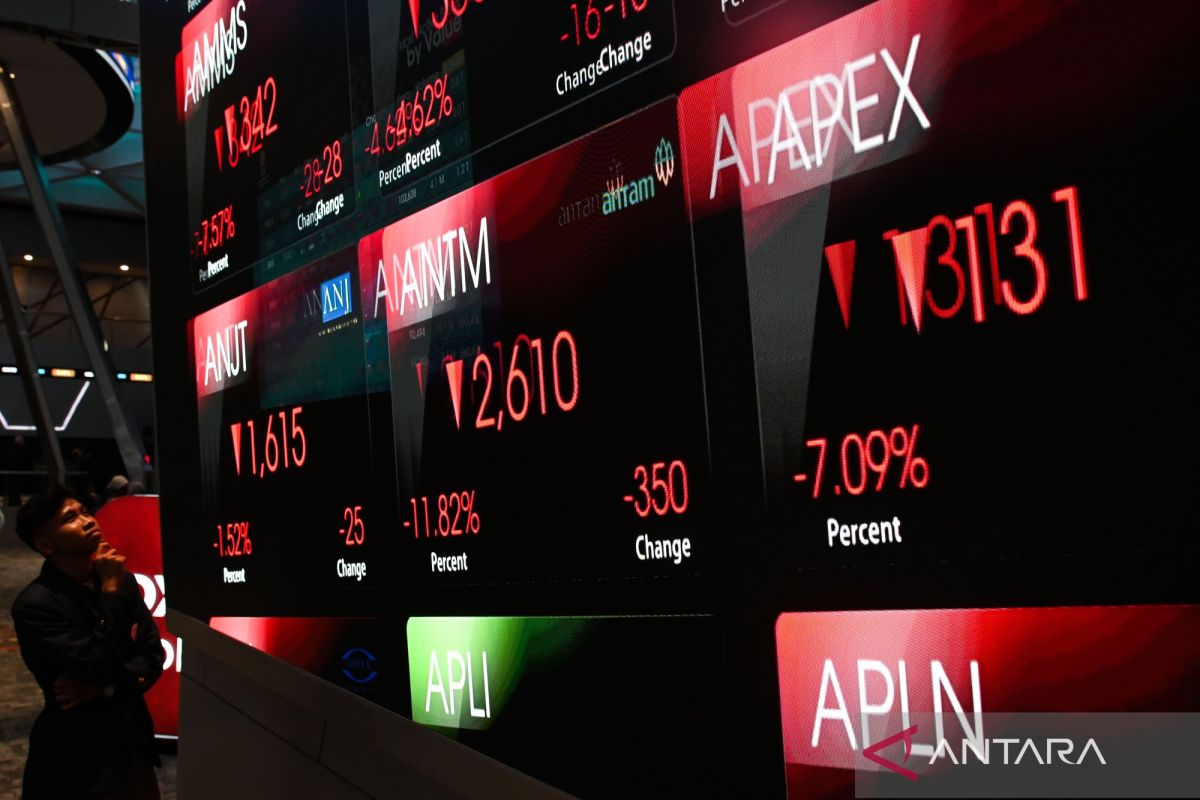
The Chairman of the Indonesian Securities Analyst Association (AEI), David Sutyanto, believes that the results of the MSCI review serve as a momentum to strengthen the quality of the Indonesian capital market to ensure it becomes more competitive on a global scale.
“These results are not a negative signal for the Indonesian capital market, but rather a momentum to strengthen market quality so that it becomes more competitive in the eyes of global investors,” David stated in an official release in Jakarta on Friday.
According to him, several key indicators in the MSCI assessment still demonstrate the strong foundation of the Indonesian capital market. Aspects such as investor requirements, foreign ownership limits, foreign ownership space, freedom of capital flow, investor account opening, market regulation, custodian systems, trading, and the availability of investment instruments still receive relatively positive assessments.
He noted that this indicates that in terms of infrastructure, openness, and accessibility, the Indonesian market remains a primary focus for global investors as an important emerging market in the Asia Pacific region.
On the other hand, he acknowledged that there is still work to be done regarding the aspect of information flow; however, this note should not be interpreted as a structural weakness that is difficult to rectify.
“This is actually very important input for regulators, exchanges, issuers, analysts, and all market participants to improve the quality of information disclosure, consistency of communication, and more equitable data access for both domestic and foreign investors,” said David.
David assessed that improving information quality is a crucial factor in increasing the attractiveness of the Indonesian capital market. For global investors, an attractive market is determined not only by size and liquidity but also by the ease of access to credible, timely information that meets international standards.
David stated that the agenda for improving information flow needs to be placed as part of the effort to upgrade the class of the Indonesian capital market, while simultaneously strengthening investor confidence.
Meanwhile, in its research, Samuel Sekuritas Indonesia assessed that the downgrade in the Information Flow criteria is not strong enough to change Indonesia’s status as an emerging market. Samuel Sekuritas mentioned several supporting factors that remain primary pillars for Indonesia’s position, including the mandatory disclosure of shareholders with a minimum ownership of 1 per cent, the existence of the High Shareholder Concentration (HSC) framework, and the roadmap to increase free float to 15 per cent.
“Those factors are sufficient to maintain Indonesia’s status as an Emerging Market,” wrote Samuel Sekuritas.
In the MSCI report released on Friday morning, which covers five Market Accessibility segments and consists of 18 measurements (criteria), the details showed that 10 out of 18 criteria were rated “++” (double plus, the highest rating), indicating compliance with global best practices with no issues. Six criteria were rated “+” (single plus), where continuous improvement is expected.
Meanwhile, the criteria for Information Flow and Foreign Exchange Market Liberalization Level were rated “-” (negative), indicating concerns that improvements are necessary.
Source: jawawa.id (https://jawawa.id/newsitem/msci-review-a-catalyst-to-strengthen-indonesias-capital-market-competitiveness-1781859397)
Originally published by Antara (Indonesian) (https://www.antaranews.com/berita/5614612/aei-ulasan-msci-momen-perkuat-kualitas-pasar-modal-lebih-kompetitif), translated from Indonesian