
MSCI Rebalancing Results and Freeze Status: Does MSCI Really Not Trust Indonesia?
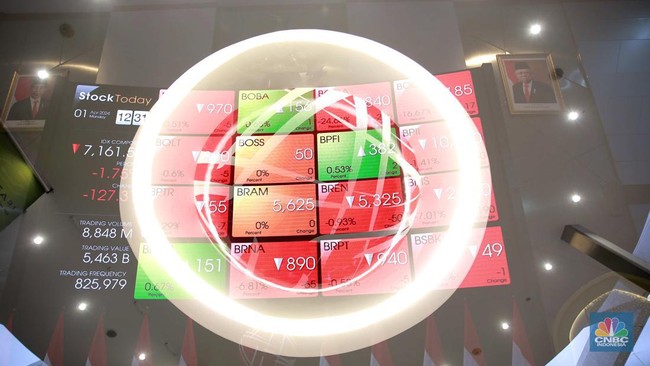
Indonesia’s capital market is once again at a crucial crossroads. MSCI Inc. has announced the results of its periodic index review for the May 2026 period. According to the official release dated 12 May 2026, the MSCI Global Standard Index for the Indonesia region records no addition of new constituents. Instead, MSCI has taken a significant reduction step by removing six large-cap issuers from the list. This move is expected to trigger portfolio adjustments by global investment managers who use the MSCI index as their primary benchmark. This decision will officially take effect at the close of trading on 29 May 2026, typically accompanied by increased trading volume in the regular market due to balancing actions by institutional investors. In the MSCI May 2026 rebalancing, no Indonesian stocks entered the MSCI Global Standard Index. Conversely, six major stocks were removed, namely PT Amman Mineral Internasional Tbk (AMMN), PT Barito Renewables Energy Tbk (BREN), PT Chandra Asri Pacific Tbk (TPIA), PT Dian Swastatika Sentosa Tbk (DSSA), PT Petrindo Jaya Kreasi Tbk (CUAN), and PT Sumber Alfaria Trijaya Tbk (AMRT). In the MSCI Global Small Cap Index, AMRT does not fully exit but is downgraded from Global Standard to Small Cap. However, outside of AMRT, 13 other issuers are eliminated from that index. In total, there are 19 deletion changes in the MSCI Indonesia indices. Since AMRT is only shifting categories, the number of stocks truly exiting all MSCI indices reaches 18 issuers. MSCI has also decided to maintain the temporary or interim freeze status for Indonesian securities. This decision reinforces that the series of structural and emergency reforms carried out by domestic exchange authorities in recent months have not fully satisfied global investor transparency standards. This serves as a warning signal that restoring foreign institutional trust requires more consistent on-the-ground implementation proof, not just rule changes on paper. Implied Meaning: Integrity Crisis and Price Manipulation. The MSCI rebalancing results and their decision to maintain the index freeze provide a very sharp analytical meaning regarding the world’s view of Indonesia’s trading mechanisms. Fundamentally, MSCI indicates that the domestic stock exchange is still surrounded by persistent investment viability risks. Global investors’ main concerns centre on two things: the opacity of share ownership structures and strong indications of coordinated trading behaviour. This coordinated trading practice is deemed to severely distort market mechanisms. Issuers with massive market capitalisation under monitoring often experience irrational price surges. When these stock prices are continuously pumped up despite very thin public liquidity portions, foreign investment managers using the MSCI index as a reference are forced to buy them at peak prices to balance their portfolio weights. This creates a highly detrimental valuation trap for global institutional investors. MSCI’s most impactful step is their decision to immediately exclude stocks identified by Indonesian authorities from the High Shareholding Concentration list in global index calculations. This proves that global institutions tolerate no securities whose movements are vulnerable to unilateral control by a handful of conglomerates. MSCI seems to deliver a hard slap that the Indonesian exchange is not yet fully safe for massive-scale passive fund flows. The Grim Memory of January 2026 and the IHSG Critical Point. MSCI’s conservative stance inevitably triggers concerns about a repeat of the tragedy in the last week of January 2026. That event became one of the lowest points in the modern history of the domestic capital market. At that time, MSCI’s initial index freeze announcement was immediately followed by Goldman Sachs’ step to downgrade the Indonesian stock market rating to Underweight. This combination of negative sentiment triggered extraordinary panic among investors. Massive foreign net selling actions destroyed the valuations of major banking stocks that actually had solid fundamentals. This panic forced the Indonesia Stock Exchange to activate crisis protocols in the form of temporary trading halts twice in a week. This trust crisis even caused shocks at the elite regulator level. The collapse of public trust led to the resignation of the Indonesia Stock Exchange President Director Iman Rachman, followed by the Capital Market Supervisory Executive Head Inarno Djajadi. The peak was when the Financial Services Authority Commissioner Chairman Mahendra Siregar and his deputy Mirza Adityaswara also stepped down. This exodus of authority leaders becomes historical proof of how fatal the impact of losing exchange credibility in the eyes of the global community is. If the sentiment from the exit of these giant issuers from the global index fails to be contained and capital outflows occur again on a massive scale, the index could correct sharply considering the new changes will occur in June 2026 trading. The Bitter Reality of Global Index Adjustments. As evidence of MSCI’s strict evaluation of the Indonesian market filled with ownership concentration risks, the May 2026 review records aggressive cleaning results. In the MSCI Global Standard Index category, not a single Indonesian issuer succeeded in being added. Conversely, six jumbo-cap issuers had to be sidelined. The removal of these issuers sends a message that massive market capitalisation