
MSCI May Push Indonesia into the Lowest Market Tier: Is There Really a Problem with Our Stock Market?
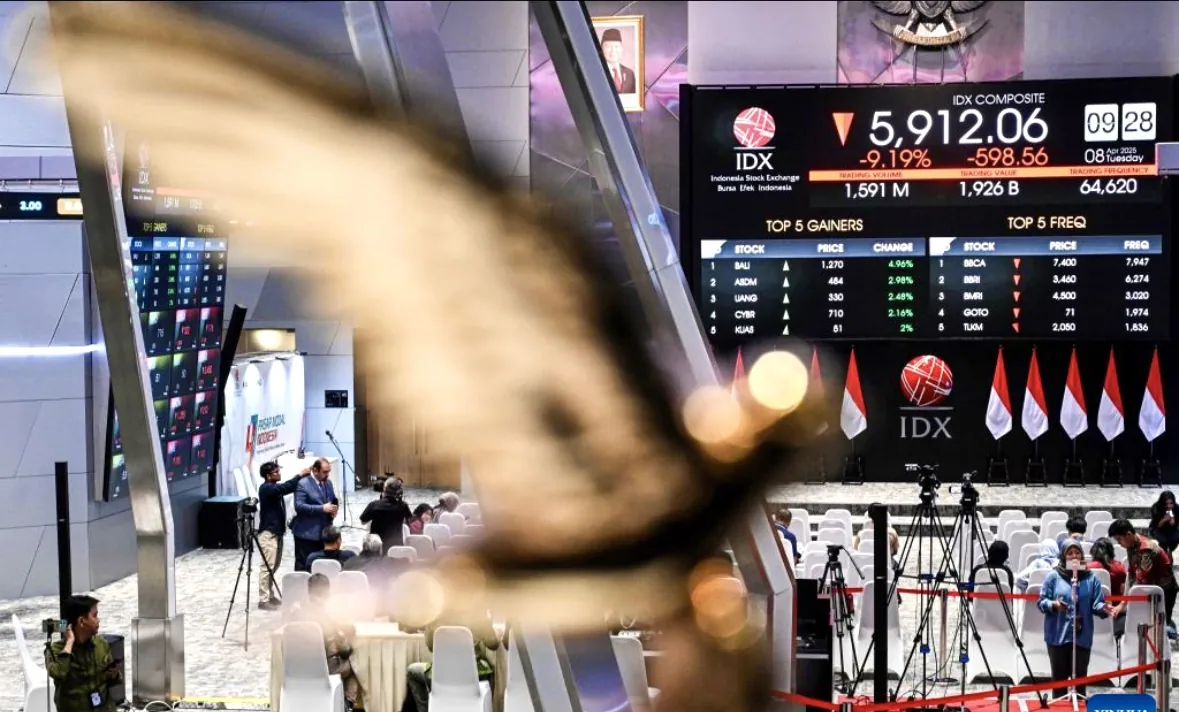
Indonesia’s capital market is facing a threat that cannot be taken lightly. Morgan Stanley Capital International (MSCI), a provider of major global equity benchmarks, has proposed removing Indonesia from its global stock indices. If the decision goes ahead, Indonesia risks losing access to international capital flows and being pushed to the margins of the global investment landscape.
The threat emerged after MSCI had earlier considered downgrading Indonesia from emerging-market to frontier-market status. The latest proposal is much more severe: MSCI is considering stripping Indonesia of its status in the global indices and classifying it as a standalone market.
Such a move is rare. Argentina was removed from MSCI indices in 2021 after imposing capital controls. A year later, Russia suffered a similar fate after Western sanctions imposed following its invasion of Ukraine cut off the country’s access to the global financial system. If Indonesia faced the same outcome, it would join a small group of standalone markets that includes Lebanon and Zimbabwe.
Indonesia has been part of MSCI’s emerging-market indices since 1989. Losing that status would therefore represent a major setback for a stock market that has long been a destination for foreign investors.
Rully Arya Wisnubroto, head of research at Mirae Asset Sekuritas in Jakarta, said MSCI’s proposal went beyond the worst-case scenario previously envisaged by market participants. “This proposal far exceeds what we considered the worst-case scenario,” Rully said, as quoted by Reuters on Saturday, 17 October 2026.
The market reaction was immediate. MSCI’s announcement wiped about US$65 billion (around Rp1,163.5 trillion) off the value of Indonesian shares. The Jakarta Composite Index (JCI) plunged 11.6 per cent, its biggest one-day fall since the 1998 Asian financial crisis.
The panic was not confined to equities. The rupiah briefly weakened by as much as 0.8 per cent. Some analysts have even begun to consider the possibility of a Bank Indonesia rate rise at its next policy meeting, despite market expectations previously favouring no change.
Multinational financial services firm Citi said a rate increase, if implemented, could serve as a pre-emptive measure to stop potential foreign outflows from the stock market spilling into the bond market, where domestic investor withdrawals could make the outflows worse.
“The purpose of a rate increase would be to take preventive action: to stop anticipated foreign outflows from the stock market from spreading to the bond market, while also preventing the situation from being exacerbated by capital withdrawals from domestic investors,” Citi wrote in a note to clients.
A removal from emerging-market status is different from a downgrade to frontier-market status. If Indonesia were moved into the frontier-market category, it could still attract inflows from funds tracking frontier-market indices. But as a standalone market, Indonesia would no longer be eligible for potential replacement demand from those funds.
Several banks estimate that the change could trigger passive outflows of US$3 billion to US$6 billion (around Rp53.7 trillion to Rp107.4 trillion). JPMorgan estimates potential outflows of US$4.8 billion (around Rp85.92 trillion), while UBS has warned that active investors could withdraw an additional US$15 billion (around Rp268.5 trillion).
The potential risk is substantial. According to MSCI’s official website, more than US$1.8 trillion (around Rp32,220 trillion) in investment assets use its emerging-market index as a benchmark.
The scale of the funds that could leave makes Indonesia’s exposure different from that of countries previously removed from the indices. JPMorgan noted that Indonesia’s weighting in MSCI’s emerging-market index had fallen from 1.2 per cent at the end of 2025 to 0.46 per cent. Even so, that is still higher than Argentina’s 0.12 per cent weighting when it was removed in 2021.
The effects could extend beyond the stock market. Indonesia is South-east Asia’s largest economy and a major exporter of thermal coal, palm oil and nickel. It is also an important supplier of copper and coffee. Higher prices for some export commodities benefit the economy, but as a net oil importer, Indonesia also faces higher import costs when energy prices rise.
Citi analysts warned that capital-market problems could affect public finances if state-linked companies struggle to obtain funding or have to pay more to borrow. In that situation, the government could face pressure to take on spending that companies would otherwise have financed, or to scale back investment plans.
Bank Danamon Indonesia economist Irman Faiz said the broader economic effects were likely to emerge indirectly, mainly through external financing. “We expect the wider economic impact to be largely indirect, with external financing the fastest channel of transmission,” Irman said.
Government does not fully agree with MSCI
Behind the market turbulence are structural concerns raised by MSCI about Indonesia’s stock market. The index provider says opaque share ownership, alleged coordinated trading and weak enforcement could make it difficult for investors to determine how many shares are genuinely available for public trading, known as free float.
These issues are also seen as undermining investors’ ability to rely on market prices as a fair reflection of share values. For global index providers, ownership transparency and reliable trading mechanisms are important in deciding whether a market qualifies for inclusion in international investment indices.
MSCI said a change in status could be implemented if the consultation process, which runs until next April, fails to produce clear evidence of improvements in market governance and functioning. A final decision is scheduled for the following June.
The Indonesian government and capital-market authorities have sought to address the concerns by tightening disclosure requirements and planning to raise the minimum free-float threshold. On Friday, regulators also announced sanctions related to alleged trading manipulation in three shares.
However, the government does not accept MSCI’s assessment as unquestionable. Deputy Coordinating Minister for Economic Affairs Dradjad Hari Wibowo acknowledged the index provider’s reputation but said its judgements could still be disputed.
“It is true that MSCI has a strong reputation, and it is also true that we need to pay attention to what it says. But there is one point I want to stress: it is not always right,” Dradjad said.
Meanwhile, Juan Torres, a portfolio manager at the Neuberger Emerging Markets Equity Fund, questioned whether Indonesia’s market structure and behaviour were really comparable with Zimbabwe’s.
“Is Indonesia really on a par with Zimbabwe in terms of market behaviour and structure? Is the treatment of shareholders really worse than in many other emerging markets, including some in Asia?” he said.
The debate shows that Indonesia’s challenge is not only the potential loss of foreign investment, but also the credibility of its capital-market governance. If MSCI’s concerns are not addressed, the risks go beyond a falling stock index to include higher costs of raising capital and diminished investor confidence in Indonesia’s financial markets.
Source: jawawa.id (https://jawawa.id/newsitem/msci-may-push-indonesia-into-the-lowest-market-tier-is-there-really-a-problem-with-our-stock-market-1792241423)
Originally published by kabarbursa.com (https://www.kabarbursa.com/makro/msci-mau-tendang-indonesia-ke-kasta-terbawah-benarkah-pasar-saham-kita-bermasalah), translated from Indonesian