
MSCI Gives Indonesia Until November to Address Market Transparency Concerns
MSCI Gives Indonesia Until November to Address Market Transparency Concerns
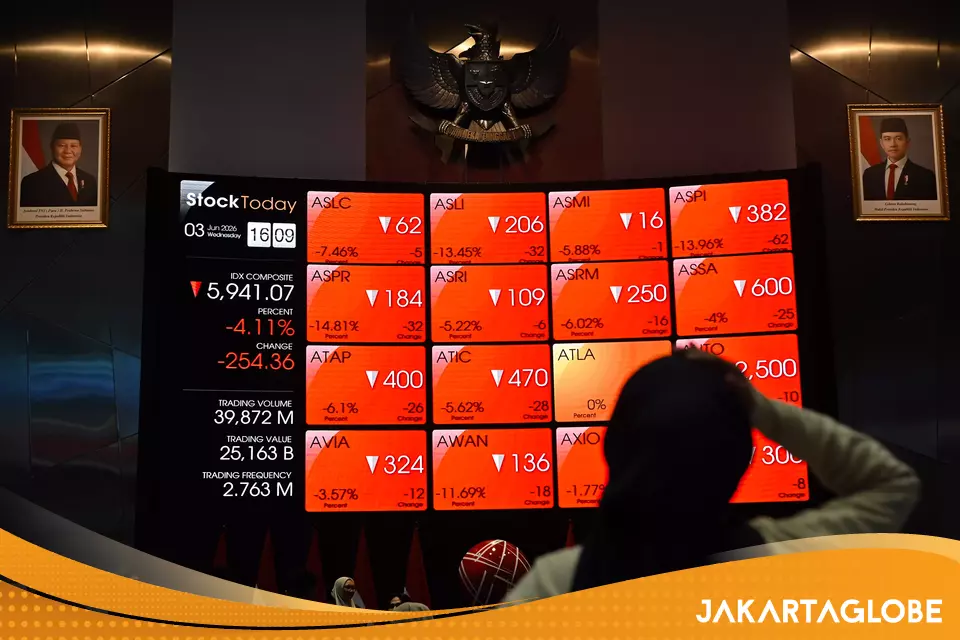
Jakarta. Global index provider MSCI has given Indonesian market authorities until November to demonstrate meaningful progress in addressing concerns over coordinated trading practices, concentrated share ownership, and limited free float, warning that failure to do so could trigger a review of the country’s status as an emerging market.
In a statement published Tuesday, MSCI said international institutional investors continue to raise concerns about the transparency of Indonesia’s equity market, particularly regarding opaque shareholding structures and suspected coordinated trading activity.
“International institutional investors frequently raise concerns with MSCI when they experience persistent opacity in shareholding structures and suspect coordinated trading behavior,” MSCI said.
“For Indonesia, market participants raised profound investability concerns stemming from these issues.”
The warning marks a significant development for Southeast Asia’s largest economy, whose capital market has long sought to attract greater participation from global investors. A downgrade from MSCI’s Emerging Markets classification to Frontier Markets status could reduce Indonesia’s appeal to international fund managers and potentially affect capital inflows from investment funds that track MSCI benchmarks.
MSCI acknowledged that Indonesian regulators have recently introduced a series of reforms aimed at improving market transparency and governance. These measures include enhanced disclosure requirements for shareholders owning more than 1% of a listed company, more detailed investor classification, the introduction of a High Shareholding Concentration (HSC) framework, and a roadmap to increase the minimum public free float requirement to 15%.
The reforms have been spearheaded by the Financial Services Authority (OJK), the Indonesia Stock Exchange (IDX), and the Indonesia Central Securities Depository (KSEI).
However, MSCI said investors are looking beyond policy announcements and are focused on whether the measures are implemented consistently across the market.
“While these announcements represent a step in the right direction, what matters for international institutional investors is the consistent implementation and sustained effect of these measures across the market,” MSCI said.
Read More:
Indonesia Overhauls Capital Markets After Volatility, Targets Insider Trading and Price RiggingThe index provider said it would continue evaluating the scope, consistency, and effectiveness of the reforms, particularly in relation to free-float calculations and broader market accessibility.
MSCI’s concern centers on investability – a key criterion used in determining market classification. International investors have increasingly scrutinized Indonesian listed companies with highly concentrated ownership structures, where only a small percentage of shares are freely available for trading. Such conditions can limit liquidity, distort price discovery, and raise concerns about potential coordination among market participants.
Indonesia was upgraded to MSCI Emerging Markets status in 2010, a move that helped increase the country’s visibility among global investors. Today, Indonesian stocks are included in a range of emerging-market funds managed by some of the world’s largest asset managers.
MSCI said that if sufficient progress is not evident by the November 2026 MSCI Index Review, it may consider several options, including launching a formal consultation on reclassifying Indonesia from Emerging Markets to Frontier Markets.
“Should sufficient progress not be evident by the time of the November 2026 MSCI Index Review, MSCI will consider a range of options for the appropriate treatment of the Indonesia market, potentially including a consultation on the reclassification of Indonesia from Emerging Markets to Frontier Markets,” the statement said.
Tags: Keywords: