
MSCI Exclusion, Market Governance, and the Test of Indonesia's Economic Integrity
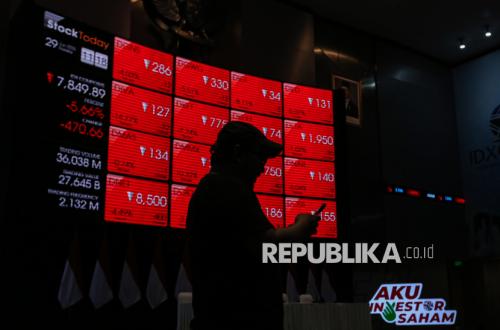
May 2026 marked one of the most testing moments for Indonesia’s capital market and economy. The drastic decision by MSCI to remove six Indonesian stocks from the Global Standard Index and 13 from the MSCI Indonesia Small Cap Index proved a hard blow to the credibility of the domestic financial market.
The announcement of the Semi-Annual Index Review results on 12 May 2026, effective 29 May 2026, was not merely red figures on trading screens but a structural shock rippling quickly through the core of fiscal and monetary stability.
MSCI’s decision to remove heavyweight issuers from the MSCI Global Standard Index triggered panic. Six large-cap stocks, mostly affiliated with Indonesia’s major conglomerate groups, were entirely expelled from the index. Others were downgraded and reclassified into the Small Cap Index. In the lower tier, a number of other stocks were similarly expelled from the MSCI Indonesia Small Cap Index.
The chain reaction from the exclusion of the global index is highly destructive. In modern investment ecosystems, inclusion in MSCI indices serves as the compass for trillions of dollars in passive funds and institutional investments. Therefore, the removal of Indonesian issuers forces passive funds to replicate index compositions by massively liquidating positions.
Technical simulation calculations project passive fund outflows could reach between $1.7 billion and $2.0 billion, according to estimates from CGS International and Citigroup.
Instantaneous impact was recorded on the trading floor. The Jakarta Composite Index (IHSG) instantly fell 1.98 percent to 6,723.32 on the day of the announcement. This drop extended the IHSG’s underperformance through 2026 amid rising risk-off sentiment among global investors.
Simultaneously, foreign capital outflows continued, with global investors recorded net selling of Indonesian shares totaling around Rp 40.8 trillion during 2026.
Impact on the monetary sector
Panic in the stock market did not stop at the exchange gates. The spillover of the capital shock directly affected the national monetary sector. The aggressive withdrawal of portfolio capital pushed the rupiah towards the psychological level near Rp 17,600 per US dollar in mid-May 2026. This depreciation further strained the Garuda, which was already under heavy pressure from the United States Federal Reserve’s higher-for-longer stance and Middle East geopolitical tensions.
Such extreme currency depreciation placed Bank Indonesia (BI) in a difficult position. To quell panic and prevent a further brutal depreciation of the rupiah, BI stepped up layered intervention strategies, covering the spot market, Domestic Non-Deliverable Forward (DNDF) contracts, and purchases of Government Securities (SBN) in the secondary market.
The consequence is substantial: Indonesia’s foreign exchange reserves have been eroded for four consecutive months since early 2026, from $156.47 billion at end-2025 to $146.2 billion at end-April 2026, a total decline of $10.27 billion.
Bank Indonesia confirmed that the decline in reserves reflects a combination of costs associated with stabilising the rupiah in the foreign exchange market and the regular servicing of the government’s external debt. Nevertheless, Governor Perry Warjiyo said that $146.2 billion remains well above the minimum requirement and ‘more than adequate’ to sustain future intervention operations.
Beyond foreign exchange costs, BI also had to curb policy easing by keeping the policy rate (BI Rate) at 4.75 percent to avoid an even more brutal depreciation of the rupiah.
Fiscal space alarm for the 2026 APBN
The relentless pressure from the capital and monetary sectors culminates in a double burden for the state budget. For reference, the macroeconomic exchange rate assumptions in the 2026 Macro Economic Framework and Policy Guidelines (KEM PPKF) set a band for the rupiah of between Rp 16,500 and Rp 16,900 per US dollar.
The rupiah’s depreciation breached Rp 17,600 per US dollar on 15 May 2026, meaning the Garuda currency had surpassed the upper bound of the 2026 APBN assumption by Rp 700 and diverged by Rp 1,100 from the core fiscal reference of Rp 16,500.
Sensitivity modelling in the RAPBN 2026 Financial Notes shows that every Rp 100 depreciation per US dollar would widen the net deficit by about Rp 800 billion as government spending expands by Rp 6.1 trillion while revenue rises by only Rp 5.3 trillion. With the exchange rate deviation of Rp 1,100 from the baseline, the cumulative fiscal pressure that the APBN could bear may reach around Rp 8.8 trillion.
Source: jawawa.id (https://jawawa.id/newsitem/msci-exclusion-market-governance-and-the-test-of-indonesias-economic-integrity-1779542702)
Originally published by Republika (https://esgnow.republika.co.id/berita/tfdmm2416/eksklusi-msci-tata-kelola-pasar-modal-dan-ujian-integritas-ekonomi-indonesia), translated from Indonesian