
MSCI Drama Is Not Over: A Major Announcement for Indonesians Is Due Tomorrow
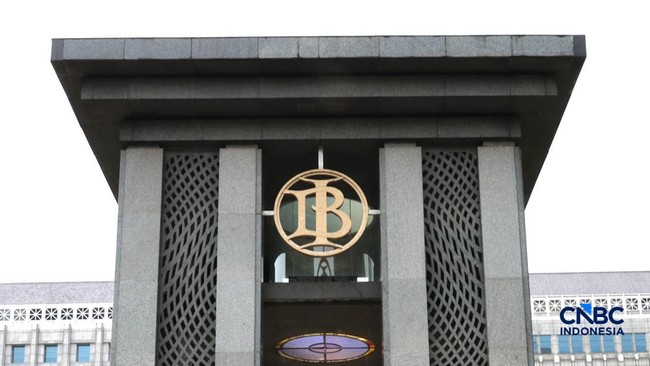
Jakarta, CNBC Indonesia — Bank Indonesia (BI) is expected to raise its benchmark interest rate at the Board of Governors’ Meeting (RDG) taking place on 20–21 October 2026.
Pressure on the rupiah, which has fallen beyond Rp18,000 per US dollar, financial market volatility following MSCI’s announcement, and rising inflation are the main reasons behind the forecast.
A CNBC Indonesia Research poll of 13 financial institutions found that most respondents expect BI to raise its policy rate by 25 basis points to 6.00%.
Ten respondents projected a rate rise, while the other three expected BI to hold the rate at 5.75%.
BI is scheduled to announce its decision on Wednesday, 21 October 2026, after the two-day meeting beginning on Tuesday, 20 October.
BI previously raised rates by a cumulative 100 basis points over May and June 2026, from 4.75% to 5.75%. The increases were intended to maintain rupiah stability and anticipate inflationary pressures.
Inflation rises as rupiah breaches Rp18,000
Domestic inflation is one factor behind expectations that BI will raise rates again.
Statistics Indonesia (BPS) data show that annual inflation reached 3.28% in September 2026, up from 3.19% in August.
The figure remains within BI’s target of 2.5%, plus or minus 1 percentage point — a range of 1.5% to 3.5%. However, inflation is now approaching the upper limit of that range.
Core inflation, meanwhile, remains relatively contained at 2.84% year on year.
Inflationary pressure could also increase because of high global energy prices and the rupiah’s weakness, which makes imported goods more expensive.
Juniman, an economist at Bank Maybank Indonesia, said the weaker rupiah and rising domestic inflation were the two main considerations for BI in deciding the direction of interest rates.
He explained that higher inflation was also being driven by pressure on energy and food prices. This needs to be monitored because persistently high global oil prices could raise production and transport costs in Indonesia.
However, if inflation remains within BI’s target, the rupiah’s condition is the greater challenge in this decision.
Pressure on the rupiah intensified towards the end of last week. On Friday, 16 October 2026, the currency again breached the psychological level of Rp18,000 per US dollar amid greater volatility in domestic financial markets.
The rupiah weakened further at the start of this week. Refinitiv data show it closed down 0.45% at Rp18,000 per US dollar on Monday, 19 October 2026.
During the session, it briefly touched Rp18,070 per US dollar before easing slightly towards the close.
MSCI pressure
One trigger for the increased pressure on financial markets was MSCI’s announcement that it may change Indonesia’s equity market status from Emerging Market to Standalone Market.
The announcement on Friday, 16 October 2026, prompted heavy selling on the Indonesia Stock Exchange (IDX).
The Jakarta Composite Index (JCI) plunged by around 11.6% on Friday and came under further pressure on Monday, 19 October.
However, the proposed change in Indonesia’s status is still subject to consultation with market participants. MSCI is due to announce its final decision by 30 June 2027 at the latest.
Josua Pardede, chief economist at Bank Permata, said the pressure following MSCI’s announcement was now being felt not only in equities but also in the bond market and the exchange rate.
“This shows that pressure is spreading from the equity market to the bond market and the exchange rate,” Josua told CNBC Indonesia.
Rising bond yields indicate that investors are demanding higher returns to hold Indonesian government debt.
Meanwhile, the yield on 10-year US government bonds has reached around 5.14%. This has narrowed the yield spread between Indonesian and US debt.
As that spread shrinks, Indonesian government bonds risk becoming less attractive to foreign investors, particularly while domestic financial markets are volatile.
Josua said BI needed to consider measures to prevent a larger outflow of foreign capital, especially if domestic investors also began moving their funds into foreign-currency assets.
An interest rate increase could be one option for sustaining the appeal of rupiah-denominated assets and reducing the risk of capital outflows.
Nevertheless, such a move would not necessarily strengthen the rupiah immediately.
“An increase in the BI Rate does not guarantee an immediate appreciation of the rupiah, particularly because the current pressure does not stem entirely from interest rate differentials but also from a greater perception of risk in Indonesia’s financial markets,” he said.
According to Josua, the issues raised by MSCI, including transparency of share ownership, suspected market manipulation and the effectiveness of law enforcement, cannot be resolved through interest rate policy alone.
The government and regulators therefore also need to improve capital market governance to restore investor confidence.
BI must also take into account the effect of higher rates on domestic economic activity.
Higher interest rates can make borrowing more expensive for households and businesses. If maintained for a sufficiently long period, they risk slowing credit growth, consumption and investment.
“An overly aggressive rate increase could also raise financing costs for the government and businesses, slow credit growth, and weigh on consumption and investment,” Josua said.
Indonesia’s 5.29% economic growth in the second quarter of 2026 indicates that the economy is still expanding at a solid pace, but it continues to need support to sustain business activity and household consumption.
BI therefore needs to balance efforts to stabilise the rupiah with the need to maintain economic growth.
BI also has room to support rupiah stability through foreign exchange market intervention. Indonesia’s foreign exchange reserves stood at US$146.3 billion at the end of September 2026.
Juniman said financial market stability, particularly the rupiah’s exchange rate, was now BI’s main concern.
“At present, BI is prioritising the stability of Indonesia’s financial markets, particularly the rupiah, over efforts to promote domestic economic growth,” Juniman told CNBC Indonesia.
To support economic activity, BI can still use other measures, including easing macroprudential policy and improving the effectiveness of the national payment system.
Josua also cautioned that BI needed to assess whether the rupiah’s weakness had begun to disrupt financial market stability and banking activity.
“The main consideration for BI at this RDG should not simply be whether the rupiah has breached Rp18,000 per US dollar, but how far the risk of further weakness is developing into a threat to monetary and financial system stability,” he said.
Most economists therefore expect BI to raise interest rates again in October 2026, after holding them steady for three consecutive months.
However, the decision must take account of an economy that still needs support, as well as market pressures that cannot be fully addressed by raising interest rates.
Markets will be watching BI’s decision on Wednesday, 21 October, particularly for indications of how the central bank intends to stabilise the rupiah amid rising inflation and financial market volatility.
Source: jawawa.id (https://jawawa.id/newsitem/msci-drama-is-not-over-a-major-announcement-for-indonesians-is-due-tomorrow-1792489906)
Originally published by CNBC Indonesia (https://www.cnbcindonesia.com/research/20261020134553-128-777867/drama-msci-belum-berlalu-besok-ada-pengumuman-penting-buat-warga-ri), translated from Indonesian