
MSCI and the Indonesian Stock Exchange at a Crossroads
MSCI and the Indonesian Stock Exchange at a Crossroads
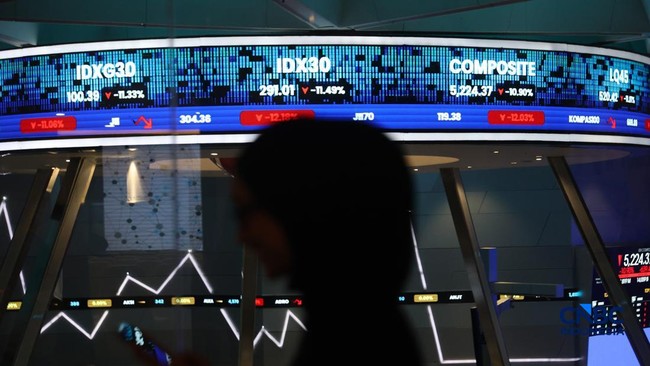
The announcement was released suddenly on Thursday (15 October 2026) at 20:40 New York time, or 03:40 WIB on Friday (16 October 2026). It said a public consultation had begun on a proposed change to Indonesia’s stock-market classification, from Emerging Market to Standalone Market.
The proposal was prompted by concerns among market participants that reforms to Indonesia’s stock market had not been consistent. The market participants in question, according to MSCI, are global institutional investors, particularly passive funds, which are required to buy or sell shares automatically in line with changes to the weightings of standard global MSCI indices.
MSCI highlighted three issues. First, free float: it cited a lack of clarity and transparency about the proportion of shares genuinely available to the public. Second, coordinated trading: it said there remained strong suspicions that certain parties were engaging in coordinated trading practices that distorted share prices. Third, weak law enforcement: the authorities’ enforcement of the law against capital-market crimes was considered insufficiently firm and consistent.
MSCI’s review is not new, and it does not mean that Indonesian authorities have taken no action. They have made data on shareholdings of more than 1% in listed companies publicly available; the Indonesia Stock Exchange (IDX) has disclosed shares meeting the criteria for high shareholding concentration (HSC); and the Indonesia Central Securities Depository (KSEI) has expanded its investor classification data to 39 categories and investor types. A minimum free-float requirement of 15% is also due to take effect in stages from 31 March 2026.
The Financial Services Authority (OJK) has also strengthened transparency on beneficial ownership for shareholders holding 10% or more. It has taken enforcement action and announced reforms ahead of October 2026. For example, in February 2026 the OJK said it had imposed administrative sanctions totalling Rp542.49 billion on 3,418 parties between 2022 and January 2026, including Rp240.65 billion in sanctions against 151 parties over share-trading manipulation.
For MSCI, however, these steps are not enough. It says Indonesia’s stock market has yet to demonstrate a sufficiently clear commitment to consistent structural reform. The index provider is concerned about opaque ownership structures, particularly whether ownership and affiliation data can be used to assess effective ownership rather than merely satisfy reporting requirements.
On free float, MSCI is looking for more than regulatory changes and high reported figures. It wants auditable validation, a consistent methodology and corrections where shares deemed available do not meet the criteria. Suspected coordinated trading also remains a concern for the integrity of Indonesia’s market.
What MSCI is looking for is evidence that the surveillance system can identify, investigate and penalise proven violations, rather than merely detect suspicious trading patterns. MSCI is not claiming that Indonesia has taken no enforcement action; the question, it says, is whether there is sufficient evidence of the impact of that enforcement.
We therefore cannot understand MSCI’s demands through a purely technical or technocratic lens. What it says is not purely scientific, neutral or value-free: it also has an ideological dimension. MSCI’s indices are not simply technical tools that direct passive funds’ trading.
They also seek to define ideal financial-market governance through standards, indices and classifications, which in turn shape investment accessibility and serve as benchmarks for what MSCI calls “market quality”. We should therefore consider them through the philosophical and ideological traditions of economic thought.
Viewing the issue through Smith, Hayek and Friedman
In An Inquiry into the Nature and Causes of the Wealth of Nations (1776), Adam Smith explained the relationship between the quantity of goods actually brought to market and the demand that determines market prices.
Smith wrote: “The market price of every particular commodity is regulated by the proportion between the quantity which is actually brought to market, and the demand.”
In the stock-market context, opaque ownership structures make it difficult for investors to assess who controls shares and how many are genuinely available for trading.
Reliable ownership and free-float information is therefore necessary for investors to assess the supply of shares accurately. This is at the heart of MSCI’s concern: the quantity genuinely offered for trading cannot be established simply by referring to the number of shares on the register; the amount available to the public must be assessed reliably.
Without transparency over ownership structures, the market loses its corrective function. Public investors lack sufficient information to assess risk objectively, creating information asymmetry that disadvantages minority shareholders.
Smith also criticised monopolies, oligopolies and concentrated combinations of capital. In The Wealth of Nations, he wrote: “People of the same trade seldom meet together, even for merriment and diversion, but the conversation ends in a conspiracy against the public, or in some contrivance to raise prices.”
For Smith, excessive concentration of economic power in a few hands undermines the essence of fair competition.
When a market is dominated by concentrated and opaque ownership, the “invisible hand” cannot work properly. Prices are no longer determined by competitive supply and demand, but by the decisions of a few dominant players seeking economic rents.
The phrase “contrivance to raise prices” also refers directly to manipulative practices designed to benefit insiders at the expense of the wider public.
If coordination between market participants is used to influence prices or restrict competition, it runs counter to the principles of a competitive market defended by Smith. Markets should depend on genuine competition, not on artificially created transactions that give a false impression of demand, supply or price.
In The Theory of Moral Sentiments, Smith also criticised manipulative coordinated trading as a form of moral and economic deception. Such conduct, he argued, undermines the distributive justice that should exist in markets: profits are made not by creating value or improving productive efficiency, but by manipulating the system to the detriment of honest market participants.
Friedrich Hayek’s thinking offers a similar perspective. In The Use of Knowledge in Society, he emphasised that rational economic decisions require access to accurate pieces of information.
If ownership information is deliberately concealed, market participants are forced to make decisions based on defective signals. Transparent ownership structures are therefore a condition of a rational economic order, providing individuals with the information they need to make sound decisions.
In the same work, Hayek described prices as a “telecommunication system” that summarises information about the fair value of a good. In the stock-market context, a share price is a signal of a company’s fair value.
But where ownership is concentrated and free float is illusory, share prices no longer reflect the independent assessments of the public. Instead, they may be determined unilaterally by dominant shareholders.
In Hayek’s terms, the price signal is then corrupted. Investors who trust it may be misled, because the price is not the product of an open market mechanism but of artificially manipulated supply and demand.
In another work, “Competition as a Discovery Procedure”, Hayek described competition as a process through which market participants independently test their perceptions of value.
From this perspective, coordinated trading—such as wash sales or the promotion of “gorengan” stocks to fabricate volume and prices—is a conspiracy that damages this process of discovery.
In other words, coordinated trading is a deliberate attempt to engineer market prices and volumes. In Hayek’s framework, it removes the independence of competition and replaces it with manipulation by a group of market actors.
In Capitalism and Freedom (1962), Milton Friedman argued that the pursuit of profit is morally and economically legitimate only when it is free from deception or fraud.
Secretly coordinated trading therefore undermines the principle of “open and free competition without deception” espoused by Friedman. When a group of market participants artificially manipulates volume and prices, it violates one of capitalism’s most fundamental foundations.
In the same book, Friedman also wrote: “Monopoly implies the absence of alternative options and thereby inhibits effective freedom of exchange. The ultimate threat to freedom is power to coerce, whether it be in the hands of a monarch, a dictator, an oligarchy, or a momentary majority.”
In stocks with high shareholding concentration and an illusory free float, controlling groups act like oligarchs—or even dictators—by removing fair trading options for public investors. Friedman regarded the concentration of economic power as a major obstacle to market efficiency.
If controlling shareholders use HSC to restrict liquidity and manipulate market valuations, free competition collapses.
The main failing of Indonesia’s exchange, then, is that its market mechanisms do not conform to the principles of a free market: openness and transparency, fair competition and natural price formation. These are the foundations of a free market.
The Indonesian stock market and an oligarchic ownership structure
The condition of Indonesia’s stock market is discussed in detail in research by Richard Carney and Natasha Hamilton-Hart, “What Do Changes in Corporate Ownership in Indonesia Tell Us?” (2015), which examines the evolution of corporate ownership in Indonesia after the 1997–98 Asian financial crisis.
The research has two important findings. First, despite regulatory reforms, debt restructuring and privatisation of state-owned enterprises after the 1998 crisis, share ownership on the Indonesian stock market has remained highly concentrated. Most listed companies are still controlled by families or conglomerates through pyramidal ownership structures and cross-shareholdings.
Second, although the number of minority or public shareholders appears to have increased statistically, effective control and voting rights remain firmly concentrated in the hands of controlling shareholders—business-political families.
Carney and Hamilton-Hart give several structural reasons why corporate ownership in Indonesia has been difficult to disperse. First, maintaining tight family control is a rational strategy for business owners seeking to protect their assets from political risks or regulatory changes.
Second, although good corporate governance rules and minority-investor protections have been adopted on paper, enforcement in practice remains weak. This makes founders and controlling shareholders reluctant to surrender full control to the public.
Third, Indonesian corporations rely more heavily on bank loans or internal group financing than on open equity markets to fund long-term expansion, reducing the incentive to distribute share ownership widely.
Research by Stijn Claessens, Simeon Djankov and Larry H.P. Lang, titled “The Separation of Ownership and Control in East Asian Corporations”, found broadly similar patterns: more than 67% of public companies in Indonesia were controlled by particular families or individuals, rather than by dispersed public shareholders as is more common in the United States or the United Kingdom.
This control is not exercised by directly holding more than 50% of a company’s shares, but through pyramidal ownership and cross-shareholdings. A conglomerate family can use a pyramid to control dozens of layers of subsidiaries, sub-holdings and further subsidiaries with relatively little capital at the top. The researchers found that the gap between control rights and cash-flow rights in Indonesia was among the widest in Asia.
Similarly, Michael Backman’s Asian Eclipse: Exposing the Dark Side of Business in Asia (1999) found that in Asian countries, including Indonesia, asset and share transactions were often conducted not at fair market value but between companies under the control of the same family or conglomerate.
Public investors are often disadvantaged when assets are shifted into controlling owners’ private hands without adequate oversight. In developing countries, capital markets are therefore sometimes used by conglomerates not to broaden ownership and democratise capital, but as an “ATM” or a source of cheap financing from retail investors, while operational power and cash flows remain tightly controlled within family circles.
The long-running issue raised by MSCI is therefore not merely a technical or administrative matter. It reflects a structural clash between the universalist values of the free market, promoted by global standard-setters such as MSCI as representatives of global capitalism, and the crony capitalism that has become…
Source: jawawa.id (https://jawawa.id/newsitem/msci-and-the-indonesian-stock-exchange-at-a-crossroads-1792201836)
Originally published by CNBC Indonesia (https://www.cnbcindonesia.com/opini/20261017071656-14-777050/msci-dan-bursa-indonesia-di-persimpangan), translated from Indonesian