
MSCI: A Test of Indonesia’s Capital Market Credibility
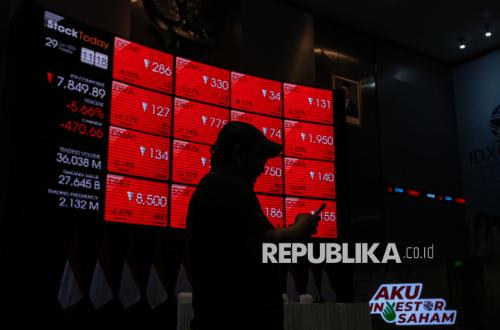
On the morning of Friday, 16 October 2026, trading was suspended shortly after the exchange opened. By the close, the Jakarta Composite Index (JCI) had plunged 11.57 per cent to 5,185.10, its steepest one-day fall since 1998. The trigger was an announcement from New York: Morgan Stanley Capital International (MSCI), an index provider used as a benchmark by many global funds, had opened a consultation on downgrading Indonesia from Emerging Market to Standalone Market. The announcement was made in the early hours of Jakarta time, just hours before trading began on the Indonesia Stock Exchange (IDX).
MSCI’s proposal did not come out of the blue. Since October 2025, MSCI had been seeking market participants’ views on how Indonesia’s publicly traded shares, or free float, should be calculated. In late January 2026, it made the surprise announcement that it was freezing the rebalancing of Indonesian equities for the February 2026 review period. The reason was serious concern about governance and transparency in Indonesia’s capital market.
The authorities then took action: information on shareholders with stakes above 1 per cent has been made public since March, the minimum free-float requirement was raised from 7.5 to 15 per cent, and shares with concentrated ownership began to be disclosed in April.
In June 2026, MSCI retained Indonesia’s Emerging Market status, but the freeze continued. It warned that it would consider reclassification if progress was not evident by November. On 15 October, however, MSCI said that progress had not been consistent across the market and continued to cite alleged coordinated trading. Market participants can submit feedback until 30 April 2027, with a final decision due by 30 June 2027 at the latest.
What surprised many people was MSCI’s decision to move directly to Standalone Market status, without first considering Frontier Market status. According to MSCI, investor feedback indicated that the Frontier Market category did not adequately reflect the depth of the problems. The move drew a strong reaction in Indonesia, with some suggesting there was a hidden agenda behind it.
If Indonesia is ultimately downgraded to Standalone Market, it will join Argentina, Lebanon, Palestine, Ukraine and Zimbabwe. It would also be the only Asia-Pacific market in the group and the largest economy among its members. Within the G20, only Argentina and Russia are in this category. Their circumstances differ: Argentina was placed there because of strict capital and foreign-exchange controls. Indonesia is being scrutinised over perceived shortcomings in transparency and trust: ownership is difficult to trace, and alleged coordinated trading has not been addressed convincingly.
Transparency and credibility are like a compass for investors, whether retail or institutional, foreign or domestic. When investors cannot distinguish between companies of differing quality, they discount all shares, and the market loses its best stocks. If investors do not know who the real controllers are or how many shares are genuinely available to trade, the entire market is undervalued, including healthy listed companies.
Source: jawawa.id (https://jawawa.id/newsitem/msci-a-test-of-indonesias-capital-market-credibility-1794217879)
Originally published by Republika (https://opini.republika.co.id/berita/to88tw502/msci-ujian-kredibilitas-pasar-modal-indonesia), translated from Indonesian