
MSC engages Indonesian experts to discuss sustainable octopus management
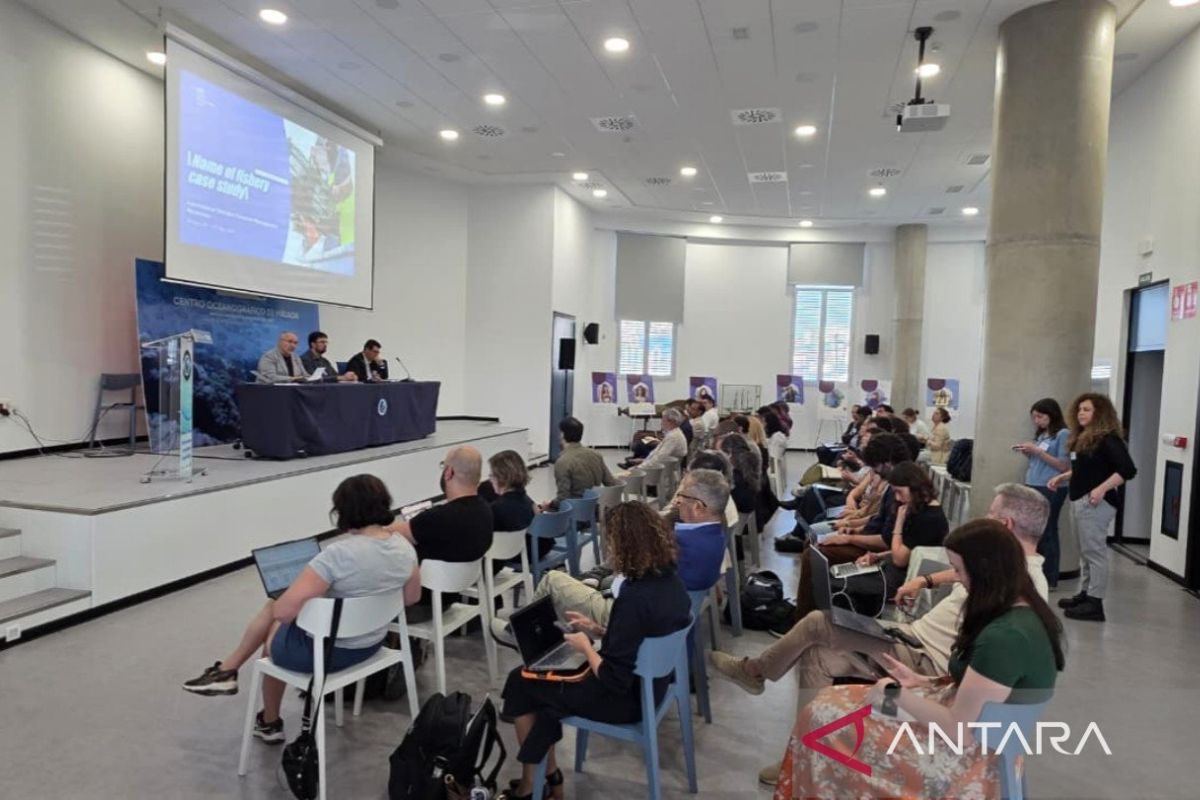
Indonesia has many instructive lessons regarding community-based octopus management.
The Marine Stewardship Council (MSC) has involved three Indonesian experts in an international workshop on sustainable octopus fishery management.
Programme Director MSC Indonesia Hirmen Syofyanto said in a statement received in Bogor, West Java, on Friday, that the workshop, held in Málaga, Spain, from 12 to 14 May 2026, was organised jointly with the Oceanographic Center of the Spanish Institute of Oceanography/Instituto Español de Oceanografía (IEO-CSIC). It brought together researchers, government agencies, fishery managers, NGOs and industry players from various countries to discuss best practices in octopus fishery management.
The activity, funded by the Ocean Stewardship Fund, addressed a range of challenges in managing octopus as a short-lived species, from stock assessment, monitoring systems, governance models to the development of a Harvest Strategy.
Three Indonesian representatives involved were Soraya Gigantika, a lecturer at Universitas Mataram and Chair of the Scientific Forum on Sustainable Fisheries Management for the Province of West Nusa Tenggara; Duranta D. Kembaren, researcher at the National Research and Innovation Agency (BRIN); and NGO practitioner and MSC Technical Consultant Faridz Fachri.
Hirmen said the involvement of Indonesian experts demonstrates a sustained commitment to strengthening octopus fishery management scientifically and collaboratively.
“Octopus fisheries are an important sector for small-scale fishers in Indonesia. The presence of Indonesian experts at this global forum shows that Indonesia’s experiences and lessons are relevant to be shared at the international level,” said Hirmen.
He hopes that cross-country collaboration will strengthen the capacity for sustainable, data-based octopus fishery management that involves communities.
According to MSC, Indonesia was one of the countries drawing attention at the forum because it has previously undertaken various octopus fishery improvement programmes or Fisheries Improvement Projects.
A range of community-based octopus management initiatives, governance strengthening, and the preparation of Octopus Fishery Management Plans have been implemented in several parts of Indonesia to promote sustainability of small-scale fisheries.
Nevertheless, octopus fishery management in Indonesia still faces several challenges, including limited scientific data on octopus stocks, suboptimal catch data collection systems, and insufficient rules on legal catch size.
In the draft National Octopus Fishery Management Plan, the government and stakeholders identified indications of octopus stock depletion, particularly for the species Octopus cyanea in several Fisheries Management Areas of the Republic of Indonesia.
Additionally, limited scientific information on habitat, life cycles, and catch data are seen as challenges that need to be addressed promptly to make octopus fishery management more effective and sustainable.
BRIN researcher Duranta D. Kembaren said the workshop represented a crucial opportunity to connect Indonesia’s local experiences with international practices already implemented in various countries.
“Indonesia has many instructive lessons regarding community-based octopus management. On the other hand, we can also learn about stock assessment, monitoring and governance approaches from other countries that can be adapted to the small-scale fishing context in Indonesia,” Duranta said.
Through the workshop, participants are expected to draft a joint guidance document to support decision-making in octopus fishery management on a global scale.
For Indonesia, the outcomes and learnings from the international forum are hoped to strengthen policies and implementation of octopus fishery management that are more adaptive, transparent and sustainable in the future.