
MRT Jakarta: TOD Development Provides Multiplier Effect for Economic Growth
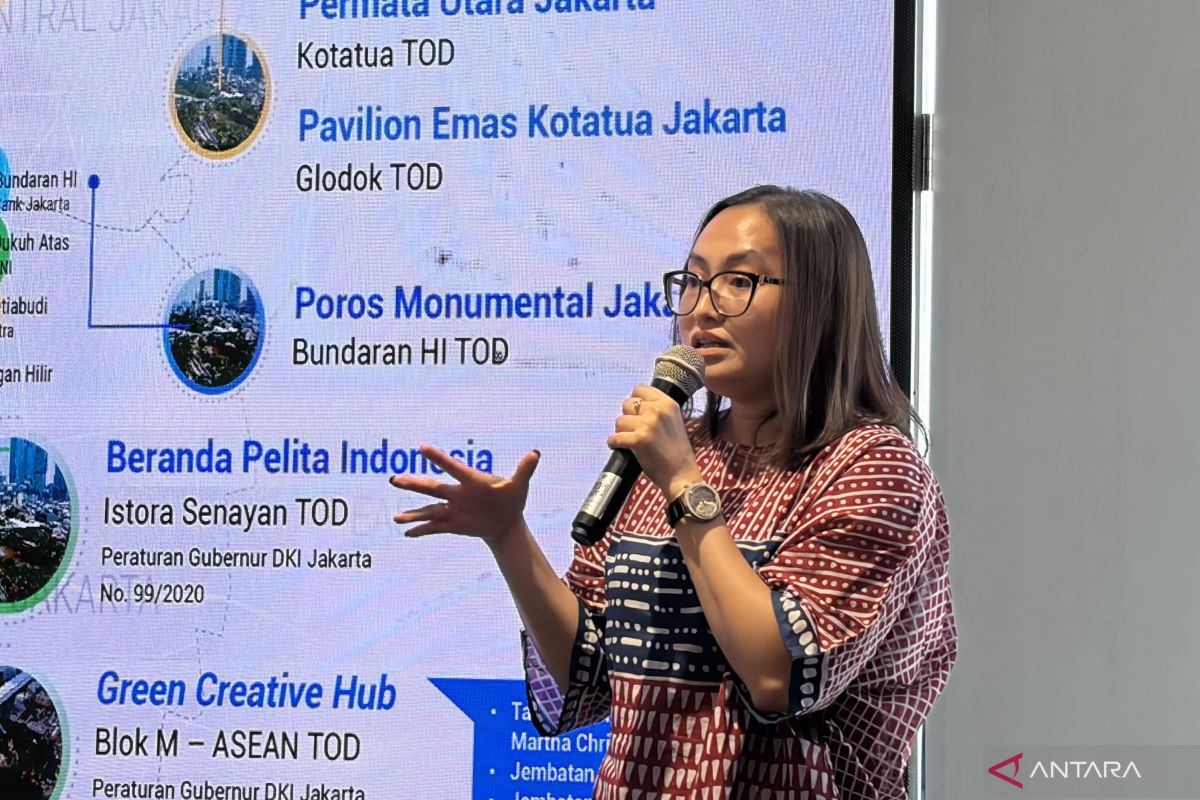
PT MRT Jakarta (Perseroda) has stated that transit-oriented development (TOD) delivers a multiplier effect as a driver of economic growth in areas surrounding transit points such as Jakarta’s mass rapid transit (MRT) stations.
“Development in TOD areas delivers a multiplier effect, transforming urban transit space to spur economic growth,” said Sagita Devi, Head of the TOD Planning Department at MRT Jakarta, during the MRTJ Fellowship Program 2026 series of events in Jakarta on Thursday.
“For example, increased building occupancy rates, the emergence of various new commercial typologies, and a rise in passenger numbers,” she added.
Sagita said transit-oriented development can position the MRT as a catalyst for urban regeneration through the presence of reliable public transport, transport integration as a priority, the provision and revitalisation of public space, and economic growth through interconnection.
The strategic focus of TOD development includes pedestrian connectivity through seamless integration between stations and buildings, as well as the development of parking infrastructure and systems, including their operation and maintenance.
Furthermore, Sagita said another focus is mixed-use development through the integration of commercial functions, housing and public space, such as the Dukuh Atas Transport Hub.
“Next, asset optimisation by maximising the value and utilisation of assets around transit areas. Optimising provincial government assets to increase value, collaboration with other regional-owned enterprises (BUMD), and collaboration with the private sector in developing assets going forward,” Sagita explained.
Another focus is transit commercialisation by maximising commercial potential to create self-sustained infrastructure, with Blok M Hub as an example, which has now evolved into a modern, highly inclusive and integrated transit location.
In addition, Sagita said TOD can also be developed to boost urban tourism potential in Jakarta.
One example is the development of the Dukuh Atas transit area, including the Pedestrian Deck, which highlights seamless connectivity with various public transport operators, including the airport train.
“The hope is that tourists arriving from the airport can travel directly to the city centre by airport train, alight here (Dukuh Atas), and with mixed-use development at the Transport Hub (Dukuh Atas), including a hotel above it,” Sagita said.
“This encourages seamless connectivity for public transport and surrounding infrastructure through pedestrian routes, so there will be more pedestrians. Pedestrian infrastructure that is safer and more comfortable for public transport users also needs to be added,” she added.