
MRT Jakarta Phase 2A Construction Cost Estimated at Rp25.3 Trillion
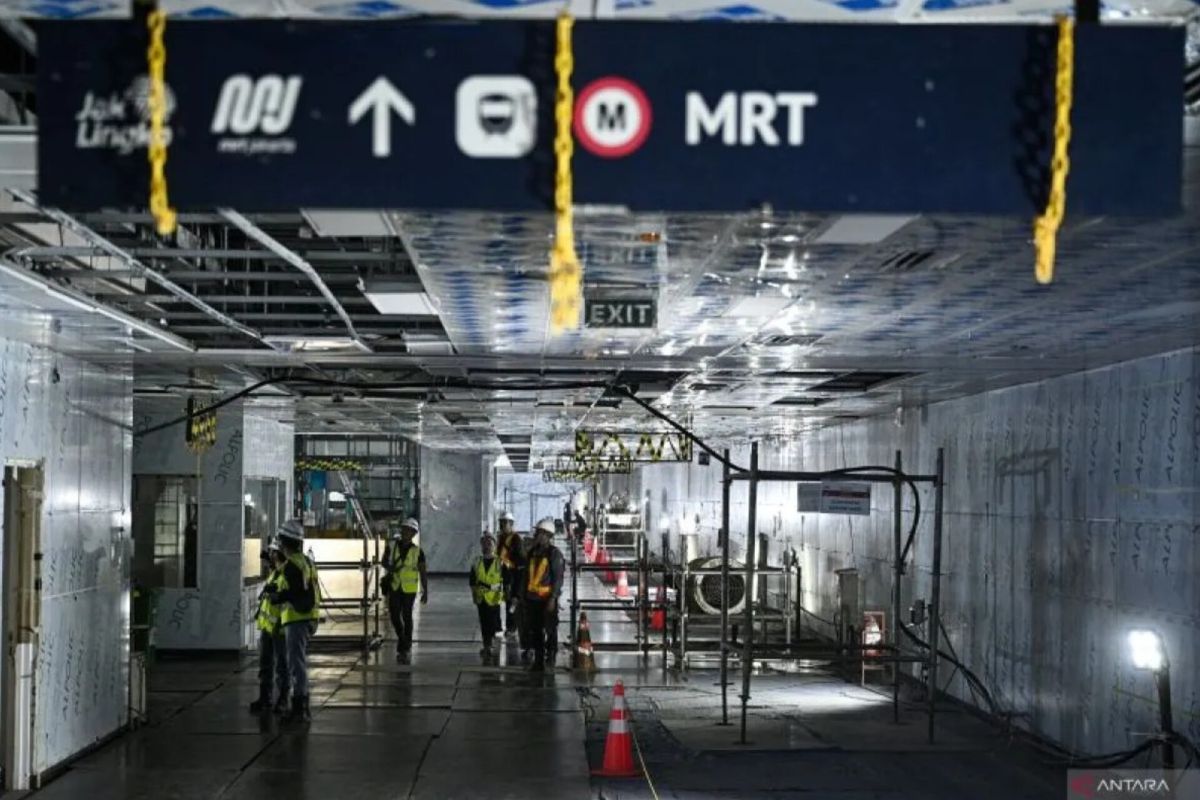
The construction of the MRT Jakarta Phase 2A North-South Line is estimated to cost Rp25.3 trillion, funded through a loan cooperation between the Indonesian and Japanese governments.
“This phase is being built at a cost of approximately Rp25.3 trillion through a loan cooperation between the Government of Indonesia and Japan,” said Corporate Secretary Division Head of PT MRT Jakarta (Perseroda) Rendy Primartantyo in Jakarta on Thursday.
Phase 2A of the North-South Line will connect Bundaran HI Station to Kota, spanning approximately 5.8 kilometres and comprising seven underground stations: Thamrin, Monas, Harmoni, Sawah Besar, Mangga Besar, Glodok, and Kota.
The phase is divided into two segments. Segment one, from Bundaran HI to Harmoni, is targeted for completion by the end of 2027. Segment two, from Harmoni to Kota, is targeted for completion by the end of 2029.
As of 25 July 2026, the overall construction progress for Phase 2A has reached 62.68 percent, exceeding the target of 61.92 percent.
“On contract package CP201, construction has reached 93.90 percent against a target of 93.89 percent,” Rendy stated.
At Monas Station, the construction team is continuing to complete interior works and Entrance 2 access, reinstatement of the north side station box, as well as system acceptance tests and partial acceptance tests.
Significant progress has also been made on contract package CP202, which covers the construction of tunnels and the Harmoni, Sawah Besar, and Mangga Besar stations, now reaching 68.00 percent. Completion of this contract package, which represents one of the milestones in civil construction in Indonesia with its four-level underground station and tunnels, is being accelerated.
As of July 2026, tunnel boring machine 1 has broken through the south side of Mangga Besar Station, meaning the northbound tunnel from Bundaran HI to Kota is now fully connected.
On contract package CP203, progress has reached 86.85 percent, with works at Kota and Glodok stations, including pipe and cable installation, plastering and painting, as well as other architectural works, still ongoing.