
MRP Papua Tengah: Otsus success measured by welfare of indigenous Papuans
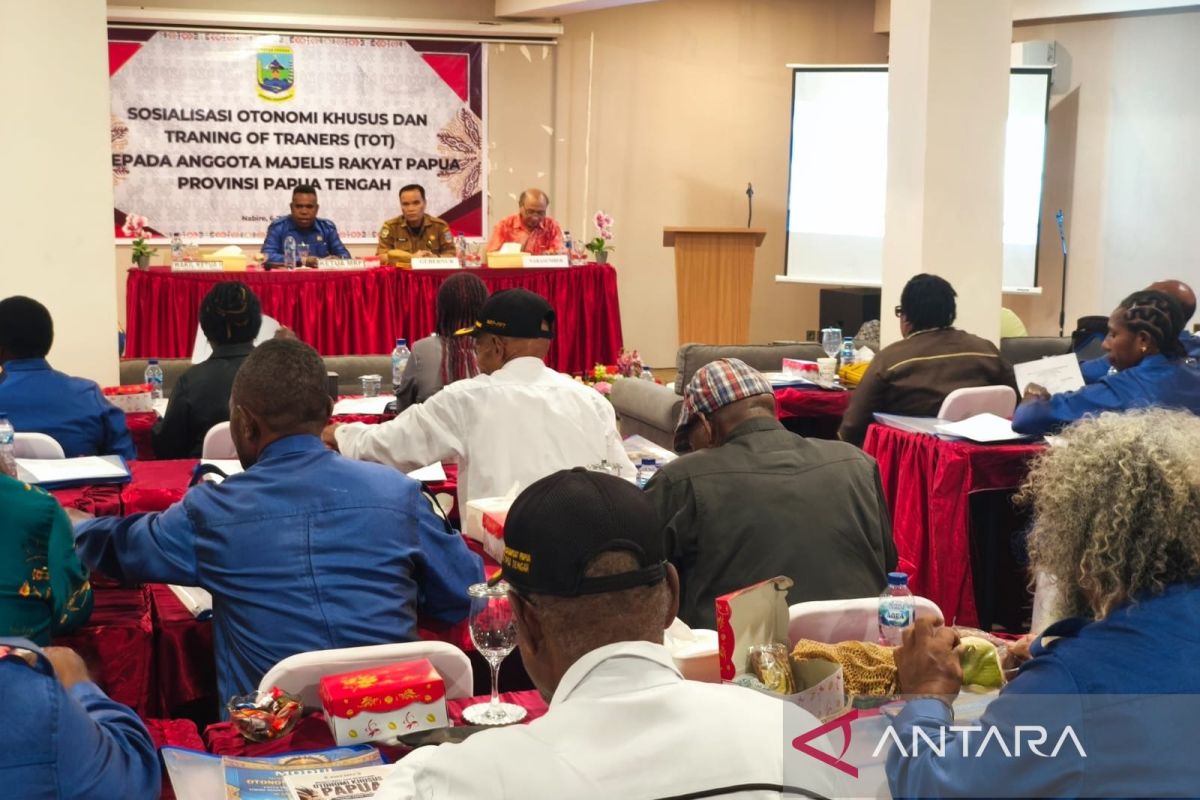
Nabire (ANTARA) - The Chairman of the Papua Central Provincial People’s Representative Council (MRP), Agustinus Anggaibak, has emphasised that the success of implementing Law Number 2 of 2021 regarding Special Autonomy in the Land of Papua is not measured by the size of the budget allocated by the government, but rather by the increasing welfare of Indigenous Papuans (OAP).
“The true success of Special Autonomy is the improvement of the quality of life for Indigenous Papuans, increased access to education and health, wider employment opportunities, the protection of customary rights, the economic empowerment of indigenous communities, and the preservation of Papuan cultural values,” said Agustinus during the opening of a technical guidance session on the socialisation of the Special Autonomy Law for members of the Papua Central Provincial MRP in Nabire on Monday.
He stated that Special Autonomy is a constitutional policy born to provide justice, recognition, protection, and respect for the uniqueness of the Papuan people, while simultaneously serving as a state instrument to accelerate development in the region.
According to Agustinus, as a relatively young province, Central Papua still faces various development challenges, ranging from infrastructure gaps, limited basic services, and difficult geographical conditions to the need for improving the quality of human resources.
Therefore, he continued, the implementation of Special Autaminomy must be able to serve as a real solution in addressing these various issues.
The Central Papua MRP believes that the implementation of Special Autonomy must be based on three main principles: favouring Indigenous Papuans, good governance, and the management of Special Autonomy funds oriented towards the needs of the community, rather than merely fulfilling desires.
He acknowledged that the implementation of Special Autonomy still faces several challenges, one of which is the limited authority held by the MRP, which means the institution’s scope of movement in performing its function of protecting the rights of Indigenous Papuans has not yet been optimal.
For this reason, the council believes that the socialisation of the Special Autonomy Law needs to be carried out continuously so that the community understands their rights and obligations and is not easily influenced by incorrect information regarding the policy.
“We want to ensure that Special Autonomy becomes an instrument to build a more advanced, peaceful, safe, just, and dignified Central Papua, while simultaneously ensuring that education, health, the economy of indigenous communities, and the protection of Papuan culture continue to improve,” said Agustinus.