
MPX Logistics Director Sunyoto: Seeking Opportunities in Domestic and Global Stock Markets
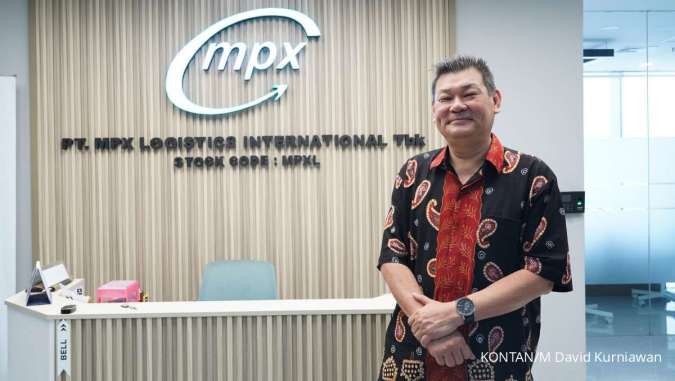
Each person’s investment journey is unique, shaped by the opportunities that arise in their lives. Sunyoto Bambang Kusumo, Director of PT MPX Logistics International Tbk (MPXL), has seized opportunities to learn investing, enabling him to capitalise on opportunities despite current domestic stock market volatility. He gained financial and investment literacy during his management studies at Surabaya University. However, his interest in the stock market began with Astra Shares Ownership, a programme where employees receive company shares, prompting him to question the nature of shares and how to profit from ownership. Around 1997, he began learning about share lot systems and how to buy and accumulate shares. Sunyoto became active in Indonesia’s stock market in 2004, experiencing euphoria from consistent profits. However, the 2008 crisis caused significant losses as his portfolio plummeted from 100% to just 5% of its original value. ‘Back then, learning resources were scarce—only newspapers—so the experience left a lasting impression,’ he said. This experience drove him to delve deeper into stock market mechanics. In 2012, Sunyoto pursued memberships, training, and mentorship in Singapore to enhance his knowledge. The learning paid off, with returns of 20-30% in a year, outpacing inflation. He then adopted a trading system in Indonesia, aiding decisions on high-potential shares through analysis and backtesting. In 2021, he began investing in the US stock market. The following year, he explored other derivatives, including forex, commodity futures, and crypto. ‘I’ve traded commodity futures such as oil, gold, meat, and coffee,’ he said. The 1996 Surabaya University graduate recalled spending hours manually analysing around 150 shares after work, conducting technical analysis late into the night. His current trading system, aided by artificial intelligence (AI), now streamlines this process. Sunyoto now spends minimal time each morning selecting three to five candidate shares to purchase before the Indonesian Stock Exchange (BEI) closes at 3:30-4:00 PM WIB. ‘For the US market, I adjust to nighttime, usually from 12:30 AM WIB until the NYSE closes,’ he said. Sunyoto recalled that losing 95% of his portfolio in 2008 wasn’t the largest in absolute terms, but it left the deepest impression as he didn’t understand why the losses occurred. ‘That experience didn’t leave much of an impression. I lost, but I knew why. In 2008, I didn’t understand and felt robbed,’ he recalled. His entire portfolio consists of Indonesian and US stocks. In Indonesia, he regularly adds shares of PT Bank Rakyat Indonesia Tbk (BBRI) and PT Bank Central Asia Tbk (BBCA). He applies the same strategy to NVIDIA and the S&P 500 in the US market. The remainder is allocated to quantitative trading using the system he described. This year, Sunyoto has paused crypto and forex trading due to his job not allowing scalping. Most of his funds are now focused on the US market. ‘This May, I withdrew funds from Indonesia except for long-term positions like BRI and BCA. My trading portfolio has returned 126% of the initial capital this year despite the war,’ he said. The East Java native stated his initial motivation for trading and investing was to prepare for retirement and financial freedom. At around 42-45 years old, he decided between starting a business or entering financial instruments, ultimately choosing financial assets to manage his ‘business’ remotely and achieve independence. Sunyoto stressed the importance of distinguishing between investment and trading. He believes investments must have underlying assets, whereas those without are not true investments. ‘I’m not anti-crypto as a trader, but it’s not for long-term investment due to lacking underlying assets. True investments must be grounded in tangible factors like real company performance, profit growth, and efficient operations,’ he said. He urged other investors to seek facts rather than follow social media opinions or hype. For those interested in trading systems, he stressed the need for backtesting to validate their effectiveness. ‘Know your investments and understand how your money works, rather than blindly trusting unproven claims,’ he added.