
MPR: Women's domestic workload must be taken into account
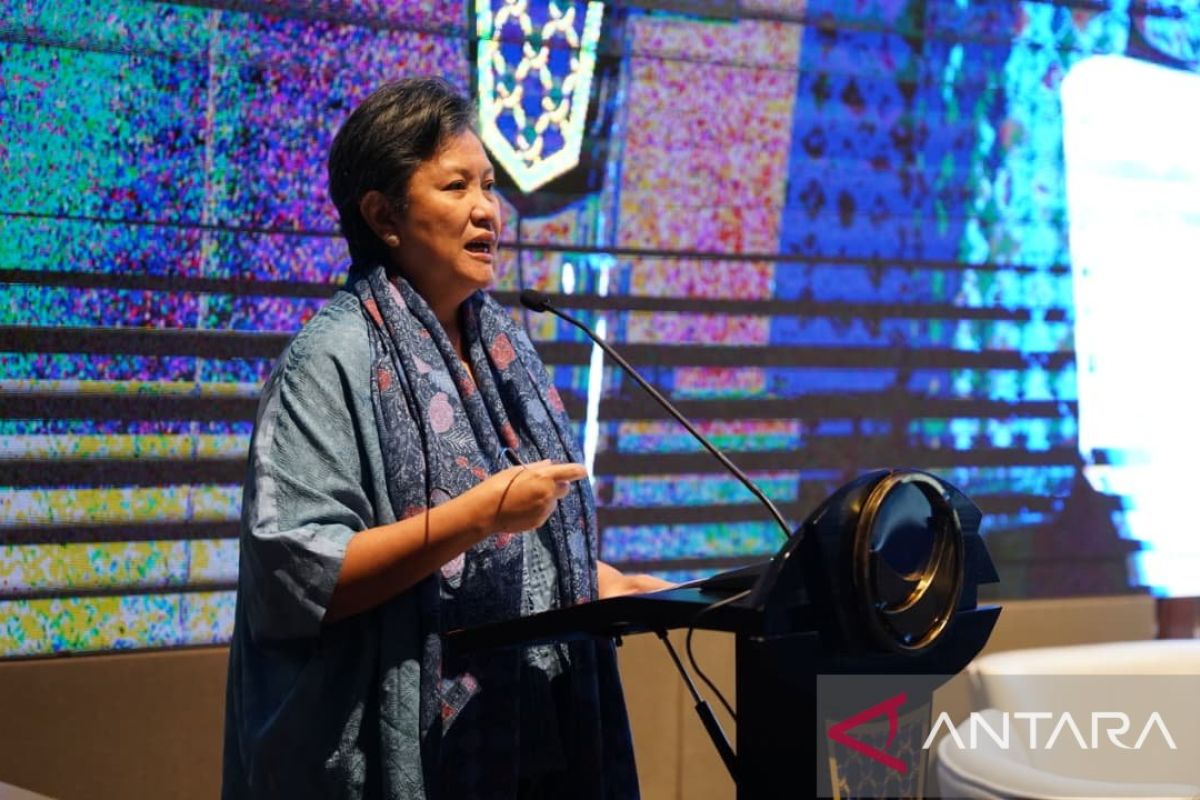
Jakarta (ANTARA) - The Deputy Speaker of the MPR RI, Lestari Moerdijat, stated that the domestic workload and caregiving responsibilities undertaken by women must be considered in the formulation of economic policies.
According to her, as long as domestic work and caregiving are regarded solely as women’s private matters, structural injustice will continue to recur. “Care work supports families, the workforce, and the economy, and therefore must be accounted for in policy formulation,” said Rerie (her affectionate nickname) in a statement received in Jakarta on Wednesday.
This statement was made by Lestress Moerdijat in response to research by Populix titled “Further Study on the Wage Gap: The Burden of Caregiving and Domestic Work Escaping Economic Calculation”.
The research notes that women in urban households allocate 252 more hours to domestic work per year compared to men. This difference is equivalent to approximately 31 working days, assuming an eight-hour workday.
Based on an online survey of 1,000 urban households in March-April 2026, women spend an average of three hours and 14 minutes per day on domestic work, which is about 27 per cent longer than men.
In addition to time, women were also recorded to have a higher decision-making and mental burden. The score for women’s decision and mental burden reached 59.7 out of 100, while men’s was 48.5.
Furthermore, 71.7 per cent of women were recorded to manage at least 60 per cent of daily household decisions, ranging from managing children’s needs and shopping to ensuring various household obligations are met.
Rerie stated that these findings show that the issues faced by women are not merely related to capacity, but also to social structures and the division of roles. “Many women must face a double burden. They are required to be productive in the workplace, but at the same time, they continue to bear the majority of domestic and caregiving responsibilities,” she said.
On the other hand, data from the Central Bureau of Statistics in May 2026 recorded the average wage for male labourers at Rp3.69 million per month, while for women it was Rp2.86 million. Thus, there is a difference of approximately Rp830,000, or 22 per cent.
According to her, this gap should serve as a basis for evaluating various structural barriers facing women, such as gender-based job segregation, limited career development opportunities, and the heavy burden of caregiving responsibilities.
To address these issues, Rerie urged the government to strengthen national data regarding time use and to develop an economic satellite account for care work to measure the contribution of unpaid domestic and caregiving labour.
She also called for expanded access to quality and affordable childcare and care services, as well as the effective implementation of maternity leave and paternity leave so that caregiving responsibilities can be shared more fairly.
Additionally, Rerie encouraged stronger supervision of wage practices through payroll system transparency, objective job evaluations, and the enforcement of the principle of equal pay for work of equal value.
“Care work must not continue to be invisible work burdened upon women. The state, the business world, political parties, and society must work together to build an ecosystem that allows women to thrive equally,” she said.