
MPR Urges Strengthening of Pancasila Education in National Education System Law Revision
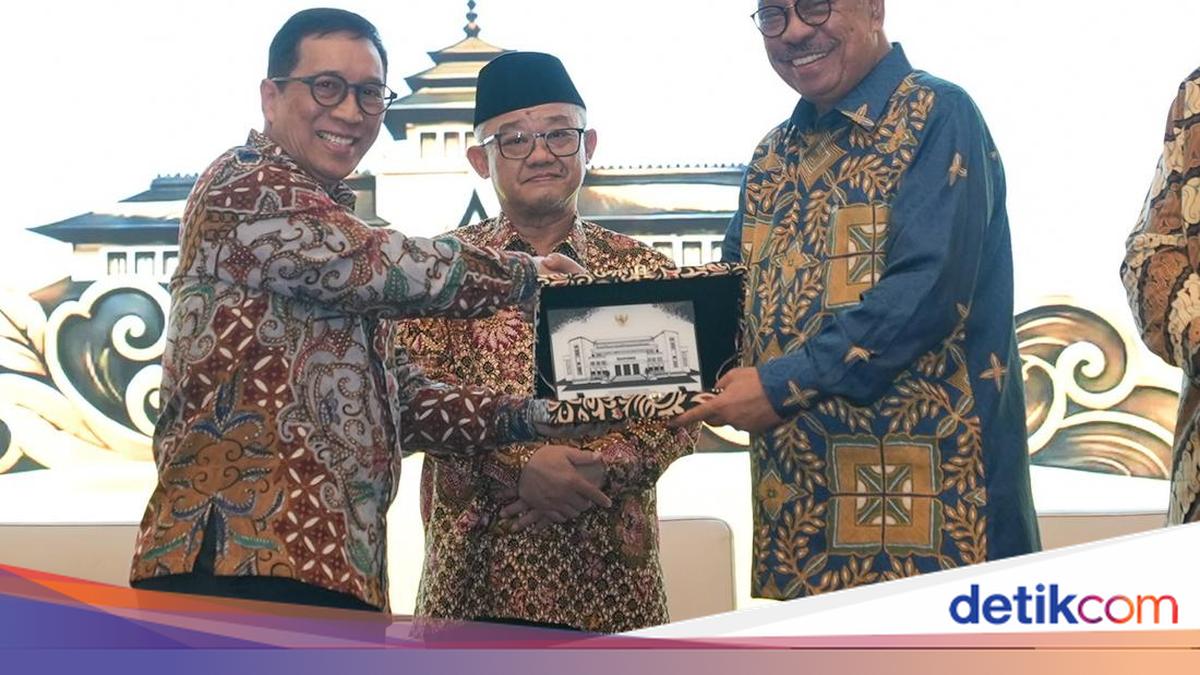
The Chairperson of the Golkar Party Faction (FPG) of the MPR RI, Melchias Markus Mekeng, is pushing for the strengthening of Pancasila education within the national education system. Mekeng believes that Pancasila serves not only as the foundation of the state but also as the nation’s philosophy, providing the basis for social, national, and state life.
He expressed this during the Golkar Party Faction Academic Workshop, themed ‘Pancasila as Philosophy and State Foundation: Strengthening Pancasila Education in the National Education System’, held in Bandung, West Java, on Tuesday (29/9).
Mekeng revealed that strengthening Pancasila education is an urgent and vital part of the effort to build a future generation of Indonesians characterised by national identity, integrity, democracy, and civility. Furthermore, strengthening Pancasasia education is seen as a way to face the increasingly complex challenges of the modern era, including globalisation, digital technology, information flows, and current social changes.
Mekeng noted that while globalisation offers opportunities to improve human resource quality, a lack of strong foundational values can lead to various problems. These include weakening social solidarity, rising individualism, intolerance, violence, the spread of misinformation, and a declining sense of concern for national and state interests.
“This shows that national education is not enough to be oriented solely towards achieving academic competence and technical skills,” Mekeng stated in a written statement on Wednesday (30/9/2026).
Pancasila Education Must Go Beyond Rote Learning
Mekeng believes that education must be capable of forming the Indonesian person holistically. This means students should possess not only intellectual intelligence but also moral, social, emotional, and spiritual intelligence.
In this context, Pancasila holds a strategic position as a source of values and orientation in the implementation of national education.
Mekeng emphasised that Pancasila education should not merely be provided as material to be memorised by students.
“Pancasila should not be understood simply as material to be memorised by students, but needs to be internalised and practised in daily life,” he continued.
He explained that the values within the five principles of Pancasila are interconnected with the character building of students. The principle of Belief in the One and Only God serves as the moral and spiritual foundation, while the principle of humanity emphasises respect for human dignity; unity serves as the orientation for maintaining national integrity; democracy serves as the basis for democratic life; and social justice serves as the ultimate goal of national and state life.
Mekeng asserted that Pancasila education needs to be an integral part of the national education system and should not be the sole responsibility of teachers or lecturers teaching related subjects.
“This is the responsibility of the entire educational ecosystem,” said Mekeng. He noted that headmasters, teachers, lecturers, educational staff, students, families, and the community all play a role in creating an educational environment that reflects Pancasila values.
Pancasila Must Hold a Firm Position in National Education
Mekeng stated that the strengthening of Pancasila education can be achieved through several approaches, ranging from strengthening learning substance, role modelling, and the use of digital technology, to real-world experience through social and community activities.
He also assessed that Pancasila learning needs to be transformed from mere knowledge into values that are understood, believed, and practised.
In the context of the discussions regarding the Law on the National Education System (UU Sisdiknas), Mekeng hopes that Pancasila can regain a strong position as part of national education.
“The UU Sisdiknas is currently being discussed. Through this workshop, we hope that Pancasila can be included as one of the primary subjects,” he said.
Mekeng recalled his own experience as a student when the Pancasila Moral Education (PMP) subject existed. “When I was young, we had PMP lessons. If you were good at mathematics and other subjects and scored 10, but your PMP grade was poor, you would not pass the grade,” he added.
Mekenter’s experience illustrates the importance of Pancasila education in shaping student understanding and character. He also linked Pancasila values to environmental cleanliness, particularly the growing waste problem.
“Therefore, children must understand Pancasila as well as the value of cleanliness, because the waste issue in this nation has become a very significant problem,” said Mekeng.
He hopes that the UU Sisdiknas discussions can accommodate both the strengthening of Pancasila education and values regarding environmental care.
“So, hopefully, with the discussion of the UU Sisdiknas, issues regarding Pancasila and cleanliness can be included in this law,” he concluded.
Mekeng expressed hope that the workshop would not stop at normative discussions but would produce ideas and recommendations that can be applied in both policy and educational practice. Thus, Pancasila is expected to not only be the state foundation written in the constitution but also a living philosophy in the thoughts, attitudes, behaviours, and policies of the Indonesian people.
Source: jawawa.id (https://jawawa.id/newsitem/mpr-urges-strengthening-of-pancasila-education-in-national-education-system-law-revision-1790737266)
Originally published by detikcom (https://news.detik.com/berita/d-8685344/mpr-dorong-pendidikan-pancasila-diperkuat-dalam-revisi-uu-sisdiknas), translated from Indonesian